Acts 12: Is It Too Good to Be True?

When Peter was out of the game. Caught by Herod. Held in prison. Not on the streets healing or preaching… out. It looked like he was going to lose. The region knew what violence was possible against Peter. They knew Stephen who was already murdered. The knew Peter was in hot water… So they prayed.

Maybe there prayers were half-hearted God covering prayers just in case things didn’t turn out as they hoped… “If it be your will, according to your pleasure, Help us to understand, etc.” So then maybe they really didn’t expect an answer? Maybe they thought it was beyond God to set a captive free? Maybe they weren’t in the mood for an interruption?

But isn’t that just like the Lord to break into our plans with a miracle. Surely this God who is capable of saving rebellious sinners is capable of a little local Jail break and maybe he’s capable of more than we pray for too.

Act 10: The Gospel and the Nations

God was reaching out to the Gentiles. Throughout history there have always been others who were not of Jewish birth who would come to recognize the one true God. Cornelius was such a man. But He didn’t know about Jesus and so an angel appears to him and tells him how to make contact with someone who can tell him about Jesus. 

A Step Deeper:Have you ever wondered why God doesn’t just sent an angel to tell people about Jesus or appear to people in their dreams? Sometimes he does. But when he does, he directs them to a person who will fill in the gaps. God always uses people to reach people with the Gospel. Who is might God be using you to reach with the gospel?

Peter Had a dream that revealed to him that he was supposed to go with the people outside at the gate. Did you read verse 28? God had to show Peter that he wasn’t to look down on anyone because of their nationality.

A Step Deeper:One of my favorite Hip-hop artists called Propaganda released a song entitled “Precious Puritans” and in the song he says that God can use a “crooked stick to draw a straight line.” Sometimes we think we have to be perfect for God to use us, but if we are willing God can use us in impact others and in the process teach us something greater about him… Just like Peter.

Peter Preaches the Gospel and the Gentiles come to believe in Jesus Christ. Their conversion is accompanied by the sign of being able to speak in tongues! This is important because it was a sign that God had used in Acts chapter two. This indicated a realization that gospel was going to the whole world, not just the Jews but the gentiles as well. What had been done at Babel would become undone through the power of the gospel.  God in Heaven was reaching down!


Acts 5: Your Sin isn’t Small

God kills Ananias and Sapphira. Before you start to get upset about that consider that He had every right. He’s God! We all owe him our breath. We all live at his pleasure. Don’t kid yourself into thinking that God doesn’t posses the same right over you… He’s your maker.

Ananias and Sapphira wanted recognition for selling property and giving their money to the church. No worries there, but they held back and lied about the gift. I don’t know what they were holding back for, maybe a 401K, a better car, or maybe to just pay off some debts. Either way, they held back. Not that they owed all the money to the church like a debt or obligation, but that they claimed that it was everything. They were faking generosity.

Faking generosity to the church is a mockery of the gospel. Consider that this offering was going to meet the needs of the poor (4:34-35). Consider that those who sold their property were giving all of it away and this enabled the apostles to boast even more about the resurrection of Jesus (4:32-35). This unity that the church experiences is a direct witness to the power of the gospel. It puts both the present condition of those who are destitute and suffering and the eternal condition of those who profess faith in Christ in the same light… If God would not withhold his son from me, so that I might be saved… Who am I to withhold earthly goods from those who have immediate need.

The problem came when Ananias and Sapphira held back. That’s not the gospel… it’s a feigned generosity. It’s a lie. It’s a false gospel. They are not mimicking the generosity of God.  They held back. They care only about having the appearance of piety and so they lie.

The lie costs them. It costs them their lives… by the way, that is what sin costs. It’s not small. It’s not trivial. It’s not as though the cross were a small thing. The love of God compelled Christ to die for our sin and this single act is the most generous thing that has ever happened in all of history. The early church was a testimony to that in the way that the hearts of the wealthy were moved to outrageous generosity… but when one couple held back they were reminded to never take the generosity of God for granted. Sin always costs.

Acts 4: The Cornerstone

The healing of a beggar in chapter three provoked a commotion and all the officials come to see what is going on. They demand to know by what power these things are being accomplished. The Apostles declare plainly through the power of the Holy Spirit that it was in the name of Jesus. (Notice that the Holy Spirit empowers them to testify about the resurrection of Jesus… Make no mistake the book of Acts is about Jesus.)

Peter presses in to the rulers that they are the ones who crucified Jesus. He references a teaching moment of Jesus just prior to his death, burial and resurrection (2 months before this event… You can find it in Matthew 21:33-46). Jesus tells a parable about wicked tenants who reject the owners right over a certain property and ultimately kill the owners son. He then goes on to quote Psalm 118:22-23 and says “the stone the builders rejected has become the chief cornerstone,” implicating the Pharisees rejection of Jesus (and by association murder).

Now Peter throws it out again, this time spelling it out just in case they didn’t get it. “Jesus is the stone that was rejected by you, the builders, which has become the chief corner stone” (Acts 4:11, ESV). Any attempt to build a platform to reach up to Heaven must have the Risen Christ as the corner stone. These men in the temple not only rejected Jesus but among them were men who set in motion the false arrest, trial and murder of Jesus.

These are some wicked dudes and Peter lets them know. But here is where the real power of the gospel lies… The sovereign plan of God takes the most wicked sin imaginable (the murder of GOD – John 1:1-3) and uses that very same act to cause the greatest good man has ever known (redemption and the forgiveness of sins) through the resurrection… They meant it for evil… but God intended it for good.

What a glorious God we serve. Every attempt to trump the gospel is turned on its head and proves the gospel even more true: Injustice is transformed into lavish grace, where men pour out their hatred, the love of God is made manifest, where men fight to exercise control, God proves his sovereign plan.

The God Puzzle

THe God PuzzleThe God Puzzle: How the Bible fits together to reveal God as Your Greatest Treasure by Valerie Ackermann is a workbook that seeks to engage children with the rich truths of God’s Word. I’ve been working through it with my 7-year-old daughter as part of a morning devotional time. I’ll cook breakfast while she works in the book on the bar behind me. She has a hunger to learn about God, loves any kind of homework and is eager to work on any project we do together so this format is right up her ally.

I don’t know how well the format will work with my son when he is old enough to work through something like this. His personality is different and I don’t see him having enough patience to complete a lesson without diligent supervision. We’ll see when he gets there.

The book leads readers to look up scripture to answer questions and has a host of different exercises like matching, crossword puzzles, etc. It’s great for someone who already has a basic grasp on how to look things up in the bible, but will require help if you child is still learning the books of the bible, etc.

Over all I think this is a great tool but probably used best as a parent-child project. I wouldn’t just hand this to my daughter and ask her to work through it out (though I might if she were at the top end of this age range). I can see it being a great conversation starter, devotional material, and even home school teaching aid. For more information about this book and what others are saying about it check out this link from the Litfuse Group: http://litfusegroup.com/author/vackermann

Disclosure of Material Connection: I received this book free from Litfuse as part of their Blog Tour. I was not required to write a positive review. The opinions I have expressed are my own. Some of the links in the post above are “affiliate links.” This means if you click on the link and purchase the item, I will receive an affiliate commission. Regardless, I only recommend products or services I use personally and believe will add value to my readers. I am disclosing this in accordance with the Federal Trade Commission’s 16 CFR, Part 255: “Guides Concerning the Use of Endorsements and Testimonials in Advertising.”

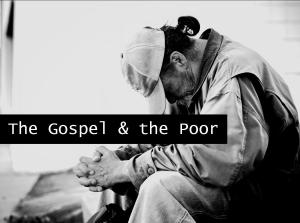
Practical Guidelines – The Gospel and the Poor (Part 7)

the gospel and the poor While general principles and guidelines can be ascertained from scripture, the practical out working of a theology of social engagement with the poor is messy. Plans to alleviate poverty may appear cut and dry on a philosophical level, but quickly unravel on a practical level. Alleviating poverty happens best when those who are attempting to render aid are able to perceive the needs first-hand on a local basis.

The truth is that your dollar goes further to  relieve poverty in third world countries than it does America and other industrialized nations because of the huge gap between living on a dollar a day and living on twelve to sixteen dollars a day. Sometimes it is easier to offer assistance in the third world because it seems like we can do more with less, but until we understand the issues surrounding specific instances of poverty we are more likely hurting those we intend to help. Poverty is seldom ever just a financial matter. More often than not throwing money at the problem will not fix it. In many cases there are other significant  factors at work such as the Hindu Cast system in India and land laws in South America.

There is nothing wrong with rendering aid to people in the third world but a few guidelines should be followed:

  1. Be sure you are meeting your moral obligation to the poor who are within your own moral proximity. An individual or church that gives aid to relieve poverty in Africa but fails to minister to the poor in its own congregation and community is passing by Lazarus at the gate.
  2. Be sure to give through an organization that understands the issues surrounding the specific instances of poverty. Sometimes we can offer economic incentives that reward bad behavior and actually fuel the cycle of poverty rather than deliver people from it. The best solution is to work with someone who understands the ins-and-outs of a specific instance of poverty and can address the real issues.
  3. Remember the difference between Mission and Philanthropy. Mission involves the gospel. Philanthropy is rendering aide. There is nothing missionary about an endeavor to merely relieve poverty without offering the only real hope we have in Jesus. There is nothing wrong with Philanthropy, but we need to be careful to not mislead people into believing that they are supporting a missionary endeavor when the organization only meets physical need. A good mission organization will have a good balance of meeting needs and sharing the gospel.

Churches and individuals may choose to give generously beyond their moral obligation of proximity to help those who are in need around the world. This though should be understood as generosity and not a moral obligation.  An individual may choose to adopt a child through an organization and send regular contributions to make sure that their child has adequate food, shelter, clothing and education. Churches may partner with ministries and churches in third world countries like India to feed slum children and provide them with a gospel lesson.  However, whenever aid is rendered in this way it is generally well beyond their moral proximity, Church communities and individual Christians would be wise to be invested in an individual or organization who knows the specific instances of poverty that are being addressed.  This would help insure that whatever aid it given is given in such a way as it not only addresses immediate needs such as hunger, but also looks to a long term solution. 

What are you doing to relieve poverty in your community and around the world?

Feel free to signup to receive this blog via e-mail or in your RSS reader. Links can be found at the top right hand corner of this page.


Who is Responsible? – The Gospel and the Poor (Part 6)

the gospel and the poorIs it the church’s responsibility to address poverty or is that a function of individual believers? DeYoung and Gilbert argue that the actual obligation of moral proximity lies at the feet of individuals rather than the church:

If I am commanded to do justice, does that mean ipso facto that it is the church’s mission to do justice? By the same token, if I am commanded to love my wife as my own body, does that mean it is the church’s mission to love my wife as it loves its own body? What sense would that even make? Our point is simply to say that defining the mission of the church institutional is just not as simple as identifying all the Bible’s commands to individual Christians and saying, “There, that’s the church’s mission.”[1]

But are they right? Is there a difference here between the Church and Believers when it comes to relieving poverty? Timothy Keller anticipating this kind of response notes:

Some believe that all the texts enjoining believers to give to the poor are given only to individual believers, not to the church as an institutional or body… If it is really true that justice and mercy to the poor is not optional for a Christian and is in fact the inevitable sign of justifying faith, it is hard to believe that the church is not to reflect this duty corporately in some way.  But we do not have to go on surmise and inference here…[2]

Keller goes on to outline a list of several Old Testament references such as tithes for the poor, land laws, etc. before turning his attention to the church in the New Testament and highlighting the role of deacons in Acts 6.[3]

Early churches did cooperate in an attempted to alleviate poverty beyond their geographic constraints. The gentile converts of Macedonia and Achaia took up a collection for the poor Jewish saints in Jerusalem. Paul wrote to the Romans, “At present, however, I am going to Jerusalem bringing aid to the saints. For Macedonia and Achaia have been pleased to make some contribution for the poor among the saints at Jerusalem. For they were pleased to do it, and indeed they owe it to them. For if the Gentiles have come to share in their spiritual blessings, they ought also to be of service to them in material blessings” (Romans 15:25-27 ESV).

While individuals such as in the account of Lazarus and the rich man are responsible to address poverty that churches are also responsible to address poverty as in the case of Macedonia and Achaia sending funds to the Jerusalem saints. The connection between the various churches however, is one of moral proximity.  The gentiles received the gospel because of the dispersion of the Jerusalem church and owed their very faith to the ones who were suffering in need. Akin to grown children providing for a parent who has fallen on hard times the gentile churches picked up the obligation to joyously care for members of the older church in her need.

What do you think? What are instances today where a church may be morally obligated to help relieve poverty in another area?


[1] Kevin DeYoung and Greg Gilbert. What is the Mission of the Church?: Making Sense of Social Justice, Shalom, and the Great Commission. (Wheaton, Ill.: Crossway, 2011), 233.

[2] Tim Keller, “The Gospel and the Poor,” Themelios 33, no. 3 (December 2008), 10.

[3] Ibid., 11.


Feel free to signup to receive this blog via e-mail or in your RSS reader. Links can be found at the top right hand corner of this page.

Generosity vs. Moral Obligation – The Gospel and the Poor (Part 5)

the gospel and the poor

Kevin DeYoung and Greg Gilbert in their book, What is the Mission of the Church, make a different argument than the one we were left with by David Platt in the last post:

Some Christians make it sound like every poor person in Africa is akin to a man dying on our church’s doorstep, and neglecting starving children in India is like ignoring our own children drowning right in front of us… This rhetoric is manipulative and morally dubious…. We must distinguish between generosity and obligation, between a call to sacrificial love and a call to stop sinning.[1]

DeYoung and Gilbert are arguing for the concept of “moral proximity” to delineate the difference between an obligation to help the poor and generosity that flows from a heart of gratitude.  They are staking the claim that Christians have an ethical debt to relieve poverty as it appears in their moral proximity. So a believer has a greater obligation to alleviate the poverty of his brother-in-law than he does to alleviate the poverty experienced by an unbeliever he has never met ten-thousand miles away. This is the gist of what Paul says when he writes to Timothy, “But if anyone does not provide for his relatives, and especially for members of his household, he has denied the faith and is worse than an unbeliever” (1 Timothy 5:8, ESV).

The concept of moral proximity is one of concentric circles working from the individuals and families experiencing poverty to a wider and wider community.  Thus the Apostle John writes about the moral obligation a believer has towards another believer, “But if anyone has the world’s goods and sees his brother in need, yet closes his heart against him, how does God’s love abide in him?” (1 John 3:17, ESV).  Likewise the epistle writer James notes that true faith will involve action to benefit those among the congregation who are living in poverty, “If a brother or sister is poorly clothed and lacking in daily food, and one of you says to them, ‘Go in peace, be warmed and filled,’ without giving them the things needed for the body, what good is that?” (James 2:15-16 ESV).

Moral proximity is precisely the point of Jesus’ parables of the Good Samaritan and the rich man and Lazarus. In each case it was the proximity that created a moral obligation. The rich man had Lazarus at his gate every day in need while he himself dined sumptuously (Luke 16:19-20).  He was not responsible to alleviate every suffering of every beggar on the planet, but he was responsible for Lazarus precisely because Lazarus was at his gate.  Likewise the Good Samaritan did not help every man of a different ethnic origin and culture that had ever been beaten nearly to death by robbers on the Jericho road; he simply helped the one who was in his path that day.

Moral proximity is a good check against hurting those whom economic aid is intended to help. Jay W. Richards in his book, Money, Greed, and God, notes how quickly financial aid intended to relieve poverty can actually cause poverty in the consumer option of purchasing fair trade coffee:

The problem is subtle. Paying artificially high prices for some coffee encourages poor farmers to enter or stay in the coffee market when it’s against their long-term interest to do so. Consider this statement by one fair-trade organization, Global Exchange: ‘Coffee prices have plummeted and are currently around $.60-$.70 per pound. ‘With World Market prices as low as they are right now, we see that a lot of farmers cannot maintain their families and their land anymore’… There’s a reason the market prices have dropped…. When the supply goes up, the price for coffee goes down- not because of injustice, but because of the law of supply and demand…. There’s no law of economics or morality that sets the price of coffee high enough so that every coffee farmer everywhere will always be able to make a decent living growing coffee- anymore than there is a law that everyone will always be able to make a decent living manufacturing tallow candles or buggy whips or eight-track tapes or Winnebagos.[3]

When consumers are uneducated about the effects of purchasing fair-trade coffee, they can be under the assumption they are doing a lot of good to help poor farmer when indeed they are contributing to keep people bound in poverty for generations.  Richards suggests individuals really interested in helping the plight of poor coffee farmers are better off dealing with issues more locally, such as supporting initiatives to reform the South American land laws inhibiting an individual to improve property for fear the land owner will then take it away.[4]

Working to alleviate poverty in developing nations such as India may be similar in nature. One of the largest issues that keep people in poverty in India is the Hindu cast system.[5] American churches can shell out millions of dollars every year to create some sort food provision for slum children, but until they break the back of the Hindu cast system nothing will have ultimately changed. In the coming generations American churches will be supporting the children and grand-children of those they support now.

The question that should always be addressed when it comes to global poverty such as starving children in India is the same question that should be asked in a local context, “why are they poor?”  Generally it is those who are in the closest proximity who will be able to intelligently answer and address the underlying issues of poverty.  Generally it is those who are closest who are morally obligated to alleviate poverty.

Moral proximity does not remove the opportunity to alleviate poverty on a global level; rather moral proximity removes alleviating global poverty out of the category of obligation and places it in the category of generosityDeYoung and Gilbert write, “Moral proximity should not make us more cavalier to the poor. But it should free us from unnecessary guilt and make us more caring toward those who count on us the most.”[6]

It is not as though the American Church should not attempt to alleviate poverty in developing nations such as India. Rather the American church should first look to its own doorstep of moral obligation before appealing to the nations on economic grounds. Each church has an economic responsibility for reaching those in its moral proximity first and foremost before the nations.


[1] Kevin DeYoung and Greg Gilbert. What is the Mission of the Church?: Making Sense of Social Justice, Shalom, and the Great Commission. (Wheaton, Ill.: Crossway, 2011), 185.

[3] Jay Wesley Richards. Money, Greed, and God, (New York: HarperOne, 2009), 41.

[4] Ibid., 42.

[5] Frederica Misturelli and Claire Heffernan. What is poverty? A diachronic exploration of the discourse on poverty from the 1970s to the 2000s. European Journal of Development Research, Dec2008, Vol. 20 Issue 4, 675.

[6] DeYoung and Gilbert, 187.

Feel free to signup to receive this blog via e-mail or in your RSS reader. Links can be found at the top right hand corner of this page.

Is David Platt Right? – The Gospel and the Poor (Part 4)

the gospel and the poor

The question of whether or not Christians should be engaged in alleviating poverty is mute. Both the New and Old Testaments bear witness to how believers are to act in kindness and generosity towards their peers who are in poverty. Timothy Keller in his book Generous Justice, in which he levels the Bible as a guide on having a more just society writes, “from ancient times, the God of the Bible stood out from the gods of all other religions as a God on the side of the powerless, and of justice for the poor.”[1]  The real question is, “how should the church respond to poverty?”

David Platt in his book Radical levels serious criticisms of the American church and its affluence compared to the poverty present in developing nations. In one place he comments on a parable found in Luke 16 concerning the rich man and Lazarus:

I am much like the rich man, and the church I lead looks a lot like him too. Every Sunday we gather in a multimillion-dollar building with millions of dollars in vehicles parked outside. We leave worship to spend thousands of dollars on lunch before we return to hundreds of millions of dollars’ worth of homes. We live in luxury.Meanwhile, the poor man is outside our gate. And he is hungry. In the time we gather for worship on a Sunday morning, almost a thousand children elsewhere die because they have no food. If it were our kids starving, they would all be gone by the time we said our closing prayer. We certainly wouldn’t ignore our kids while we sang songs and entertained ourselves, but we are content with ignoring other parents’ kids. Many of them are our spiritual brothers and sisters in developing nations. They are suffering from malnutrition, deformed bodies and brains, and preventable diseases. At most, we are throwing our scraps to them while we indulge in our pleasures here. Kind of like an extra chicken for the slaves at Christmas.[2]

While Dr. Platt’s statements are full of rhetorical flare, he does lay serious criticism at the doorstep of his church. In essence he notes that the extravagant lifestyle that invests millions of dollars in church buildings, homes and cars is responsible for the poverty and death of children on the other side of the planet.  This is serious criticism. It is one thing to be unaware of poverty on the other side of the globe and it is another thing to be actively keeping people in poverty. It is one thing to note people are starving in India and another thing to note people are starving on the drive into worship. Platt equates the two when he says, “the poor man is outside our gate… almost a thousand children elsewhere die because they have no food.”[3]

My questions go like this: Am I morally responsible for poverty in India? Should I feel guilty for buying my children nice things while other children on this globe starve? What are your thoughts? Is David Platt right?

I’ll be blogging more on this subject tomorrow.


[1] Timothy J. Keller. Generous Justice: How God’s Grace Makes Us Just. (New York, N.Y.: Dutton, Penguin Group USA, 2010), 6.

[2] David Platt. Radical: Taking Back Your Faith from the American Dream. 1. ed. (Colorado Springs, Colo.: Multnomah Books, 2010), 115.

[3] Ibid.

Feel free to signup to receive this blog via e-mail or in your RSS reader. Links can be found at the top right hand corner of this page.

The Gospel and the Poor (Part 3)

the gospel and the poorOne of the greatest reasons for needing a lose term such as “need” to help conceive of poverty is the radical differences in standard of living that occur between the continents and even among the poor themselves. D. L. Mundy in his ground breaking book, Christianity and Economic Problems wrote:


Even ‘the poorest he’ in the highly industrialized countries expects a standard of living unprecedented in earlier ages. He lives longer, he has access to educational and medical facilities, he has better clothes, a more solid and warmer house (even if it be a slum), more leisure from work, less sheerly [sic] back-breaking labor when at work, a dependable food supply, and opportunities to enjoy those luxuries of modern civilization in the form of tobacco, films and daily papers, which tend to be regarded as necessities, and no longer luxuries, though the mass of human kind have managed to live fairly satisfactory lives without knowing them or caring for them.[1]

The 2012 Poverty Guidelines Federal Register Notice from the United States Department of Health and Human Services based on the Census Bureau’s official poverty thresholds records the poverty line for a family consisting of four people, presumably two adults and two children, living in the lower forty-eight states to be at $23,050; higher in both Alaska and Hawaii.[2] This breaks down to roughly $15.80 per person, per day to live at the poverty line in the United States. The breakdown is higher for single adults living on their own assuming they are not able to share the expenses of shelter and basic utilities. The World Bank standard for the world poverty line around $1.25 per person per day.[3] The poverty line for the United States is roughly twelve times higher than the world poverty line. Incidentally the world poverty line put forth by the World Bank does not take into account large industrialized nations such as the United States, Canada, and Australia in its findings.  The conclusion is that the cost of living or at least the standard of living is higher in the United States and other industrialized nations than it is in third world countries.

D. L. Munby stated; luxuries of modern civilization have come to be counted on as necessities.[4]  Some such luxuries would include processed foods which increase the cost of food in the super market, stricter food laws that prevent markets from selling out of date products, utilities such as electricity, water and the sewer/ septic systems that are standard in America,  rigorous building codes, the cost of transportation, child care, etc.  All of these factors indicate a higher standard and therefore cost of living in the United States.

Though the United States Census Bureau attempts to put a figure on the cost of living it is difficult for any national organization to really address the specific issues of poverty in a region. Individual issues often complicate the poverty issue. Attitudes such as depression or culturally ingrained mindsets prevent people from reaching their full economic potential. Issues such as a gambling addiction, drug addiction, alcohol addiction and others are localized situations that keep individuals poor and cannot be addressed or even fully realized through suggesting  a poverty line. Ultimately the matter of poverty has to be addressed on a local and individualized level.[5]


[1] D.L. Munby. Christianity and Economic Problems. (New York: MacMillon & CO, 1956), 107-8.

[2] “http://aspe.hss.gov,” 2012 Poverty Guidelines, http://aspe.hhs.gov/poverty/12fedreg.shtml (accessed April 20, 2012).

[3] “http://worldbank.org,” Replicate the World Bank’s Regional Aggregation, http://iresearch.worldbank.org/PovcalNet/index.htm?1 (accessed April 20, 2012).

[4] Munby, 108.

[5] Jay Wesley Richards. Money, Greed, and God, (New York: HarperOne, 2009), 50-51.

Feel free to signup to receive this blog via e-mail or in your RSS reader. Links can be found at the top right hand corner of this page.