James 2:8-13 (Devotoinal Thought)

If you really fulfill the royal law according to the Scripture, “You shall love your neighbor as yourself,” you are doing well. But if you show partiality, you are committing sin and are convicted by the law as transgressors. For whoever keeps the whole law but fails in one point has become accountable for all of it. For he who said, “Do not commit adultery,” also said, “Do not murder.” If you do not commit adultery but do murder, you have become a transgressor of the law. So speak and so act as those who are to be judged under the law of liberty. For judgment is without mercy to one who has shown no mercy. Mercy triumphs over judgment. (James 2:8-13 ESV)

I like omelets. There is just something about scrambled eggs, cheese, ham, a few select veggies and bacon that make breakfast worth having. But can you imagine making an omelet with just one rotten ingredient? What if I served you an omelet with rotten eggs? Or perhaps I made one with completely fresh ingredients but threw in rancid bacon? What if it were just one rotten egg or just a few pieces of rancid bacon? Just a little rottenness really ruins the whole omelet experience.

James writes that if you keep the whole law and break it at one point, you are guilty of breaking all of it. Sometimes we are tempted to think of our sins in different categories like big sins and little sins. Conveniently the little sins are sin that we are guilty of like showing partiality. The big sins tend to be ones that we don’t do like murder. The writer of James says that showing partiality is just like murder. An omelet with a little rottenness is a rotten omelet. A person who breaks the law just a little is a law breaker.

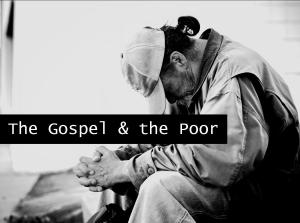
We should be merciful to others because God in Christ has been merciful to us. We should not show partiality to people based on whether they are rich or poor. God doesn’t show partiality to us. We need to remember that there is a judge of our actions and it isn’t us. Jesus will judge

Shop Amazon – Contract Cell Phones & Service Plans

Something you should know about karma

So it’s become REALLY popular to talk about karma in our culture. We hear about “bad karma” and “good karma.” I’ve heard people make threats like “karma is going to get you.” I even had one friend tell me that he believed in karma because it offered a sense of justice. I countered that karma seems like its about justice when we see the bad guys suffer, but it looks a lot different when the bad guys see you suffer.

You see, karma is more than classical “cause and effect” or “sowing and reaping.”  It is a fatalistic understanding of the “universe,” in that those who suffer deserve their suffering because of the evil they have done in the past.  Inversely those who prosper have earned their prosperity due to the good they have done in the past.  This is certainly more than “what goes around, comes around,” especially when it is applied children. I mean pause for a moment to think about kids suffering with leukemia.  Do they deserve that? Karma says they do. What about children born into poverty who die of preventable diseases? You see in some places around the world, a belief in karma enables people to pass by those who are suffering and call it “justice” for the sins committed in past lives.

If you haven’t guessed already, I don’t believe in karma.  But I serve a growing population of young people who do “believe” in karma, at least on a surface level.  Most when challenged to lay the blame somewhere for children with leukemia come up woefully short and hopefully abandon the scheme.  The problem is that it is marketed on the show’s they watch.  (Turn on the TV tonight, pick a random sitcom and see how long it takes for the word “Karma” to pop up… It will happen more often than you think.) And while marketed, it is often presented in terms of “what goes around, comes around.”

In a sense, karma IS about justice.  The real problem is when it crosses over to answering why injustice happens in the world.  The night I typed this, there was a man on the news who killed his kids.  Karma says he’ll get what is coming to him.  However, it also says that those kids got what was coming to them as well.  But then you have to ask, “What did they do?” A belief in karma indicates that they must have done something terrible in a previous life. Karma answers injustice by calling it justice for something done previously.  Ultimately in the system of Karma, injustice does not exist.  We all get what we deserve.

Does a man reap what he sows? … sometimes, but that isn’t karma.  That’s more like a law of nature, not of life.   If you mess with a bee you, you might get stung.  If you plant and cultivate and apple orchard, you might get apples.  But if someone attacks me for my apples, nobody is reaping what they sowed… It’s injustice.  Isn’t it about time that we put karma aside and look at true justice which comes from God the giver of life and the avenger of those who have been wronged. (Romans 12:19).

If you have a chance read John 9 where Jesus refutes his disciples understanding of karma.

The Modern Day Pharisee

Someone I once respected as a Christian leader told me that he didn’t read his Bible every day. I was amazed. He said that for him it had become something to do, just checking off another box. I heard him speak and ridicule people who just “check the box” on reading their Bibles

I guess it made sense at the time. I was impressionable. So I too started to NOT read my Bible when I didn’t feel like it and I checked another boxthe box of being so spiritual that I would not allow myself to fall into the kind of legalism. I thought I had reached a whole new plain of Christianity, one that had all the buzzwords like “authentic.” I started to revel in my failures so people would know that I wasn’t perfect. I was… authentic. I wore my flaws with pride and flaunted the fact that I didn’t read the Bible every day, or really much at all anymore. I didn’t need to. I was… spiritual.

I became so jaded that I soon could sense the hypocrisy in everyone around me. People would say that they were praying for someone, but I knew in my heart that they were not sincere. I had developed the gift of sensing the hypocrisy of others. I didn’t want to be a hypocrite so I stopped praying for people or I would pray with them once on the spot and completely forget about them later. I was becoming so spiritual.

Then it happened. I read the Bible again one day and then the next. I realized that I wasn’t spiritual at all. My frustration with church and the hypocrisy around me was a projection of my own dry and barren soul on those around me. I had never really seen my brothers and sisters in Christ for who they were because I was so busy judging myself in them.

When I began reading the Bible again it was like a deep and refreshing drink of cold water on parched lips. It hurt, but it felt so good. It was what I needed. I had been without for so long. I had almost forgotten how life transformational the gospel really is. I had been living in a self-imposed dessert for too long.

And so now I check the box on reading the Bible every day, not because I am a legalist or a Pharisee. No, I did that quite well without reading the scripture. I go to the well of God’s word everyday now because I know how thirsty I really am and how much I need to hear from Him (even if I don’t feel like it). I’m convinced once again that “holiness” though it isn’t a buzz word is what God has called me to and I’m not as proud as I used to be of being “authentic” with my flaws.

Oh, I’m still flawed. But now I would rather boast in Christ through my failure than boast in my failure. It’s different now that I’m a recovering from being a Pharisee. I wish I never believed the lie that it was somehow spiritual to not use one of the very tools God has given us to grow. Sometimes the most dangerous lies to believe are the ones that Satan puts in the mouths of Christian leaders.

3 Thoughts on Facebook, being Missional and the Movies

I have to confess that my Facebook feed has brought me much grief over the last few weeks. Facebook has been an excellent tool in my own life to help me see pockets of hypocrisy and need for growth… it’s also given me a window into the lives and thoughts of others. What saddens me the most is how easily I engage in a debate about the trivial… like my opinion matters more than the person I’m talking too. Rarely ever do we communicate well in these short gusts of phrase and the opportunity for miscommunication is high.

It’s been awful to watch the discussion around the Noah Movie. Before the movie was released there were already debates waging about whether Christians should go see this movie or not. Then the mud began to sling. To be fair I don’t know that anyone on my feed called any person out in particular but there were a lot of straw men put down… Straw men are what we build and destroy to prove a case when no one enters the debate with us. In our minds we may picture real people we are too cowardly to approach or we may just be trying to show an assumed audience that we are with them by verbally attacking a mutually disliked position. How easily Facebook distracts us from the real mission field.

The problem develops when we allow a trivial thing like a movie to cause an apparent rift between brothers and sisters in Christ. We say things in general to the public we would never say to each other in person. A difference of opinion on a movie (mainly whether or not it’s worth someones time to go see it) is all it takes to cause a virtual schism of my Facebook friends. No matter which side of the debate you are on it becomes so easy to build your straw men, aim in the general direction of the opposition, and fire your volleys of well put phrase.

It’s so easy to tear down… So hard to build up. That’s why after some time of thought and reflection I came up with these 3 guidelines to keep me from tearing down my friends (real or imagined) on Facebook over trivial things like the movies.

1. I am accountable to God for everything I post. The following passage is talking about food but given the current conversation there is room to make application to how one posts on Facebook.

So then each of us will give an account of himself to God. Therefore let us not pass judgment on one another any longer, but rather decide never to put a stumbling block or hindrance in the way of a brother. I know and am persuaded in the Lord Jesus that nothing is unclean in itself, but it is unclean for anyone who thinks it unclean. For if your brother is grieved by what you eat, you are no longer walking in love. By what you eat, do not destroy the one for whom Christ died. So do not let what you regard as good be spoken of as evil. For the kingdom of God is not a matter of eating and drinking but of righteousness and peace and joy in the Holy Spirit. Whoever thus serves Christ is acceptable to God and approved by men. So then let us pursue what makes for peace and for mutual upbuilding. Do not, for the sake of food, destroy the work of God. Everything is indeed clean, but it is wrong for anyone to make another stumble by what he eats. (Romans 14:12-20 ESV)

2. Not everything that I’m free to do, is good to do. The following passage also deals with food (in a different way). The gist of the passage indicates that my personal freedom isn’t the most important aspect of my life and that even personal freedom when it comes across a brother of weaker conscience can be limited for the sake of his good and God’s glory.

“All things are lawful,” but not all things are helpful. “All things are lawful,” but not all things build up. Let no one seek his own good, but the good of his neighbor. Eat whatever is sold in the meat market without raising any question on the ground of conscience. For “the earth is the Lord’s, and the fullness thereof.” If one of the unbelievers invites you to dinner and you are disposed to go, eat whatever is set before you without raising any question on the ground of conscience. But if someone says to you, “This has been offered in sacrifice,” then do not eat it, for the sake of the one who informed you, and for the sake of conscience– I do not mean your conscience, but his. For why should my liberty be determined by someone else’s conscience? If I partake with thankfulness, why am I denounced because of that for which I give thanks? So, whether you eat or drink, or whatever you do, do all to the glory of God. Give no offense to Jews or to Greeks or to the church of God, just as I try to please everyone in everything I do, not seeking my own advantage, but that of many, that they may be saved. (1 Corinthians 10:23-33 ESV)

3. Correction and discipline need to be applied in private and on a personal level. There are those occasions where a person has sinned against you and you need to address their sin. They may have sinned against you on Facebook or other areas of the public forum. Their sin still needs to be addressed in a private and personal manner.

“If your brother sins against you, go and tell him his fault, between you and him alone. If he listens to you, you have gained your brother. But if he does not listen, take one or two others along with you, that every charge may be established by the evidence of two or three witnesses. If he refuses to listen to them, tell it to the church. And if he refuses to listen even to the church, let him be to you as a Gentile and a tax collector. Truly, I say to you, whatever you bind on earth shall be bound in heaven, and whatever you loose on earth shall be loosed in heaven. Again I say to you, if two of you agree on earth about anything they ask, it will be done for them by my Father in heaven.
(Matthew 18:15-19 ESV)

I’m not there yet. I have a long way to go. I found that out the other day in the midst of the whole Noah debacle. I thought I’d add to the fray and call some folks out in “general” who were fighting straw men… Little did I realize I was falling to the same temptation.

How about you? What are your thoughts on facebook, being missional and the movies? What other points would you make or add?

Sex, Tatoos and Resurection (A Theology of the Body)

I was challenged and inspired by my pastor’s sermon last year. While dealing with the issues of the heart he also took time to address body posture in worship.  We often as Western thinkers have a tendency to set up a false dichotomy between body and soul. (As if our soul were just a mere part of us or though our body were just an extension of who we really are.)

We tend to gloss over the way scripture speaks of the body opting instead to think of our bodies as “earth suits” instead of an indivisible aspect of who we are. However, from Genesis to Revelation we are reminded that we are very much physical beings with bodies that interact in a physical world. We are made from the dust as physical beings and that will forever impact how we interact. And “forever” is not an exageration. The gospel demands a physical body. Jesus was born of a virgin, crucified for our sins, buried, raised from the dead, ascended into Heaven, and now sits at the right hand of the father making intercession for us.  We believe in a bodily resurrection.  Disembodied souls aren’t a Christian notion.

Our bodies were given us to enjoy and celebrate God’s creation. That’s why we get to enjoy eating apples and the gift of sex inside of marriage. Our bodies were given to us to worship God… Posturing our bodies in worship is a natural expression of who we are and who we were made to be.   Indeed without posturing ourselves to God we can miss the full benefits of corporate or private worship. Before you get upset, please understand that kneeling has been understood as a right response to God for ages and so has raising your hands. It’s not a new thing, it’s actually a very old thing.

I think we miss intimacy with God when we fail to worship him fully with our bodies. But that is so much more than just raising your hands to your favorite Christian anthem. Worship with your body also involves discipline like making sure you’re well rested on Saturday night before Sunday’s service. It means withholding food for short periods of time as a fast to submit my will to God. It involves the taste and sensory experience of the bread and wine for the Lord’s supper.

Listed below are a few resources that have helped develop my  theology of the body.

Acts 3: The Generosity of God

The book of Acts is record of how the apostles bore witness to the resurrection of Jesus Christ. The emphasis of the first three chapters is on the power of the Holy Spirit to complete that mission. In chapter one the apostles are told to wait in Jerusalem for the Holy Spirit (1:4). In chapter two the Holy Spirit comes in Power and three thousand souls are added to the church (2:41). Now in chapter three, through the power of the Holy Spirit a lame man is healed.

This story is really amazing because it testifies to the generosity of God! Here there is a man who was born lame is sitting as close to the temple as he can get (lame men weren’t permitted inside the temple). He has no source of income, no disability check, no food stamps. He simply depends on the generosity of others. He’s no fool. He sits by the temple at the time of prayer where people will be coming in and out. He’s also situated close to where the  money changers would be doing business and as a result strangers would have a few more lose coins than normal. He begs to survive… to get by. He doesn’t have a lot of money… He’s a beggar with no hope of ever improving his situation.

But then he sees Peter and John and they don’t have any money to give him. Instead they lock eyes with him and offer them what they do have… The generous power of God to heal a beggar! Do you get it? Do you see the irony. The Beggar doesn’t have any money. That’s why he begs. He’s poor. He’s destitute. He can’t even walk. All he can do is beg. All he can do is ask for help and on this day GOD answers.

The Apostles reach out their hands and command him “Get up.” Such a harsh command for a man who cannot respond on his own, no matter how much he wills it. His body broken from birth. But something happens… he is able! God has made him able! This man who had nothing to offer. This man who has nothing to give for the miracle… gets up and walks! And he walks, no… skips right into the temple (3:8). He’s praising God. Ten minutes before, he was a lame man, but now he walks with Apostles.

How great is God that he gives to those who cannot repay Him. He is generous beyond all measure. This man who was unable to enter the temple because of his deformity is now made able by the working of the Holy Spirit. If God can heal a lame man’s body, He is most certainly able to save us all from our own spiritual bankruptcy.

Have You Seen The Gospel Transformaiton Bible

Gospel Transformation Bible The ESV Gospel Transformation Bible is an incredible bible that seeks to empower readers to understand the gospel throughout storyline of the entire Bible and help readers draw life changing, heart altering application. I’ve really enjoyed reading my copy and was amazed at the depth and simplicity of each section. The integrity of the scripture is preserved at the top of the page while notes appear in a distinct font at the bottom of the page (much like footnotes or explanatory notes). Each book (Such as Ezra)  or section (such as Psalms 1-50) is covered by an author (and there is a long list of well studied and well known pastors, authors and speakers from varying backgrounds  such as JD Greer, Elyse Fitzpatrick, Kevin DeYoung, Scotty Smith, Jared C. Wilson, Burk Parsons, R. Kent Hughes, and Bruce Ware… Just to name a few).  The entire project then falls under the editorship of Bryan Chapell (General Editor) and Dane Ortlund (Managing Editor).

It’s a fantastic work full of great insight that provokes the heart to worship. For those who are unfamiliar with the discipline of a Biblical Theology (what this ends up being) there is an article at the front from the general editor that explains the intent and conclusions drawn in the notes.

Overall I think it’s a compelling study Bible and well worth your time and investment. It’s a handy tool for pastors, bible study leaders and teachers who are always looking for how to make sure every lesson contains a gospel element. It can be especially helpful for a new believer or someone trying to read through the bible for the first time. Ultimately what you have in the Gospel Transformation Bible is a celebration of the gospel in every text.

Disclosure of Material Connection: I received this Bible free from Crossway as part of their Reviewer program. I was not required to write a positive review. The opinions I have expressed are my own. Some of the links in the post above are “affiliate links.” This means if you click on the link and purchase the item, I will receive an affiliate commission. Regardless, I only recommend products or services I use personally and believe will add value to my readers. I am disclosing this in accordance with the Federal Trade Commission’s 16 CFR, Part 255: “Guides Concerning the Use of Endorsements and Testimonials in Advertising.”

Did you enjoy this post? Did you consider it helpful? Subscribe by e-mail on the top right of this page and get fresh articles like this one and more sent straight to your e-mail inbox. Don’t for get to share on Facebook or Twitter.

Practical Guidelines – The Gospel and the Poor (Part 7)

the gospel and the poor While general principles and guidelines can be ascertained from scripture, the practical out working of a theology of social engagement with the poor is messy. Plans to alleviate poverty may appear cut and dry on a philosophical level, but quickly unravel on a practical level. Alleviating poverty happens best when those who are attempting to render aid are able to perceive the needs first-hand on a local basis.

The truth is that your dollar goes further to  relieve poverty in third world countries than it does America and other industrialized nations because of the huge gap between living on a dollar a day and living on twelve to sixteen dollars a day. Sometimes it is easier to offer assistance in the third world because it seems like we can do more with less, but until we understand the issues surrounding specific instances of poverty we are more likely hurting those we intend to help. Poverty is seldom ever just a financial matter. More often than not throwing money at the problem will not fix it. In many cases there are other significant  factors at work such as the Hindu Cast system in India and land laws in South America.

There is nothing wrong with rendering aid to people in the third world but a few guidelines should be followed:

  1. Be sure you are meeting your moral obligation to the poor who are within your own moral proximity. An individual or church that gives aid to relieve poverty in Africa but fails to minister to the poor in its own congregation and community is passing by Lazarus at the gate.
  2. Be sure to give through an organization that understands the issues surrounding the specific instances of poverty. Sometimes we can offer economic incentives that reward bad behavior and actually fuel the cycle of poverty rather than deliver people from it. The best solution is to work with someone who understands the ins-and-outs of a specific instance of poverty and can address the real issues.
  3. Remember the difference between Mission and Philanthropy. Mission involves the gospel. Philanthropy is rendering aide. There is nothing missionary about an endeavor to merely relieve poverty without offering the only real hope we have in Jesus. There is nothing wrong with Philanthropy, but we need to be careful to not mislead people into believing that they are supporting a missionary endeavor when the organization only meets physical need. A good mission organization will have a good balance of meeting needs and sharing the gospel.

Churches and individuals may choose to give generously beyond their moral obligation of proximity to help those who are in need around the world. This though should be understood as generosity and not a moral obligation.  An individual may choose to adopt a child through an organization and send regular contributions to make sure that their child has adequate food, shelter, clothing and education. Churches may partner with ministries and churches in third world countries like India to feed slum children and provide them with a gospel lesson.  However, whenever aid is rendered in this way it is generally well beyond their moral proximity, Church communities and individual Christians would be wise to be invested in an individual or organization who knows the specific instances of poverty that are being addressed.  This would help insure that whatever aid it given is given in such a way as it not only addresses immediate needs such as hunger, but also looks to a long term solution. 

What are you doing to relieve poverty in your community and around the world?

Feel free to signup to receive this blog via e-mail or in your RSS reader. Links can be found at the top right hand corner of this page.

Who is Responsible? – The Gospel and the Poor (Part 6)

the gospel and the poorIs it the church’s responsibility to address poverty or is that a function of individual believers? DeYoung and Gilbert argue that the actual obligation of moral proximity lies at the feet of individuals rather than the church:

If I am commanded to do justice, does that mean ipso facto that it is the church’s mission to do justice? By the same token, if I am commanded to love my wife as my own body, does that mean it is the church’s mission to love my wife as it loves its own body? What sense would that even make? Our point is simply to say that defining the mission of the church institutional is just not as simple as identifying all the Bible’s commands to individual Christians and saying, “There, that’s the church’s mission.”[1]

But are they right? Is there a difference here between the Church and Believers when it comes to relieving poverty? Timothy Keller anticipating this kind of response notes:

Some believe that all the texts enjoining believers to give to the poor are given only to individual believers, not to the church as an institutional or body… If it is really true that justice and mercy to the poor is not optional for a Christian and is in fact the inevitable sign of justifying faith, it is hard to believe that the church is not to reflect this duty corporately in some way.  But we do not have to go on surmise and inference here…[2]

Keller goes on to outline a list of several Old Testament references such as tithes for the poor, land laws, etc. before turning his attention to the church in the New Testament and highlighting the role of deacons in Acts 6.[3]

Early churches did cooperate in an attempted to alleviate poverty beyond their geographic constraints. The gentile converts of Macedonia and Achaia took up a collection for the poor Jewish saints in Jerusalem. Paul wrote to the Romans, “At present, however, I am going to Jerusalem bringing aid to the saints. For Macedonia and Achaia have been pleased to make some contribution for the poor among the saints at Jerusalem. For they were pleased to do it, and indeed they owe it to them. For if the Gentiles have come to share in their spiritual blessings, they ought also to be of service to them in material blessings” (Romans 15:25-27 ESV).

While individuals such as in the account of Lazarus and the rich man are responsible to address poverty that churches are also responsible to address poverty as in the case of Macedonia and Achaia sending funds to the Jerusalem saints. The connection between the various churches however, is one of moral proximity.  The gentiles received the gospel because of the dispersion of the Jerusalem church and owed their very faith to the ones who were suffering in need. Akin to grown children providing for a parent who has fallen on hard times the gentile churches picked up the obligation to joyously care for members of the older church in her need.

What do you think? What are instances today where a church may be morally obligated to help relieve poverty in another area?


[1] Kevin DeYoung and Greg Gilbert. What is the Mission of the Church?: Making Sense of Social Justice, Shalom, and the Great Commission. (Wheaton, Ill.: Crossway, 2011), 233.

[2] Tim Keller, “The Gospel and the Poor,” Themelios 33, no. 3 (December 2008), 10.

[3] Ibid., 11.


Feel free to signup to receive this blog via e-mail or in your RSS reader. Links can be found at the top right hand corner of this page.

Generosity vs. Moral Obligation – The Gospel and the Poor (Part 5)

the gospel and the poor

Kevin DeYoung and Greg Gilbert in their book, What is the Mission of the Church, make a different argument than the one we were left with by David Platt in the last post:

Some Christians make it sound like every poor person in Africa is akin to a man dying on our church’s doorstep, and neglecting starving children in India is like ignoring our own children drowning right in front of us… This rhetoric is manipulative and morally dubious…. We must distinguish between generosity and obligation, between a call to sacrificial love and a call to stop sinning.[1]

DeYoung and Gilbert are arguing for the concept of “moral proximity” to delineate the difference between an obligation to help the poor and generosity that flows from a heart of gratitude.  They are staking the claim that Christians have an ethical debt to relieve poverty as it appears in their moral proximity. So a believer has a greater obligation to alleviate the poverty of his brother-in-law than he does to alleviate the poverty experienced by an unbeliever he has never met ten-thousand miles away. This is the gist of what Paul says when he writes to Timothy, “But if anyone does not provide for his relatives, and especially for members of his household, he has denied the faith and is worse than an unbeliever” (1 Timothy 5:8, ESV).

The concept of moral proximity is one of concentric circles working from the individuals and families experiencing poverty to a wider and wider community.  Thus the Apostle John writes about the moral obligation a believer has towards another believer, “But if anyone has the world’s goods and sees his brother in need, yet closes his heart against him, how does God’s love abide in him?” (1 John 3:17, ESV).  Likewise the epistle writer James notes that true faith will involve action to benefit those among the congregation who are living in poverty, “If a brother or sister is poorly clothed and lacking in daily food, and one of you says to them, ‘Go in peace, be warmed and filled,’ without giving them the things needed for the body, what good is that?” (James 2:15-16 ESV).

Moral proximity is precisely the point of Jesus’ parables of the Good Samaritan and the rich man and Lazarus. In each case it was the proximity that created a moral obligation. The rich man had Lazarus at his gate every day in need while he himself dined sumptuously (Luke 16:19-20).  He was not responsible to alleviate every suffering of every beggar on the planet, but he was responsible for Lazarus precisely because Lazarus was at his gate.  Likewise the Good Samaritan did not help every man of a different ethnic origin and culture that had ever been beaten nearly to death by robbers on the Jericho road; he simply helped the one who was in his path that day.

Moral proximity is a good check against hurting those whom economic aid is intended to help. Jay W. Richards in his book, Money, Greed, and God, notes how quickly financial aid intended to relieve poverty can actually cause poverty in the consumer option of purchasing fair trade coffee:

The problem is subtle. Paying artificially high prices for some coffee encourages poor farmers to enter or stay in the coffee market when it’s against their long-term interest to do so. Consider this statement by one fair-trade organization, Global Exchange: ‘Coffee prices have plummeted and are currently around $.60-$.70 per pound. ‘With World Market prices as low as they are right now, we see that a lot of farmers cannot maintain their families and their land anymore’… There’s a reason the market prices have dropped…. When the supply goes up, the price for coffee goes down- not because of injustice, but because of the law of supply and demand…. There’s no law of economics or morality that sets the price of coffee high enough so that every coffee farmer everywhere will always be able to make a decent living growing coffee- anymore than there is a law that everyone will always be able to make a decent living manufacturing tallow candles or buggy whips or eight-track tapes or Winnebagos.[3]

When consumers are uneducated about the effects of purchasing fair-trade coffee, they can be under the assumption they are doing a lot of good to help poor farmer when indeed they are contributing to keep people bound in poverty for generations.  Richards suggests individuals really interested in helping the plight of poor coffee farmers are better off dealing with issues more locally, such as supporting initiatives to reform the South American land laws inhibiting an individual to improve property for fear the land owner will then take it away.[4]

Working to alleviate poverty in developing nations such as India may be similar in nature. One of the largest issues that keep people in poverty in India is the Hindu cast system.[5] American churches can shell out millions of dollars every year to create some sort food provision for slum children, but until they break the back of the Hindu cast system nothing will have ultimately changed. In the coming generations American churches will be supporting the children and grand-children of those they support now.

The question that should always be addressed when it comes to global poverty such as starving children in India is the same question that should be asked in a local context, “why are they poor?”  Generally it is those who are in the closest proximity who will be able to intelligently answer and address the underlying issues of poverty.  Generally it is those who are closest who are morally obligated to alleviate poverty.

Moral proximity does not remove the opportunity to alleviate poverty on a global level; rather moral proximity removes alleviating global poverty out of the category of obligation and places it in the category of generosityDeYoung and Gilbert write, “Moral proximity should not make us more cavalier to the poor. But it should free us from unnecessary guilt and make us more caring toward those who count on us the most.”[6]

It is not as though the American Church should not attempt to alleviate poverty in developing nations such as India. Rather the American church should first look to its own doorstep of moral obligation before appealing to the nations on economic grounds. Each church has an economic responsibility for reaching those in its moral proximity first and foremost before the nations.


[1] Kevin DeYoung and Greg Gilbert. What is the Mission of the Church?: Making Sense of Social Justice, Shalom, and the Great Commission. (Wheaton, Ill.: Crossway, 2011), 185.

[3] Jay Wesley Richards. Money, Greed, and God, (New York: HarperOne, 2009), 41.

[4] Ibid., 42.

[5] Frederica Misturelli and Claire Heffernan. What is poverty? A diachronic exploration of the discourse on poverty from the 1970s to the 2000s. European Journal of Development Research, Dec2008, Vol. 20 Issue 4, 675.

[6] DeYoung and Gilbert, 187.

Feel free to signup to receive this blog via e-mail or in your RSS reader. Links can be found at the top right hand corner of this page.