How to Build a Bridge Between the Text and Context

As I teach younger men and women how to relay biblical messages one of the key things we focus on is building a bridge between the text and context. By that I mean we hold in tension the Truth of the scripture along with a keen awareness of the people in the audience. The natural tendency is to default to one or the other. You will either be so immersed in the text that you ignore the people you are presenting to or you will be so immersed in cultural context that you will ignore the depth of biblical truth in front of you. The two must relate because at the end of the day you are hoping to impress the truth of scripture into the lives of individuals and groups in modern context. Make no mistake, the scripture is the source of Truth and the audience is in need of Truth.

How to Build a Bridge Between the Text and Context

In the preparation process, after I have done some study and feel like I have the basic understanding of the text, I like to build the bridge by asking myself a simple question: “What is the problem to solve?” 

When my son was going to preschool we used to tell each other stories on the way to school. I’ll be honest, his stories stunk. Mostly because there wasn’t anything WRONG. The whole story was a happily ever after kind of deal. So I started coaching him on how to tell a story. I told him that every good story has a “problem to solve.It could be a relationship to heal, an enemy to fight, a fear to overcome, etc… but there needed to be a problem otherwise there was NO story, just information. 

I think some people sit bored in their chairs because the speaker hasn’t presented them with a problem. I know that if you are speaking out of the Bible that there will always be a problem to solve, if not immediately in the context of a story (such as getting God’s people out of bondage in Egypt), it will be in the overarching theological theme of a passage (Your sin separates you from God, you can’t overcome that on your own, you need a mediator… I can’t leave this hanging, his name is JESUS).

I know it sounds simplistic right? But it really does help me to set up how I will bridge between the text and the culture or the culture and the text. When coming from the text, “Sin” will always seem to be that problem to solve. But sin looks like a lot of different things and each text will highlight a different aspect of sin, or how it causes a separation from God, or how we are incapable of dealing with it on our own, or how people have tried to deal with sin and failed, etc. So while it may be simplistic to answer, “sin,” it is helpful to explore that element a moments and use it to build tension at the beginning of your message.

Sometimes I will begin with a personal story, “there was a time in my life that I couldn’t forgive this guy…” and let it go from there into the text, “But listen to what Jesus says about forgiveness

Sometimes I will share a more general statement like, “What do you do when everyone around you is screaming at you to do something like, ‘fight! fight! fight!’? You know that if you fight, you have given into the crowd and if you don’t, everyone is going to call you a ‘chicken’ and laugh at you.” Then I move into the text from there: “Today I want to look at a similar situation in the scripture where Jesus encountered a crowd who was pressing in and trying to trick him, instead of saying ‘fight! fight! fight!, they threw a woman out into the way and said they had caught her in the very act of…

By putting the problem to solve at the forefront of your presentation you are showing the audience right off the bat that what you have to say matters to them, it applies to their life, they are a part of this now and in the end when you call for some sort of response to the preaching or teaching of God’s Word… It will make sense to either accept or reject what you have said. There is a huge difference between sharing information and showing a man his problem and providing the solution.


Five Basic Questions to Help You Study the Bible

I’m coaching several young men and women on how to explore the bible for themselves as well as how to share biblical messages. It’s really part of discipleship. One of the key things we do is use are these five basic questions to help us understand the text we are studying. I call them diagnostic questions because they help us to diagnose the spiritual meaning behind the text. It’s important to note that these questions are not original with me, and I don’t know the original source.  (If you do know a quotable source, I’d like to know, so please comment below so I can give proper credit).

5 questions

Generally I’ll have someone read the passage out loud to the group. We will follow along in our own bibles. Then I’ll begin by asking these questions one at a time. We pause long enough after each question to answer. Our answers come from the scripture itself and if someone wants to know more about an individual’s answer they can ask, “Which verse did you pull that from?” This helps to keep the conversation on track and thoroughly centered on the scripture.

So here are the questions we ask:

  1. What does this passage teach about God?
  2. What does this passage teach about man?
  3. Is there a command to obey, an example to follow, or a promise to claim?
  4. Is there a sin to confess or avoid?
  5. How do I need to specifically apply this to my life?

The last question becomes a spring board into personal application. It’s where we move from the generalities to specific areas of application. When sharing in a group setting it is important that your group is comfortable enough with one another that they can share person struggles and desire to see God have victory in different areas of their life.

These five questions are helpful on most biblical passages. They are a great way to communicate about what the passage actually teaches and to come to some conclusions about personal application. I like that it is easy to model and easy to reproduce. I’ve had leaders pick up this model and use if for bible studies. Indeed, I picked it up along the way from someone else, whom I am sure picked it up from someone else, etc. There is no telling where it began (seriously, if you know tell me).

Family Devotional: It’s More About Rhythm than Time.

I’m so thankful for my parents and their commitment to the Lord. So much of what I have to share here is because of their testimony in my life. I had great models of family devotional time to build on and improve. I realize that not everyone grew up in a Christian home or Christ may have not been emphasized at home the same way he was at my house and so I want to give you a glimpse at what we do so you can have a model to build on and improve with your family. You may have some other great helps, practical suggestions, resources and/ or ideas, if so, please share with us in the comment section below.

It’s more about rhythm than time.

Leading your family is more about finding a natural rhythm in your schedule than setting up a specific time or meeting for a specific time. For our family the rhythm looks something like this on a weekday.

6AM – I have my own study time. Through the years I’ve done various things but I keep coming back to The MacArthur Daily Bible: Read through the Bible in one year.

6:20ish – I’ll have breakfast with my 8-year-old and I will do a devotional together before school. Right now we’re working on a devotional that I wrote for our students but mostly we use Long Story Short: Ten-Minute Devotions to Draw Your Family to God. I’ll read from the book and she reads the scripture portion each day.

Around 7:30ish – I’ll have coffee and read a story from The Jesus Storybook Bible to my 4-year-old before he heads off to 4k.

Evenings when I’m home before bedtime (Roughly 3 nights a week) we’ll have a prayer time around 7:30ish (our goal is to get them in bed by 8PM). Right now we’re praying for a particular UUPG and we made a cube that has pictures and writing based on Romans 10:13-14. One of the kids will roll the cube and it will help guide us in how to pray for our UUPG that night. We pray from youngest to oldest (with dad always going last). We pray simple, but heartfelt prayers. After everyone has prayed we say the Lord’s prayer together and then we play a game with the ten commandments where a family member will name a commandment and call on someone else to say the next commandment, etc. then we’ll go over a series of verses that the kids have memorized (the Roman’s Road, Proverbs 3:5-6, Matthew 6:33, etc.). The whole things lasts about 15-20 minutes from start to finish.

The real value is that each of these moments provide a great reference point for further conversation. I can’t tell you how many times we’ve talked about forgiveness based on the Lord’s prayer or sin based on the 10 commandments. There are also times were we have great gospel centered conversations based on a story we’ve read or a devotional. Then there are times where I will share about what I’ve read in my own time in the word and how it applies to something that one of the kids mentioned.

If you are looking to lead your family and aren’t doing any yet don’t try and start everything at once. Pick one habit that you think will fit or work in your routine and make it work for you. For example you may have to clock in at 5AM and so their is no way you could possibly read with your kids before school. Maybe you could record a video (using your ipad or phone) and have it ready for them to watch while they are at breakfast. Or maybe you have to be out of state/ country for your job. Challenge your children to memorize a scripture passage with you (Like the 10 commandments or the Lord’s Prayer) and make it part of the phone call when you are able to call home.

What are some other great ways to engage your kids with the scripture on a regular basis?

Servant Leadership: When is The Right Time to Delegate?

The book of Exodus contains a conversation between Moses and his father-in-law Jethro about one of the most important aspects of leadership, delegation.  Jethro challenges Moses to relieve the burden of being the sole judge for the whole nation. He counsels him to establish laws and appoint trustworthy men to handle the smaller issues of justice.  Jethro claims that if Moses will make these small changes, “God will direct you, you will be able to endure, and all this people also will go to their place in peace” (Ex. 18.23).

Likewise, in the New Testament book of Acts Luke records the history of the office of deacon.  Deacons were selected from among the people to meet an urgent need that was taking the Apostles away from their main duties. Luke records the twelve as saying, “It is not right that we should give up preaching the word of God to serve tables. Therefore, brothers, pick out from among you seven men of good repute, full of the Spirit and of wisdom, whom we will appoint to this duty” (Acts 6:2-3).

Delegation is one of the most important aspects of servant leadership.  Through delegation leaders are able to focus clearly on the greater needs of the organization or ministry they serve.  Delegation also charges leaders to responsibly recognize the gifts of others in the organization and empower them to accomplish larger tasks. Generally, as a result of good delegation, organizations are able to grow and leadership is multiplied. 

WHEN IS IT TIME TO DELGATE?

Knowing when to delegate can be an arduous task.  Leaders may feel that the tasks they accomplish quite readily or even with great agitation will suffer under the oversight of someone else.  Some leaders may sense a loss of control by handing responsibilities of a given task over to another individual, even if that individual is a subordinate.  However, the risk of not delegating at the right time is even greater.  Leaders who delegate well are helping their organization in a long term capacity.  Leaders who do not delegate tend to have only a short-term view in mind.

Leaders who do not delegate efficiently are hampering the growth of their organization. Delegation enlarges an organization’s leadership pool.  Therefore, an organization will never grow larger than its leader’s ability to delegate. Oswald Sanders writes in his book Spiritual Leadership, “A one person office can never grow larger than the load one person can carry.”[2]

Both in the case of Moses and the twelve leading disciples the time to delegate came when they could no longer move forward doing what they had been doing.  The time to delegate presented itself in the midst of crisis.  On occasion, a leader will find that he has taken on more tasks than he has time to adequately manage.  When this occurs something inevitably is let go.[3] While a leader may get by with this for a season, after a while, burning the candle at both ends generally leads to burnout and is unhealthy both for the leader and the organization he serves.

When a leader finds that she has too many tasks on her plate for one person to accomplish she should scrutinize her schedule.  Henry Blackaby and Richard Blackaby write in their book Spiritual Leadership, “The key to successful leadership is not creating more time in one’s life or packing more activities into one’s day, but staying on God’s agenda.”[4] Sometimes a leader will need to say no to items that others would like to place on her agenda. Henry Blackaby and Richard Blackaby go on to state, “Great leaders don’t allow their busy lives or their vast responsibilities to overwhelm them.  Rather, they become the masters of their schedules through determined and conscience effort.”[5]

When is the right time to delegate?  All the time.  Stay tuned for more on delegation tomorrow.

How about you?  Are you good at delegation? What is the hardest part of delegation for you?


[2] Oswald Sanders, Spiritual Leadership (Chicago:  Moody Press, 1994), 138.

[3] Ibid., 140.

[4] Henry Blackaby and Richard Blackaby, Spiritual Leadership (Nashville: B & H, 2001), 200.

[5] Ibid., 201.

If You Want Great Friends, Then You Need to Be a Great Friend: 3 steps you can take today to becoming an awesome friend.

Growing up we moved quiet a few times during my formative years.  It seems like I was always the new kid at school.  I guess with so many fresh starts that through the years I learned a lot about the kind of company you keep.

I used to think that as the new kid, I was the one in need of a friends.  But one day I realized that some people go their whole lives without ever discovering a true friend. I decided then and there that whatever other people might one day say about me, that the best thing they could say was that I was a true friend.

When I was sixteen I read an older edition of “How to Win Friends and Influence People” by Dale Carnegie (it’s still on my the shelf over my desk today).  To simplify and summarize the book, I learned that winning friends was really all about being a friend. So I set out to be a good friend to the people I already knew.  I asked questions, listened to stories, and shared positive insights into my friends’ lives.  It’s amazing what you will learn about people if you will just ask questions, listen and actually care.

Every year while I was in college, I looked around and made a list of people that needed a good friend.  I made it a point to find time to be in the Laundry mat, cafeteria, library,  etc. at the same time that they were in order to have an opportunity to ask good questions and listen.  At that point the caring part came pretty natural to me.  It’s hard not to care once you have heard someone’s story.

As the years have gone on, I’ve gotten close to several people and had several best friends.  I wish I were able to be closer to everyone.  Unfortunately geography and busy schedules have cause some friendships to wane in intensity.  (In reality you can only keep 3 or 4 good friendships going at once… with all my heart I wish it were more).

Being a good friend is a combination of things that is really just one thing… like pie, several ingredients make up the whole.  1. Ask good open ended questions and let your friend talk. 2. Listen and ask follow up questions like “how did you get involved in (whatever they are most passionate about).” 3. Care, genuinely care.  Your friends need to know that you care.

I hope all goes well on your pursuit to being a good friend.

Discipleship 101: Be Teachable

So through the years God has blessed me to be able to be in a mentor/ coach/ lead/ disciple/ pastor or whatever the next buzz-word will be, several men.  For the first several years I didn’t recognize much of what was happening other than the guys who were hanging around me began asking great questions and I was able to teach from where I had been and what I knew to be true from God’s word.  These days I’m a little more intentional and I move forward with a larger game plan to develop and strengthen the gifts and talents that these men posses in the Lord.

Regi Campbell shares in his book Mentor Like Jesus that he generally picks the guys that he is going to mentor.  I tend to agree Regi’s line of thinking on this.  The disciple maker should choose the disciples.  For the longest time I didn’t know why I held this as a default position other than the fact that through the years I’ve rejected some folks who wanted my input and sought out others to influence.  Then it dawned on me… The guys I picked tended to have one quality in common… They were teachable.

Be Teachable

I learned a long time ago that not everyone who came to me for discipleship really wanted to grow.  Sometimes people sought me out for opportunity or endorsement; they didn’t always want to learn what I might have to teach.  As a pastor I know that my greatest work for the moment with these type people will not be actual discipleship, but in bringing them to a place of being teachable (which usually involves allowing them to fail repeatedly until they come to a place of frustration and through their frustration they overcome their pride enough to ask for help).

When Jesus called the first few disciples he said, “Follow me and I will make you fishers of men.”  The key to becoming fishers of men was to follow Jesus in such a way that he could transform them.  In essence they had to be teachable.  If you were to ask me to teach you how to fold a paper airplane and I were to repeatedly demonstrate very basic folding patterns while talking about how airflow over a certain shape were to create lift, I would expect you to follow at least the very basic folding patterns even if all the talk about airflow went in one ear and out the other.  However, if you were unwilling even to follow my basic folding patterns and try to attempt your own very flawed designs with no regard to how airflow creates lift I would call you unteachable.  My best hope at that point would be to move on and teach those who are teachable and hope that after 1000’s of failed attempts to make your plane fly that you would come back for some help with at least the basic folds.

But what if you were teachable?  What if you came to me and I taught you paper folds while talking airflow and while at first you didn’t understand airflow you did understand the folds?  Then you tried some modifications to my design and some worked and some didn’t.  What if then as we talked through why some of your modifications failed and succeeded you all of the sudden grasp what I was saying about airflow and this information fuels modifications and changes that work?  Then I would say that you are teachable and soon you will be able to teach others.

So it is with discipleship.  The first thing you must do is be teachable.  If you are not teachable, all bets are off.  I can’t make you into anything.  I can’t help you succeed.  Your own pride will hang you before we ever get started.  You must be willing to listen.  You must be willing to learn.  You must be willing to attempt under supervision.  You must be willing to discuss failure as well as success.  You must be teachable.  To not be teachable is to not be transformed.

The truth is that to really be a disciple, you must be teachable.  Are you teachable?

Even as a leader I strive in my own life to fight pride and to be teachable.


Disclosure of Material Connection: Some of the links in the post above are “affiliate links.” This means if you click on the link and purchase the item, I will receive an affiliate commission. Regardless, I only recommend products or services I use personally and believe will add value to my readers. I am disclosing this in accordance with the Federal Trade Commission’s 16 CFR, Part 255: “Guides Concerning the Use of Endorsements and Testimonials in Advertising.”

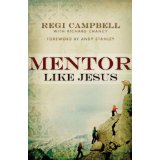
“Mentor Like Jesus” by Regi Campbell (Review)

I ordered my copy of Mentor Like Jesus last week, got it by Thursday and read it by Sunday afternoon.  It was thought provoking and kept me engaged all the way through.  I was blessed by the book and some of the key principles and plan on reading it again slower in order to harvest all that it has to offer.

The author, Regi Campbell writes with a simplistic and straight forward fashion.  In essence the book is his story on how he fell into group mentoring, the lessons he learned along the way, and how similar it really was to how Jesus mentored the disciples.  The book also has a co-author named Richard Chancy who had been through one of Regi’s mentoring groups.  At the end of each chapter Richard shares the perspective of the guys who were being mentored.

Overall I really liked this book.  Some of the principles were common, but others stood out as brilliant insights into the world of mentoring.  Probably the biggest key I took away was that mentoring in group dynamic can be beneficial to those being mentored as well as to the one mentoring.

If you are looking for a good book on mentorship, this book is for you.  I highly recommend it to anyone looking to begin a mentor group.  The retail price is $16.99 (Hardcover), I got my copy for just under $12 at  Amazon.com.  I gave it five stars.

Disclosure of Material Connection: Some of the links in the post above are “affiliate links.” This means if you click on the link and purchase the item, I will receive an affiliate commission. Regardless, I only recommend products or services I use personally and believe will add value to my readers. I am disclosing this in accordance with the Federal Trade Commission’s 16 CFR, Part 255: “Guides Concerning the Use of Endorsements and Testimonials in Advertising.”

“Lead Like Ike,” By Geoff Loftus (Review)

To be honest, when I first saw this book I thought it would be corny.  I really enjoy history and like reading about World War II.  I also enjoy reading about leadership and business.  I was just a little uncertain on how well it would all blend in one book.  I was glad that I got passed my initial reaction and and picked up Lead Like Ike: Ten Business Strategies from the CEO of D-Day, it turned out to be one of the most fascinating books I’ve ever read!

In Lead Like Ike Geoff Loftus does a masterful job at walking the reader through the leadership and  decision making process of then General Eisenhower.  He does so in such a way that reveal ten characteristics of leadership that transcend application to military service.  I really liked the break out points that Loftus makes in the book helping to illustrate how these strategies apply to leadership in the business world.  He is even careful to provide short gut check moments along the way that call the reader to reflection.

I really appreciate the skill and demeanor with which this book was written.  Loftus does a great job in painting a picture of Eisenhower and the times that he lived.  He examines Eisenhower’s shortcomings as well as successes in such a way that help you appreciate the man and the environment in which he made gut wrenching decisions.  Through it all he is able to draw ten practical leadership strategies that were forged in Eisenhower’s life that have practical value to leaders in general.

If you are looking for a great book on leadership, this book is for you.  I highly recommend this book to anyone interested in biography, military history, leadership, business.  The retail price is $24.99 (Hardcover), and is available at a discount at  Amazon.com for $17.99. I gave it five stars.

Disclosure of Material Connection: I received this book free from Thomas Nelson as part of the BookSneeze program. I was not required to write a positive review. The opinions I have expressed are my own. Some of the links in the post above are “affiliate links.” This means if you click on the link and purchase the item, I will receive an affiliate commission. Regardless, I only recommend products or services I use personally and believe will add value to my readers. I am disclosing this in accordance with the Federal Trade Commission’s 16 CFR, Part 255: “Guides Concerning the Use of Endorsements and Testimonials in Advertising.”

Finish Well sometimes requires a team effort (1 Kings 1)

It’s not how you begin the game, it’s how you finish that counts. The L.A. Lakers proved that Tuesday night in game 3 of the finals. After an terrible start, they came back on a scoring rampage in the second quarter. At one point it looked like it was going to be a blow out, but it was still early in the game. The Celtics came back and at times in the 4th quarter it was a 1 point ball game. However the Lakers rallied at the end to hold their lead and win.

I think we get a similar picture of the life of David. David was hated by Saul. Then upon Sauls death he managed to unite an empire. Yet when he was supposed to be at war he was home sleeping with the wife of one of his soldiers. That among otherthings caused family problems and disputes among Davids children that often ended in bloodshed. At one point obe of his own sons marched on Jerusalem to depose him as king. Now at the end of David’s life another one of his sons is seeking to ignore his father’s wishes and make himself king.

By the kindness of God, David has some close friends and allies who will help make sure that his wishes are honored and that he doesn’t blow it in the final chapter of his life. Here is the deal, I wonder if David would have missed it if he weren’t surrounded by such a caring crew of individuals? Even near the end, they weren’t willing to see David lose a grasp on his kingdom. They stuck around long enough to make sure that his final act as king was to hand the mantle of leadership off properly.

You see David really could have blown it at this point. He could have remained ignorant. He could have forgotten to make the appointment of Solomon official. He could have done slot of things wrong, but he didn’t. David’s success in handing of the mantle of leadership rested in the hands of his greatest friends who were available to spur him on in his hour of need.

Application: Its not how you begin, it’s how you finish. David finished well, because he had great friends and allies who wanted to see him do the right thing.

Two Questions:

1. Who are you helping to finish well? Who are you investing in? Who can call on you when they need you?

2. Who will help you to finish well? Who knows you inside and out? Who will keep you accountable?

What did you get from 1 Kings 1.

Switch: How to Change Things When Change is Hard (Review)

Switch: How to Change Things When Change Is Hard (Affiliate link) is an awesome book and a great resource for those who are in the position of motivating others to change.  We  all have things in our life we want to change.  We may want or feel the need to change our physical health, or personal organizational habits.  Maybe the need is greater or the goal is bigger and we are trying to effect change in the health of our community or how we organize our corporation.  Switch takes on those challenges and provides an excellent study on the patterns of change and who to institute them in effective ways.

While this book isn’t a motivator or change agent in and of itself, it does provide a great resource for anyone who is interested in making change happen.  Near the End of the book the authors state,

We can say this much with confidence: When change works, it tends to follow a pattern.  The people who change have a clear direction, ample motivation, and a supportive environment (Switch, 255).

By evaluating these three strategic pieces to change and motivators in each area the authors are able to offer great council on setting things up for change.  This is one of the better books I have read this year and one of the best I have read on the subject of motivating people.  My personal copy is dog eared with a couple of dozen notes written in the margin.  It has proven to be of great value to me, I hope it is a good value for you as well.

If you are interested in purchasing a copy of If you are interested in purchasing a copy of Switch: How to Change Things When Change Is Hard (affiliate link) the retail price is $26.00 (hardcover), and is worth every penny. I purchased my copy at Amazon.com for $14.95 (affiliate links). I gave it five stars.