Model Prayer: Prayer Begins With a Relationship

When Jesus teaches us how to pray, the first thing off of his lips in the model prayer is the word “Father.” When we pray, we get to call God, “Father”. The word for father here is “pater” which is a special term. It’s one of the first names a baby will learn to say with meaning. Many language groups tilt the things in the dads favor and we have words like “papa,” “da-da,” and in the Hebrew “ab” or “abba.” So in these languages the word is reduced to even the first syllables a child can pronounce.

We know from the very beginning that prayer is simple. We begin by calling on God like an infant learns to call on her daddy. She can’t say much, but she is thrilled to say it and her father is thrilled to hear it.

It’s popular these days to talk about “all of God’s Children,” assuming that we all belong to Him. But the bible is abundantly clear that you don’t become a child of God by just being born into the human race. You have to be born again! You have to be adopted. You have to be brought in. This is a personal title! Only those who belong to God have the right to call him father. It’s not a right afforded to those who do not know him. I know this sounds harsh, but It’s not my idea. Jesus makes the distinction. Check out what he says to the Pharisees in John 8:

John 8:42-44 ESV Jesus said to them, “If God were your Father, you would love me, for I came from God and I am here. I came not of my own accord, but he sent me. (43) Why do you not understand what I say? It is because you cannot bear to hear my word. (44) You are of your father the devil, and your will is to do your father’s desires. He was a murderer from the beginning, and has nothing to do with the truth, because there is no truth in him. When he lies, he speaks out of his own character, for he is a liar and the father of lies.

By the way, this was a message delivered to the religious insiders. The Pharisees in this passage were far from God! They were putting on a mask, a façade. They had all the forms of godliness in their language, but they didn’t know God. Their deeds, their giving, even their prayers were for show. They didn’t love God, they loved themselves. They had taken worship that was meant to be given to God and made it a commodity to curry favor or prestige with others. Even while they were calling out to God with pomp and energy, their prayers did not reach Heaven, because they were not aimed at Heaven. Jesus repeatedly warns his audience that there will be many religious insiders on the outside of the kingdom and many outsiders will come in.

The problem is that we are too often like these Pharisees. We take good things and pervert them. We turn giving from an act of worship to a form of control. We turn the leadership aspects of church into a pride issue. We take a few verses about wives submitting to your husbands and use that to get our own way. We have all believed lies, even the most religious among us. We have all embraced a different father. The Apostle Paul in Ephesians 2 says that we were all by nature “sons of disobedience” and “Children of wrath.”

So who can call God father? Only those who come to him in childlike faith, get to call God, father. The apostle John tells us in the gospel of John:

John 1:12-14 ESV But to all who did receive him, who believed in his name, he gave the right to become children of God, (13) who were born, not of blood nor of the will of the flesh nor of the will of man, but of God. (14) And the Word became flesh and dwelt among us, and we have seen his glory, glory as of the only Son from the Father, full of grace and truth.

From this we learn that Jesus was God’s son in a special way (ie he is the very essence and being of God) and those who belong to him by faith are adopted sons and daughters. The Apostle Paul states:

Galatians 4:4-6 ESV But when the fullness of time had come, God sent forth his Son, born of woman, born under the law, (5) to redeem those who were under the law, so that we might receive adoption as sons. (6) And because you are sons, God has sent the Spirit of his Son into our hearts, crying, “Abba! Father!”

The first real question we have to ask ourselves when we go to God in prayer concerns our relationship to God. Have we embraced the gospel? Have we responded by faith to the work of Christ in our lives? Do we approach him simply as a child approaches her father?

Let your kids choose not to go to church today and they’ll choose not to go when they are adults

My dad was a pastor, so I got an inside perspective on church growing up. I did everything from help fold the bulletins to taking up the offering. Occasionally through my preteen and teen years there were those moments where for whatever reason… I did not want to go to church.

Now here is where it gets a little touchy because I had friends whose parents gave them the choice about attending church. (ironically they still HAD to do a lot of things like wear a shirt to the dinner table, do their homework, their chores, and visit with great-grandma).  I thought for sure that the only reason I HAD to attend church was because my dad “worked” there. I mean there must be a reason that my friends parents were lax on the whole church deal but strict on stuff like Algebra.

Then my dad got fired… ahem, I mean resigned from the church he was serving. I thought for sure we’d take a Sunday off or something, but the very next week we were in church (a different church, but a church none-the-less). I tried to get out of going (in hind sight I can’t imagine how difficult this must have been for my dad) but he insisted and we went. I learned in a very real way that church attendance was important, not because my dad was a pastor, but because that is where we gathered with the people of God for the worship of God.

Then there came that first Sunday I was away at college. I had the opportunity for the first time in my life to ditch church, but at 18 years old I got out of bed early, got ready and walked into a church in time for Sunday School and I’ve only missed a handful of Sundays since. You see when my dad made me go to church when I didn’t want to, I learned something… Church is important. It was more important than hunting, fishing, sports, and especially more important than sleeping in.

My friends also learned something from their parents about church… Church wasn’t important. Much to the agony of their parents many of my friends, whose parents let them stay home, have continued to stay home from church. They went to college and didn’t attend church. Now they’re having kids and some are coming back but others aren’t.

I’m sure my friends’ parents meant well. They were probably afraid that they would burn their kids out on church. Maybe the pastor made that awful “I had a drug problem… my parents drug me to church” joke one too many times. Or maybe it’s because deciding to follow Jesus is a ‘personal decision’ we don’t want to “pressure” our kids, that we as parents can make the mistake of backing away from training our kids in spiritually right and helpful behaviors. We wouldn’t think twice about making our kids do their homework or clean their room. But somehow we let church attendance be the one place where we let them decide for themselves? Does this not actually send the unintended message… church is not important and you can blow it off for sleep?

I get it…. We faced a similar issue when we started family prayer time and my kids didn’t want to pray. Should I tell my kid they “have to” pray? I don’t want them to hate prayer… But then I realized that I’m responsible for training my kids and they will follow my example no matter what I do. So it’s probably better to err on the side of “repeat the Lords Prayer with me then” than it is to say, “you don’t have to pray.” At the very least they will know that prayer is important to their father. God has blessed our family prayer time. He’s used the Lord’s Prayer in numerous ways to instruct my children and bring both of them to conviction and repentance. I look back and wonder the shape their hearts would be in if we had not hunkered down and said, “This is too important to skip.”

Amazon.com – Read eBooks using the FREE Kindle Reading App on Most Devices

Shop Amazon Gift Cards. Any Occasion. No Expiration.

Be Sure to also check out:

Philippians 1:7-11 (Devotional Thought)

It is right for me to feel this way about you all, because I hold you in my heart, for you are all partakers with me of grace, both in my imprisonment and in the defense and confirmation of the gospel. For God is my witness, how I yearn for you all with the affection of Christ Jesus. And it is my prayer that your love may abound more and more, with knowledge and all discernment, so that you may approve what is excellent, and so be pure and blameless for the day of Christ, filled with the fruit of righteousness that comes through Jesus Christ, to the glory and praise of God. (Philippians 1:7-11 ESV)

Wow. It really sounds like the Apostle Paul is getting a little mushy here! He can’t help but be filled with warm feelings for this church who has stood beside him through some tough things. They continue to love and encourage him even though he’s been put in prison, beaten, and ridiculed for the sake of the gospel. They aren’t ashamed to be identified with him.

But it’s not just Paul’s affection that is flowing in this passage. Paul is saying that he loves them like Jesus loves them! In other words, he can’t help but be crazy about this church because Jesus is crazy about this church! Sometimes as a believer it helps to be reminded that God loves us with a “never stopping, never giving up, always and forever kind of love.” Because Paul loves this church like Jesus loves the church, he prays for them.

How do you pray for the people you love? Do you love the church like Jesus loves his church?

Sometimes we pray for the people we love in a kind of selfish way. “Thank you for my mom and dad.” or “help my dad want to give me that big present I want for Christmas.” Or when someone is sick we pray, “help mom to get to feeling better.” I suppose that those kind of prayers are good to an extent because we are told to “cast all our cares upon Him” (1 Peter 5:7). But these selfish prayers are different than how Paul prays for the church at Philippi.

Paul prays for the church to grow more in love. Sometimes we can think of love as an emotion, but love is more than an emotion. Love requires knowledge and action. I can say that I love my wife but then I have to know her and act accordingly. If I know that she doesn’t like to do the dishes then an act of love might be for me to do something like do the dishes. With knowledge comes the ability to act in a way that demonstrates my love. This is what Paul prays for the church at Philippi, not that they would be filled with an emotion, but that they would know God! Then their knowledge of God would drive their actions and emotions. That they would look more like Jesus because of how closely they walk with him. That’s how Paul prays for the people he loves. That’s a gospel payer.

Take time to pray for the people you love today. Pray for them according to the gospel that they would grow in their knowledge of God.

Did you enjoy this post? Did you consider it helpful? Subscribe by e-mail on the top right of this page and get fresh articles like this one and more sent straight to your e-mail inbox. Don’t for get to share on Facebook or Twitter.

Family Devotional: It’s More About Rhythm than Time.

I’m so thankful for my parents and their commitment to the Lord. So much of what I have to share here is because of their testimony in my life. I had great models of family devotional time to build on and improve. I realize that not everyone grew up in a Christian home or Christ may have not been emphasized at home the same way he was at my house and so I want to give you a glimpse at what we do so you can have a model to build on and improve with your family. You may have some other great helps, practical suggestions, resources and/ or ideas, if so, please share with us in the comment section below.

It’s more about rhythm than time.

Leading your family is more about finding a natural rhythm in your schedule than setting up a specific time or meeting for a specific time. For our family the rhythm looks something like this on a weekday.

6AM – I have my own study time. Through the years I’ve done various things but I keep coming back to The MacArthur Daily Bible: Read through the Bible in one year.

6:20ish – I’ll have breakfast with my 8-year-old and I will do a devotional together before school. Right now we’re working on a devotional that I wrote for our students but mostly we use Long Story Short: Ten-Minute Devotions to Draw Your Family to God. I’ll read from the book and she reads the scripture portion each day.

Around 7:30ish – I’ll have coffee and read a story from The Jesus Storybook Bible to my 4-year-old before he heads off to 4k.
Evenings when I’m home before bedtime (Roughly 3 nights a week) we’ll have a prayer time around 7:30ish (our goal is to get them in bed by 8PM). Right now we’re praying for a particular UUPG and we made a cube that has pictures and writing based on Romans 10:13-14. One of the kids will roll the cube and it will help guide us in how to pray for our UUPG that night. We pray from youngest to oldest (with dad always going last). We pray simple, but heartfelt prayers. After everyone has prayed we say the Lord’s prayer together and then we play a game with the ten commandments where a family member will name a commandment and call on someone else to say the next commandment, etc. then we’ll go over a series of verses that the kids have memorized (the Roman’s Road, Proverbs 3:5-6, Matthew 6:33, etc.). The whole things lasts about 15-20 minutes from start to finish.

The real value is that each of these moments provide a great reference point for further conversation. I can’t tell you how many times we’ve talked about forgiveness based on the Lord’s prayer or sin based on the 10 commandments. There are also times were we have great gospel centered conversations based on a story we’ve read or a devotional. Then there are times where I will share about what I’ve read in my own time in the word and how it applies to something that one of the kids mentioned.

If you are looking to lead your family and aren’t doing any yet don’t try and start everything at once. Pick one habit that you think will fit or work in your routine and make it work for you. For example you may have to clock in at 5AM and so their is no way you could possibly read with your kids before school. Maybe you could record a video (using your ipad or phone) and have it ready for them to watch while they are at breakfast. Or maybe you have to be out of state/ country for your job. Challenge your children to memorize a scripture passage with you (Like the 10 commandments or the Lord’s Prayer) and make it part of the phone call when you are able to call home.

What are some other great ways to engage your kids with the scripture on a regular basis?

10 Reasons Why I Taught My Children to Pray Lord’s Prayer

At the writing of this post my kids are 4 and 8. Both have learned the Lord’s prayer and have been quoting it each night from memory for quite some time now. The Lord’s Prayer, or as it is also called, the Model Prayer can be found in Matthew 6:9-13 where Jesus teaches his follower how  to pray. Here are 10 reasons why I found it important for my kids memorize this (each one memorized it around age 3 before they could read).

10. So when some genius says, “the sinner’s prayer isn’t in even in the scripture” they can just start quoting scripture… “Thy Kingdom come… Forgive us our sins” (Maybe I’ll teach them Psalm 51 as well).

9. I don’t think they will come up with anything cooler on their own since this is the way that Jesus taught the disciples how to pray.

8. To improve and expand upon their capacity to memorize information.

7. To help hide scripture in their heart that is obviously both immediately relevant and applicable.

6. To provide a reference point for teachable moments… “It’s like we say in the Lord’s prayer…”

5. To give them confidence in prayer.

4.So they learn forgiveness through remembering what it is like to be forgiven.

3. So the will learn to be Kingdom focused rather than self-centered in their prayers

2. The Lord’s Prayer is a map straight to the heart and character of God.

1. So That They might Know God. (both at times have prayed on their own small childlike prayers of faith for the forgiveness of their sins and to follow God based on the Lord’s prayer).

Acts 2: Babel has Come Undone in Jerusalem

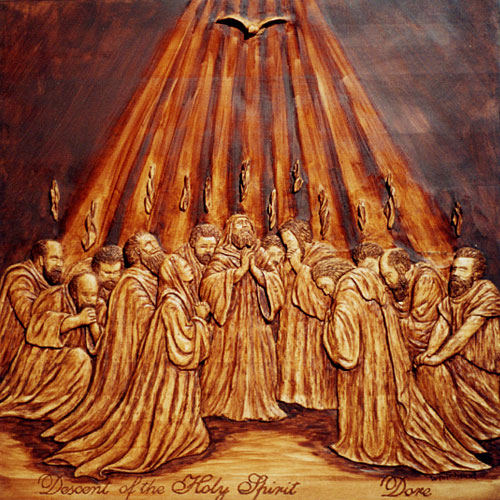
Descent of the Holy Spirit DoreSo here we are in Acts 2. The Apostles have stayed in Jerusalem at the Lord’s request (Acts 1:4). Jerusalem is the launching point for the gospel to go to the whole world (Acts 1:8).  They have been with the risen Christ for forty days before he ascended into heaven (Acts 1:3) and now they have waited another ten days for the Holy Spirit to come (Pentecost occurs 50 days after the Passover… Jesus was crucified at the time of the Passover). I’ve written before about Pentecost, you can read a brief PDF here.

As we anticipated yesterday something amazing happens because the disciples were obedient to the Lord’s command. The Holy Spirit comes, they preach, and three thousand souls are added to the church that day (2:41)… They are indeed fishing for men (Luke 5:1-11).

What is truly amazing is that through the power of the Holy Spirit each person is hearing the gospel in their own language. It’s the tower of Babel in reverse (Genesis 11:1-9). At the tower of Babel God had confused the language of the people because of their sin and rebellion. But now Jesus has made the ultimate sacrifice for sin. He is calling lost sinners to come home. He speaks to them through their own native language here in Jerusalem and ultimately the gospel will reach to the very ends of the earth (Revelation 5:9). What was done at Babel was coming undone.

What’s compelling here is that these men, the Apostles have come to Jerusalem. It’s not their home. This point is driven almost to the point of absurdity when men of the crowd recognize them as Galileans (2:7). This was a big deal the day because Galilee was a somewhat recently resettled state of Israel. They would have had the reputation of back wood hicks (John 1:46) and probably looked and talked differently than the folks in Jerusalem (Luke 22:59).

At this point you’re probably saying, I get that they were from Galilee… What’s the big deal? Exactly! You’re supposed to ask that! You are supposed to see that the disciples didn’t go to their home first (in all fairness they had already been there through the years of ministry with Jesus)! They went to the city and they went to the city on the day that everyone from all over the world would be there. The gospel went to the nations by way of Jerusalem because the nations were in Jerusalem that day (2:-11)!

I think the bigger point here is to obey God (even in the small things) after all it’s His plan. Yet how often do we put our confidence in the flesh thinking WE have a snazzy plan… of course our snazzy plan usually discounts the Spirit of God and chalks things like a language barrier as impossible to over come or at least a long way off. Can you imagine if the disciples had packed it in and tried to gain a stronger foothold in Galilee?

How to Raise a Daughter: 15 Small Steps for Dad’s that Make Difference in the Lives of Their Daughters

 Unless the LORD builds the house, those who build it labor in vain. Unless the LORD watches over the city, the watchman stays awake in vain.  (2)  It is in vain that you rise up early and go late to rest, eating the bread of anxious toil; for he gives to his beloved sleep.  (3)  Behold, children are a heritage from the LORD, the fruit of the womb a reward.  (4)  Like arrows in the hand of a warrior are the children of one’s youth.  (5)  Blessed is the man who fills his quiver with them! He shall not be put to shame when he speaks with his enemies in the gate. – Psalm 127


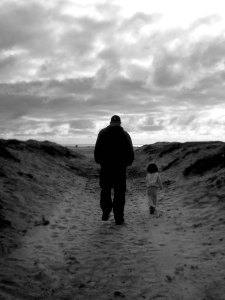
Children are like arrows, they have to be aimed and let go. Below are a few practices that I have set out to keep up with my daughter that take very little time, but will shape her whole life and prepare her for the future.  I’m not an expert by any stretch of the imagination, but I am intentional.  I hope this list provokes your thoughts on the simple things we do as parents and how they can make a world of difference for your children.

1. Tell her you love her every day of your life (say it multiple times and in multiple ways each day)

2. Teach her that character, not make-up brings out her true beauty.

3. Tell her everything special that you like about her mom on a regular basis (especially in regards to her character)

4. Teach her to give her best effort on every project

5. Tell her you are proud of her (and highlight the things you are proud of, especially when you know she gave her best effort).

6. Give her a hug everyday (even in the teenage years when things get a little awkward and you realize that she’s closer to being a woman than a little girl).

7. Tell her that she is beautiful (just like her mom… give her a womanly role model worthy of emulation and affirm her mother in front of her often).

8. Teach her to be thankful for everything (Thank God for simple pleasures like apples and other fruit that God gave us for our pleasure).

9. Give her responsibility and hold her accountable (nothing says love like trust, expectation, and a little help along the way).

10. Hit Pause on the Disney shows and talk about real life issues (though “family friendly,” most kids shows are centered on someone telling a lie, a weak or non-existent father character, and kids running the show… you are your daughters filter, but you won’t always be… help her discern truth for error even in her entertainment options).

11. Pray for her everyday of your life.

12. Pray with her every day. (and let her hear you pray for her)

13. Teach her to pray.

14. Read the Bible together every day. (Starting with a reliable Story Bible and working into a good translation. Start reading to her and then work into her reading to you, especially if she is younger.)

15. Memorize scripture and Spiritual questions and answers together often (at lease weekly).


He Departed and Went into a Desolate Place (Lk. 4:42)

In the middle of all the excitement, He was finding a place to be still. While people were desperately searching for Him, asking, begging Him to lay his ministering hands on the injured and bring healing, He was looking for a place to be alone with the Father.  It was that important.

The day before had been busy.  Maybe He should have slept in, but instead He is out in a desolate place seeking an opportunity to speak the Father.  People were looking for Him.  Didn’t He know that they were lining up at the door?  His ministry was taking off!  He could be doing ministry at that moment, but instead we find Him with the Father.

It’s just then that I’m reminded.  Ministry isn’t His objective.  It’s not the end.  It’s the means to the end.  Worship is the end.  Bringing people to worship is the end.  And you can’t bring people to a place where you haven’t been.  You can’t lead people to do something in public that you haven’t at least done in private.

He wasn’t on His own in the mission.  He had constant contact with the Father.  He got up and spent time in prayer.  He could have stayed, but He left, the mission required it (Lk. 4:43). He had every reason to stay and be “successful” where He was, but that wasn’t the mission.  He had spoken to the Father and obedience to the Father is more important than a seemingly “successful” ministry now.

Healing, calling people to repentance, declaring the work of the Lord were all secondary to worship!  Real and authentic worship!  Worship not by song or way of lip service, but worship wrought out by obedience! Obedience wrought out by a time of solitude in prayer.

Father,

Today I hear you calling.  You call just like every day.  You say, “Come now and drink deeply from the fountain… come now and drink!”  You say, “Jonathan, you drink now from the fountain… before you call others to drink and immerse themselves in Me, you be immersed!  Don’t preach with a parched mouth!  Don’t attempt to do ministry for Me without seeing Me first.”

I admit O’ God that I am tempted some days to run into the day without seeking You first.  Thank You Father for drawing me close to You.  I almost mistook the ministry for You and that is a dangerous place to be (Mt. 7:21-23).  You have my obedience today and I pray you have it for the rest of the life You have given me.  I am yours.

What Is My Body Language Saying When I Pray?

So this thought has been on my mind for a while now.  When I got my undergraduate degree I minored in communication.  One of the first things they teach you in communication class is that verbal communication (speaking) is only a small portion of communication.  Non-verbal communication also plays a key role in how people understand your message. You and I get this.  If I never make eye-contact with you while talking to you in a private conversation, you will think somethings up.  If you say yes and shake your head no, I’ll be confused.  If you frown at me and tell me that I did an outstanding job, I might think you’re mad about it.  We get non-verbal communication.

We judge people on how they present themselves. We evaluate the kind of handshakes we receive when meeting a client or sales person for the first time.  We imagine that students who wear nice cloths are more respectful to the teacher than those who show up to class with their hair disheveled wearing a t-shirt.

Our body language says a lot.  So why is it that when it comes to communication with God, we would want to leave that out?  I know God knows our heart and doesn’t need us to get on our knees to signal that we are ready to talk with and listen to Him.  Forget for a moment how the message is received.  I’m confident that God knows our own hearts better than we do.  I’m more concerned about what we are actually saying when we don’t assume a posture that expresses what our heart is saying. Can you really call out to God face down on your pillow a few minutes before you drift to sleep?  Why not kneel or lay on your face on the cold hard ground.  One of the things I noticed reading through the Bible is the physical response of people to God.  It’s not as though God doesn’t understand the heart, but I’m not sure our heart is really saying what we want it to if we can’t make our bodies say it as well.

I’m sure these aren’t new thoughts.  I’m learning more and more about a false dichotomy that exists in me and many others between the mind and body.  I’m thankful for what I have learned about Bonhoeffer and others when it comes to “making our bodies say what our heart is saying.”

How about you? What are your thoughts on the body language of prayer?
Try Audible and Get Two Free Audiobooks

A Great Introduction to Fasting

Last night I was greatly blessed to read the book Fasting: The Ancient Practices (Ancient Practices Series) by Scot McKnight.  McKnight does a fantastic job of leading the reader to understand the Biblical discipline of fasting (a discipline that has largely been ignored or forgotten in many modern evangelical circles).  The book is well organized, well thought out and includes a few chapters of practical nature to help those who are interested in picking up the discipline of fasting for the first time.

Admittedly McKnight is an academic. However his writing style is clear, concise and reader friendly.  I really enjoyed the book because the author covers the topic well.  He draws a clear and simple definition around Biblical fasting and then proceeds to share his research on how various traditions have esteemed fasting.

McKnight makes a strong case that fasting is a response to a sacred moment.  Tragically today many picture fasting as a currency get what you want.  While God’s blessings may come after fasting, His blessings are always gifts of His grace.  In essence we are to fast in response to sacred moment (like realizing injustice, personal sin,  national sin, sickness of a loved one, death of a loved one, etc).  Fasting is primarily responsive, not causal.

I wish this book had been around when I first began to experiment with fasting in my late teens and early twenties.  Another great resource on fasting is John Piper’s book A Hunger for God: Desiring God through Fasting and Prayer.

I  highly recommend Fasting: The Ancient Practices (Ancient Practices Series) to anyone interested in learning about fasting.  The retail price is $12.99 (paperback), and is available around the web in places like Amazon.com for $11.04.  I gave it four stars.


Disclosure of Material Connection: I received this book free from Thomas Nelson as part of the BookSneeze program. I was not required to write a positive review. The opinions I have expressed are my own. Some of the links in the post above are “affiliate links.” This means if you click on the link and purchase the item, I will receive an affiliate commission. Regardless, I only recommend products or services I use personally and believe will add value to my readers. I am disclosing this in accordance with the Federal Trade Commission’s 16 CFR, Part 255: “Guides Concerning the Use of Endorsements and Testimonials in Advertising.”