My Food is to do the will of Him who Sent Me (John 4:34)

The disciples see themselves as providers for Jesus, they don’t get that ultimately He is the one who is going to provide for them.  They imagine that someone else has brought a party tray by and fed the master.  Perhaps they become indignant. It was their job to go into town and buy lunch.

Jesus lets them wrestle with the issue long enough and then fills them in on what he really means when he says, “I have food that you don’t know about.”  They need to know that they ultimately do not provide for Jesus, but that Jesus provides for the whole world.  They need to see what really drives their master, beyond human appetite.  Beyond the desire to have a full stomach, Jesus desires to obey they father.  This is worship.

Jesus said to them, “My food is to do the will of him who sent me and to accomplish his work. (John 4:34, ESV)

He challenges his disciples to see past hungry stomachs and see hungry souls, to look beyond the physical reality of a hungry tummy to see that true worship is a heart rightly submitted to God.  What fuels Jesus?  The disciples must learn here that food is for the body, but worship is for the soul.  Jesus is seeing past the physical into the spiritual.  If the disciples are ever to be like him they must come to a place where they desire God’s will to be done more than they desire their daily bread.  Indeed later Jesus will teach them to pray to the father and before daily bread comes the request that God’s will would be done.

Now like the Samaritan woman before them, he presses his disciples to see all the people coming out of the city.  See them with spiritual eyes.  They walked into the city to get food, never once did it cross their minds to see the great spiritual need, but now they see it as the whole city comes out to the well.

Do you not say, ‘There are yet four months, then comes the harvest’? Look, I tell you, lift up your eyes, and see that the fields are white for harvest. Already the one who reaps is receiving wages and gathering fruit for eternal life, so that sower and reaper may rejoice together. For here the saying holds true, ‘One sows and another reaps.’ I sent you to reap that for which you did not labor. Others have labored, and you have entered into their labor.” Many Samaritans from that town believed in him because of the woman’s testimony, “He told me all that I ever did.” So when the Samaritans came to him, they asked him to stay with them, and he stayed there two days. And many more believed because of his word. They said to the woman, “It is no longer because of what you said that we believe, for we have heard for ourselves, and we know that this is indeed the Savior of the world.” (John 4:35-42, ESV)

It was a common saying in the day of Jesus to say, “there are four months till harvest.” It was a way of saying, “relax,” don’t worry, don’t be in such a hurry, there isn’t anything you can do right now.  Our modern saying is something like this, “Good things come to those who wait.”  Here Jesus is saying the opposite.  He is saying, “look!  You didn’t plant anything and now there is a harvest field.”  You didn’t tell anybody in the city about me and now the whole city is coming out to meet me.

Application: You will never be able to serve God fully until you realize what Christ has done for you.  Only in the power of Christ can we see the world around us the way that He sees it.

Father,

Thank you for the cross and all that Jesus did to purchase me from my sin.  I ask that you will give me eyes today to see people the way that you see them.

Morning: Psalm 104

Mid-Day: Psalm 52

Night: Psalm 4

As Moses Lifted Up the Serpent (John 3:14)

A little background: In Numbers 21:1-9 the people of Israel sinned against God by grumbling about their deliverance. God sent serpents upon the people and many people were bitten and died.  The people cried out to God in repentance and God told Moses to create a bronze serpent and put it in the middle of camp.  Everyone who looked upon the serpent would be healed of their bite.

In Jesus’ conversation with Nicodemus he tells Nicodemus that just as Moses lifted up the serpent in the wilderness, so must he be lifted up.  In other words.  We all have a sin problem and only those who look to Jesus will be healed.

In the midst of this passage Jesus reminds Nicodemus the he hasn’t come to condemn the world, but to save it.  Just like those who looked at the snake were healed of their bite, so to, those who look to Jesus in faith will be delivered from the consaquences of their sin.

Jesus is the True and better Moses.  Where Moses obeyed God and constructed a serpent for the healing of his people, even more Jesus offered his own body and took in the flesh the penalty that was due you and I so that we might free from the debt of sin and have life in Him.

Application:  You will never be able to deal with the sin in your life until you look to the one who bore your sin on the cross.

Father,

Thank you for the atoning work of Christ on the cross for my sin.  Thank you that he paid the price for my sins so that I can look to him by faith and be delivered from your wrath.  Thank you for my salvation and the great price that was paid.  I am walking in your freedom today.

Morning: Psalm 103

Mid-Day: Psalm 51

Evening: Psalm 3

What Sign Do You Show Us for Doing These Things? (John 2:18)

Read all of John 2 to grasp the context.

Do you get it?  Do you see the logic?  The reason behind the question?  Jesus flips tables.  He takes a whip and clears the Temple.  The people around start asking for a sign.

They get it.  They realize that here is a man who has no position or title to give him authority in the Temple, yet he is acting out like he has authority in that sphere.  He is acting like a prophet.  They know their history.

Moses performed miracles when he approached Pharoah. Elijah called fire down from heaven.  They want to know if Jesus is a prophet, possibly even the messiah.  If he is, they reason, he should show them a sign.

Jesus doesn’t play any parlor tricks here.  He has already changed water into wine back at Canna of Galilee.  He could easily do something here, but instead he points to the temple they are in and says, destroy this temple and in 3 days I’ll build it back.  They thought he was talking about a building.  He was talking about his body.

They had perverted worship by bringing money making schemes into the Temple.  Their offerings were an offense to God, but they would offend God further by putting Christ to death.  But that would not be the end of it.  The ultimate sign that He would give is that he would rise from the dead.  Worship would no longer center around an earthly temple made by human hands, but would center of Jesus Christ.  (There is a great depth and richness to this passage, but not enough time to go through it all here).

Also note 2 things. 1. The disciples immediately recall Psalm 69:9 in reference to Jesus’ actions here (John 2:17). 2. When Jesus is raised from the dead the disciples remember this event and it causes them to believe the scripture (John 2:22).  Remember the New Testament hadn’t been written yet.  The scripture that the disciples  believe is the Old Testament in reference to Jesus as the Messiah.

Application: Jesus is the True and Better temple that was destroyed and ressurected so that we might also be raised from the dead and enjoy eternal life with God. Thank God today for all Christ has done for you and live in free worship of Him by how you live.

Father,

I thank you for the work of Christ on the cross and his ressurection for my benefit that I might enjoy the pleasure of knowing you.  I rejoice that your word is singularly focused on the message of the gospel.  I ask for grace to walk worthy of Christ in thefreedom that you have given me.

Morning: Psalm 69

Mid-Day: Psalm 3

Evening: Psalm 102

Jesus is the True Jacob’s Ladder (John 1:51)

Jesus saw Nathanael coming toward him and said of him, “Behold, an Israelite indeed, in whom there is no deceit!” Nathanael said to him, “How do you know me?” Jesus answered him, “Before Philip called you, when you were under the fig tree, I saw you.” Nathanael answered him, “Rabbi, you are the Son of God! You are the King of Israel!” Jesus answered him, “Because I said to you, ‘I saw you under the fig tree,’ do you believe? You will see greater things than these.” And he said to him, “Truly, truly, I say to you, you will see heaven opened, and the angels of God ascending and descending on the Son of Man.” (John 1:47-51)

Here it is again.  Do you see it?  The story of Babel (Genesis 11) and the story of Bethel, where Jacob saw a ladder coming from Heaven (Genesis 28)  and we are still in the first chapter of John.  Babel reveals our inability to reach God.  Bethel reveals that God is reaching down to us.  Jesus promises here that He is the ladder.  He is the one that bridges the gap between God and Men.  No one sees God apart from the way that God has made.  Do you see it.

Application: You will never reach God. You will never please God. You will never even see God apart from going through Jesus Christ. Jesus has come to rescue us and restore us to a right relationship with God.  The message of Heaven is simply this… Emmanuel God with us!

Father,

Today I am provoked to praise.  Glory to Jesus Christ for what He has done so that I might know you.  He is indeed the Way, the Truth, and the Life.  Guard my heart from being tempted to think that I stand or fall before based on anything to do with me.  It’s all about you.

Morning: Psalm 50

Mid-Day: Psalm 101

Evening : Psalm 2

Shop Amazon Gift Cards. Any Occasion. No Expiration.

Try Audible and Get Two Free Audiobooks

“He Has Made Him Known” (John 1:18)

What great news! This indeed is the gospel.  God has not left us without a way to know Him.  We do not have to blindly search our world for evidence of God.  We are not left alone in our depraved and fallen nature, cursed to wander through life aimlessly.  God has come to our rescue.  He has made Himself known.

What a marvelous plan.  God has not demanded that we be able to ascend to heaven.  We could never reach up to God by our merit or deeds… God has reached down to us.  You see this was the mistake at Babel (Genesis 11).  Man by his own devices was trying to reach unto the heavens.  He was trying to regain admission to the kingdom of God through force.

You see, that is why Jacob’s ladder was so important (Genesis 28).  It was a symbol, a promise that though man could not reach God, God could still reach down to men.  He spoke to Jacob there and made a promise.  A promise that was also made to his father, Abraham.  A promise that included the message that through Jacob’s offspring all the families of the earth would be blessed.

This is the picture.  Man can not reach up to God, but God will reach down to man.  The rift, the separation of people that was caused at the tower of Babel would not ultimately last.  There is still hope for all the families of the earth.  There is one who stands in the line of Jacob who has come to bring us to God.  There is one who has come to gather together people from every tongue, tribe and nation (Revelation 5:9).  There is one who has made God known to us.  His name is Jesus.

Father,

Our only hope is in Jesus Christ.  He is indeed the way the Truth and the Life.  I ask today that I would walk in Him.  Thank you for working in my life.  Thank you for saving me.  Changing me. Cleansing me.  Making me a new person in Jesus Christ.  I want the world to know you .  Give me grace to share your gospel with others today.

Morning: Psalm 100

Mid-Day: Philippians 4:4-8

Night: Psalm 1

Seeing Sychar: Seeing Spiritual Realities in a Physical World (Part 4)

Meanwhile the disciples were urging him, saying, “Rabbi, eat.” But he said to them, “I have food to eat that you do not know about.” (John 4:31-32, ESV)

Now the disciples are getting to know Jesus.  They were around when he cleaned out the temple, they may have been around to overhear Jesus talking with Nicodemus, they know that sometimes Jesus speaks a little funny.  They also know that they just saw him talking to a Samaritan woman which was a very socially unacceptable situation.  They also know he is hungry and tired.

Right now they see that he needs something to eat.  They knew how hungry they were when they went into town, they know how tired he was when they left him by the well, so they imagine that his number one priority right now is to get something to eat.  Jesus, you’re hungry, eat.

They don’t see a man on a mission to save the world, all they see is a hungry and tired teacher.  They miss the reality of who Jesus is.  They won’t get it until later, much later.

So then they start to look around and see if someone has taken their spot of getting Jesus lunch?

So the disciples said to one another, “Has anyone brought him something to eat?”(John 4:33, ESV)

They see themselves as providers for Jesus, they don’t get that ultimately He is the one who is going to provide for them.  They imagine that someone else has brought a party tray by and fed the master.  Perhaps they become indignant. It was their job to go into town and buy lunch.  Great, now they have too much lunch.

Jesus lets them wrestle with the issue long enough and then fills them in on what he really means when he says, “I have food that you don’t know about.”  They need to know that they ultimately do not provide for Jesus, but that Jesus provides for the whole world.  They need to see what really drives their master, beyond human appetite.  Beyond the desire to have a full stomach, Jesus desires to obey they father.  This is worship.

Jesus said to them, “My food is to do the will of him who sent me and to accomplish his work. (John 4:34, ESV)

He challenges his disciples to see past hungry stomachs and see hungry souls, to look beyond the physical reality of a hungry tummy to see that true worship is a heart rightly submitted to God.  What fuels Jesus?  The disciples must learn here that food is for the body, but worship is for the soul.  Jesus is seeing past the physical into the spiritual.  If the disciples are ever to be like him they must come to a place where they desire God’s will to be done more than they desire their daily bread.  Indeed later Jesus will teach them to pray to the father and before daily bread comes the request that God’s will would be done.

Now like the Samaritan woman before them, he presses his disciples to see all the people coming out of the city.  See them with spiritual eyes.  They walked into the city to get food, never once did it cross their minds to see the great spiritual need, but now they see it as the whole city comes out to the well.

Do you not say, ‘There are yet four months, then comes the harvest’? Look, I tell you, lift up your eyes, and see that the fields are white for harvest. Already the one who reaps is receiving wages and gathering fruit for eternal life, so that sower and reaper may rejoice together. For here the saying holds true, ‘One sows and another reaps.’ I sent you to reap that for which you did not labor. Others have labored, and you have entered into their labor.” Many Samaritans from that town believed in him because of the woman’s testimony, “He told me all that I ever did.” So when the Samaritans came to him, they asked him to stay with them, and he stayed there two days. And many more believed because of his word. They said to the woman, “It is no longer because of what you said that we believe, for we have heard for ourselves, and we know that this is indeed the Savior of the world.” (John 4:35-42, ESV)

It was a common saying in the day of Jesus to say, “there are four months till harvest.” It was a way of saying, “relax,” don’t worry, don’t be in such a hurry, there isn’t anything you can do right now.  Our modern saying is something like this, “Good things come to those who wait.”  Here Jesus is saying the opposite.  He is saying, “look!  You didn’t plant anything and now there is a harvest field.”  You didn’t tell anybody in the city about me and now the whole city is coming out to meet me.

I can’t help but be reminded of one of our Wednesday nights a few months ago.  I was running around trying to get everything set up.  I’m a firm believer that service is more caught than taught and so I set out all the chairs, place connect cards and pens in the seats, open the student center, help count out the cash box, etc.  I also speak.

One of our girls was talking about her life.  Something told me that I needed to sit down with the band who was already engaged in talking with her.  She had several great questions and we listened and prayed with her and then it struck me that God was really dealing with her heart.  Long story short she prayed to receive Jesus as her Lord and Savior.  What was really interesting about the situation thought was that while she was praying, I was thinking, “you have this all backwards.  I haven’t even spoken yet. I’m supposed to preach and then people are supposed to respond.”

The truth of the matter is, it rarely ever works out that way.  Sure people may respond after a sermon, but most often times someone has been there before.  A praying parent or spouse, a concerned youth worker or Life group leader.  I may be the one that someone prays with, but seldom do I sow the first seed.

Seeing Sychar: Seeing Spiritual Realities in a Physical World (Part 3)

The woman said to him, “Sir, give me this water, so that I will not be thirsty or have to come here to draw water.” Jesus said to her, “Go, call your husband, and come here.” The woman answered him, “I have no husband.” Jesus said to her, “You are right in saying, ‘I have no husband’; for you have had five husbands, and the one you now have is not your husband. What you have said is true.” (John 4:15-18, ESV)

She says, almost sarcastically, “give me this water.” And then Jesus does something strange by telling her to go get her husband.  To us it looks like he is changing the conversation or we think she may have turned a corner and is really interested at this point in what Jesus is saying.  But Jesus is doing heart surgery here.  He is helping her to see who He is, by asking her to be honest with herself.

It is not as though divorce in Jesus day was unheard of, or that people didn’t get remarried, they did.  So it was socially acceptable to have been in one or more marriages. However, if the marriage ended in divorce, it was the woman who was generally though to be at fault.  And even if all her husband’s had died, the rule of the day was 3 marriages, beyond that and you were damaged goods. So for a woman to have had 5 husbands and shacked up with another guy there is no hiding the fact that she is a sinner and now this strange Jewish man knows it.

Jesus knows the weight that she carries around on her shoulders and he presses the conversation in a way that must hurt her.  I can imagine that her whole life is spent trying to ignore how many bad decisions that she has made; trying to avoid the stares of the town people.

Some people assert that at this point the pain is unbearable and that she is trying to focus the spot light off of herself and so she brings up a theological question; one to steer the conversation away from her painful personal life.  But that’s not it at all.  Her question actually centers on the proper place for a sinful person to offer sacrifices for their sins. Her question is about worship.

The woman said to him, “Sir, I perceive that you are a prophet. Our fathers worshiped on this mountain, but you say that in Jerusalem is the place where people ought to worship.” Jesus said to her, “Woman, believe me, the hour is coming when neither on this mountain nor in Jerusalem will you worship the Father. You worship what you do not know; we worship what we know, for salvation is from the Jews. But the hour is coming, and is now here, when the true worshipers will worship the Father in spirit and truth, for the Father is seeking such people to worship him. God is spirit, and those who worship him must worship in spirit and truth.” The woman said to him, “I know that Messiah is coming (he who is called Christ). When he comes, he will tell us all things.” Jesus said to her, “I who speak to you am he.” (John 4:19-26, ESV)

This woman’s question is about the right place for worship.  When we say worship, we may think of songs and preaching, but when she said worship she was talking about making restitution for her sins.  In our day the question might look like this, “The Catholic’s say go to a priest and confess my sins, my Baptist friends come forward at an invitation and rededicate their lives.  Which way is right?”

Jesus answer is designed to help her see past the physical reality.  She is looking for a place, she doesn’t know that worship isn’t about the right place, it’s about the heart.  Jesus tells her that the place is about to be made irrelevant.  His sacrifice will be the last sacrifice ever needed.  What is needed is a humble and contrite spirit; an attitude of the heart.  She also needs to know the truth; worship the true God.

She knows that the messiah is coming and she looks forward to that day and there she makes a startling discovery and Jesus makes a bold claim.  I am the messiah.

Jesus declares that he is the messiah just in time for his disciples to come up on the conversation.  The next few verses will reveal their thoughts and we will look at them, but first see how this woman responds to his declaration.  It is as though a veil has been lifted.  All at once she see’s who Jesus is; she sees who she is; she sees what worship is really all about and now she sees her home town of Sychar different than she has ever seen it before.

Just then his disciples came back. They marveled that he was talking with a woman, but no one said, “What do you seek?” or, “Why are you talking with her?” So the woman left her water jar and went away into town and said to the people, “Come, see a man who told me all that I ever did. Can this be the Christ?” They went out of the town and were coming to him.  (John 4:27-30, ESV)

She runs back into town, leaving her water jar (as if to say, “I don’t need it any more, I’m satisfied in Jesus). She runs to all those people who’s stares she has tried to avoid.  She is no longer worried about how they see her, she see’s them for the very first time.  They are thirsty just like she had been.  They need to meet this man.  Who cares what they think of her.  The reality of her situation has just changed.  Before her sign might have read, “looking for love in all the wrong places.” And now it reads “rescued from my sin and shame.”  She is different and she sees the world as different.

Her neighbors take note.  What has caused this shy sinner to now go running throughout town compelling everyone to go out to the well?  Something has changed this woman!

In the meantime Jesus is about to help his disciples see the spiritual reality around them.  They have just come from doing business in town to buy lunches for everyone and where they saw filthy Samaritans, this woman was now seeing people who needed to meet Jesus.


Seeing Sychar: Seeing Spiritual Realities in a Physical World (Part 2)

Now when Jesus learned that the Pharisees had heard that Jesus was making and baptizing more disciples than John (although Jesus himself did not baptize, but only his disciples), he left Judea and departed again for Galilee. And he had to pass through Samaria. So he came to a town of Samaria called Sychar, near the field that Jacob had given to his son Joseph. Jacob’s well was there; so Jesus, wearied as he was from his journey, was sitting beside the well. It was about the sixth hour.  (John 4:1-6, ESV)

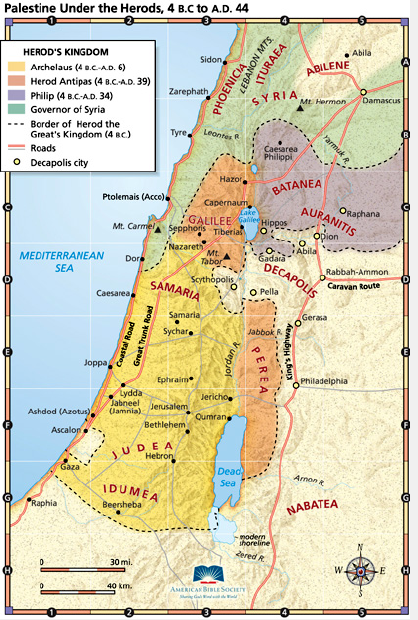
Between Jerusalem and Galilee was a territory known as Samaria.  Samaria was filled with a people who could trace their ancestry back to Jewish peasants who intermarried with the foreign people brought into the area when Israel was away in Babylon.  The Jews hated the Samaritans and the Samaritans hated the Jews.  Most devoutly religious Jews avoided the whole area like the plague.  When they had to travel between Galilee and Samaria they would opt to go a longer route and cross the Jordan river and head  north that way.  The fact that Jesus is traveling through Samaria shows that he is not taking his time getting back to Galilee and perhaps God has some big plans for Samaria.

We learn just a few verses later that Jesus’ disciples go into town to get food, leaving them at the well alone.  As he is sitting their tired from their long and hasty journey a woman comes to draw water from the well.  Now as she approaches the well, let’s look at things through her eyes.  Who does she see when she sees Jesus?

A woman from Samaria came to draw water. Jesus said to her, “Give me a drink.” (For his disciples had gone away into the city to buy food.) The Samaritan woman said to him, “How is it that you, a Jew, ask for a drink from me, a woman of Samaria?” (For Jews have no dealings with Samaritans.) Jesus answered her, “If you knew the gift of God, and who it is that is saying to you, ‘Give me a drink,’ you would have asked him, and he would have given you living water.” The woman said to him, “Sir, you have nothing to draw water with, and the well is deep. Where do you get that living water? Are you greater than our father Jacob? He gave us the well and drank from it himself, as did his sons and his livestock.” Jesus said to her, “Everyone who drinks of this water will be thirsty again, but whoever drinks of the water that I will give him will never be thirsty again. The water that I will give him will become in him a spring of water welling up to eternal life.” (John 4:7-14, ESV)

Does she see Jesus, savior of the world or does she see a Jewish man?  She just sees a Jewish man.  A strange Jewish man, because men don’t talk to women in public and Jews don’t talk to Samaritans, so for a Jewish man to talk to a Samaritan woman, he must be strange.

Jesus isn’t content with her just thinking that he is a strange, thirsty Jewish man, there is a greater reality to who He is and he is going to help her see that.  He tells her that if she just knew who he was that she’d be asking him for water.  But she doesn’t get it.  Who does this strange Jewish man think He is… he doesn’t even have a pitcher to draw water with, how can he give her water?  Is he greater than their ancestor Jacob?  She asks as much assuming that he is just a strange man, never quite grasping that she is having a conversation with the Messiah.

The irony here is that Jesus is greater than Jacob!  The first readers of this gospel, like us would have understood that right away.  It is obvious that this woman doesn’t know who she is talking to.  So what does Jesus do?  He gently states that he is greater because his water satisfies where as Jacob’s well leaves those who drink from it thirsty again and again.

While she can’t see the reality of who Jesus is, He sees the reality of who she is and he knows that she is thirsty for a real relationship with a holy God and so his next move is to help her see herself.  Look at how she responds and what he says.

Seeing Sychar: Seeing Spiritual Realities in a Physical Wolrd (Part 1)

WATCH THE VIDEO FIRST

When I first saw that video I immediately was convicted.  Too often I’m the guy in the first part of the video.  I get frustrated at things like traffic and long lines at the coffee shop.  I don’t ever pause to wonder or think that someone’s mourning the loss of their best friend when they pull in the parking spot ahead of me… I just think that they’re a jerk.  And when I get in the parking space ahead of someone else, I just think that their a loser.  (Just kidding!)

I do wonder what life would be like though if we really saw everything that was going on?  What would it be like if there were an eye-wear service that would let you know more than what meets the eye?  More than just someone’s emotional state, but who they really were?

Often when Jesus spoke with people he was pushing them to see past just what met the eye and see a deeper underlying spiritual issue.  In John chapter two he drives the money changers out of the temple and people ask him by what authority he does this… and he answers, “Destroy this temple and in 3 days I will raise it up.”  They thought he was talking about a building.  They thought worship centered on a place.  Jesus was talking about his body, worship centers on the person and work of Jesus.  They thought worship was making animal sacrifices, Jesus was saying, “I am the sacrifice.” They thought death defined their world.  Later they thought they could kill him and it would be the end.  They didn’t know that Jesus was on mission to beat death, deliver us from hell, and that his death was just the beginning.

Later in John chapter 3 Jesus speaks with a man named Nicodemus. Jesus tell Nic that if he wants to see the kingdom of God that he must be born again.  Nic doesn’t get it.  Nic thinks that it’s impossible for old life to have new life.  Jesus wasn’t talking about the physical, he was talking about the spiritual.  Nic didn’t understand that you don’t enter heaven because of who your parents are, you enter heaven because of who God is.  You don’t enter as a master teacher trying to offer God your services, you enter as a helpless babe completely dependent on God for everything.

Tomorrow as we come John chapter 4 and the story of the woman at the well.  As we read this story, as we examine this truth, I want to ask you to put on your glasses.  Ask God to give us a glimpse of how to see the world as He sees it.  Ask him to help us look past the every day and into the eternal.  Ask him to apply this truth to our lives.  Ask him to help us see people as he sees people

Seeing Sychar: Seeing Spiritual Realities in a Physical World (Intro)

When I was in college I used to drive 16 hours to go home and see my parents.  It was quite a drive.  Along the way I passed by countless towns and cities all with their own off ramps complete with signs touting the local eateries, gas stations, and hotels.  Despite the long drive I rarely ever stopped.  In fact, I tried to shave hours off the trip by stopping only to use the restroom, fill up the truck and grab a bite to eat (Usually all in the same location).

Then one day somewhere in southern Illinois I did the unthinkable.  I pulled off the interstate and went to a town about 8 miles off the beaten.   I don’t know what prompted me, but as I drove through that small town I began to ask God to move in that place.  I asked him to reveal himself to the people.  I asked God to give me a heart for those people.

When I got home, I looked up the town on the internet and got all the statistical information that was available for free.  I wasn’t aware of church planting at the time, If I had been I might of been tempted to go plant a church.  The urge to pray for this small town was so great and so profound.  I ended up praying for the people of that town for about a year.  I asked God many times if I was supposed to go, but sensed his call to stay.

I don’t really know what that whole experience was for, other than this… I was never able to pass that spot on the interstate again with out a burden to pray for the people of that town.  It was one of the first times that I was able to see past my own needs to see the needs of others and pray for a town just south of the interstate in southern Illinois.  The adventure of going off the map in Illinois lead to my beginning to see the Gulf Coast and the people around me as a mission field.  God was teaching me to see people with His heart.

A similar story is told in the New Testament.  Jesus and his disciples are traveling from Jerusalem to Galilee.  Their rout takes them right through Samaria and by a town named Sychar.  Weary from travel the disciples leave Jesus by a well outside of town and go into Sychar to buy lunch.  It is obvious that this place is just supposed to be a stopping off point along the way.  But a conversation with a woman at the well changes everything.  The story ends with Jesus telling the disciples to look at the town and see all the people coming to hear about him.  While they were busy buying lunch.  God was already at work in the lives of the people and many professed belief on Christ that week.

I wonder if while we go through our daily routines and habits if like the disciples we miss what God is doing in the lives of people around us.  I bet the disciples started looking at commerce and buying lunch differently after that day.  I bet they saw Sychar differently after witnessing the town flock to believe in Jesus.  I imagine that the disciples began straining to see things the way Jesus did, looking for the needs of people and the opportunity to proclaim the good news of Jesus.  After all, Jesus promised to make them “fishers of men.”  And part of fishing for men is to see them; really see them and their need for a Savior.

Stay tuned for a series of blog posts entitled-  Seeing Sychar: Seeing Spiritual Realities in a Physical World