Mark 7: keep the main thing the main thing

At the beginning of this chapter, Jesus’ disciples are taken to task by some of the religious leaders for not washing their hands. To be honest, washing your hands is very wise behavior. I was taught to wash my hands before meals as a child and still do on most occasions, even if I have to use hand sanitizer. I wash though to keep germs somewhat at bay and prevent disease. Again… Washing hands is very wise behavior. However, the issue arrises when the religious leaders raised the wise behavior to the level of the law and imposed it on the disciples.

Jesus immediately corrects the situation and calls the leaders on their hardness of heart. They were more concerned with what went in a person than what came out. Jesus declared that the heart was the issue. The disciples could have a right heart and practice some unwise behavior by not washing their hands. However, the religious leaders were in the habit of washing hands, but were far from God in their hearts as they were actually finding ways to dishonor heir parents while still appearing right with God.

The point is that God is most concerned with our actual obedience, not just the appearance of obedience. It’s easy to elevate wise behavior to the level of law and think that we are okay before God because we wash our hands, rinse our vegetables, and put a thermometer in our meat, but the real issue is are we testing God in obedience?

An Open Letter to all My Legalistic Friends

Wandering in the Dessert (Review)

Wanderin’ in the Desert (3rd Disc from What’s in the Bible with Buck Denver) is a fascinating yet educating program.  I watched it with my four year old daughter and we talked about the program.  I was really impressed with the material on two levels.  On one level I was impressed with how much content was packed into the two 30 minute shows.  It is clear that the creators were intent on presenting a conservative view of scripture (for which I am deeply appreciative).  They also took great care to answer relevant questions on kid friendly level. On a second level , I was impressed with how the writers took care to draw the information to a simple point of real application.  Not only was there information about the reliability of scripture, but there was a subtle yet evident plea to trust the God of the Scripture.

My daughter, though she was able to retain a lot of information from the program, was impressed on a different level.  The program was fast paced enough to keep her attention all the way through.  She really enjoyed the songs making me play them over and over for her.  After the program I asked her several questions and she responded pretty well.

Overall I was highly impressed with the 3rd disc as I have been with the whole series to date.  The only draw back was that in between segments it shows a little boy (puppet) talking a little disrespectfully to his mother who is silent and off camera.  I discussed this with my daughter as an example of behavior that I expect her not to emulate. Beyond that the whole production is pretty amazing.  I would highly recommend it to parents and grandparents to watch and review with their children.  I can see it being a great resource for bible lessons!  I give it four stars.

Disclosure of Material Connection: I received a DVD of this program free from Tyndale House Publishers as part of their Tyndale Blog Network. I was not required to write a positive review. The opinions I have expressed are my own. Some of the links in the post above are “affiliate links.” This means if you click on the link and purchase the item, I will receive an affiliate commission. Regardless, I only recommend products or services I use personally and believe will add value to my readers. I am disclosing this in accordance with the Federal Trade Commission’s 16 CFR, Part 255: “Guides Concerning the Use of Endorsements and Testimonials in Advertising.”

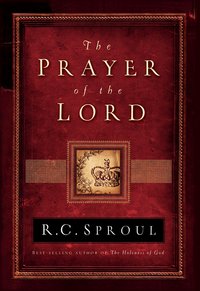
The Prayer of the Lord By R.C. Sproul (Review)

The Prayer of the Lord is perhaps the best books I have ever read on the Model Prayer (sometimes called the Lord’s Prayer)!  I was deeply impressed with how Bible scholar and pastor Dr. R.C. Sproul opened the Scripture and set everything on the bottom shelf.  Dr. Sproul has an engaging and witty style of writing that is both faithful to the text of Scripture and engaging to the reader.  I continue to be amazed at how well he writes.

The Prayer of the Lord is a simple exposition of the Model Prayer.  Dr. Sproul breaks it down taking the reader through the teaching of Jesus on prayer.  Each chapter examines a phrase of the prayer in great detail.  I’ve been a serious student of Scripture for years and I was deeply impressed with how well Sproul wrote about this passage while maintaining a focus to present the truth and application within easy grasp of the reader.  This is a book I would have no problem handing off to a new believer looking to develop his prayer life or a mature believer looking to examine the model prayer.  I really appreciated the appendix that answered several questions for me.

If you are looking for a great book that teaches about the nature of prayer with the scriptures as its source, this book is for you.  I highly recommend this book to anyone interested in developing their prayer life.  The retail price is $15.00 (Hardcover), and is available at a discount at steep discount at  Amazon.com for $10.20. I gave it five stars.

Disclosure of Material Connection: I received this book free from Reformation Trust Publishers as part of their Blog for a Free Book Program. I was not required to write a positive review. The opinions I have expressed are my own. Some of the links in the post above are “affiliate links.” This means if you click on the link and purchase the item, I will receive an affiliate commission. Regardless, I only recommend products or services I use personally and believe will add value to my readers. I am disclosing this in accordance with the Federal Trade Commission’s 16 CFR, Part 255: “Guides Concerning the Use of Endorsements and Testimonials in Advertising.”

Mark 6: An uncommon man in common clothes

Mark 6 begins with the account of Jesus teaching in his home town. The people there recognize him and are amazed at his teaching. They knew that he had no real formal education and chose to reject him. They marveled at his works, but must have assumed that it was some sort of trick. They knew him too well. They knew his family. They knew that Joseph was a carpenter. They thought they had him all figured out, but they didn’t.

They missed the message, they missed the miracles, but most importantly the missed the Messiah because they were focused on familiar. They couldn’t see the forest for the trees. They threw the baby out with the bathwater. They were indignant because they thought they knew him. They thought he was a common man trying to be uncommon it never entered their minds that he could be the uncommon reaching out to the common.

Do we miss seeing what He would do in our lives because we have treated Him as common? The culture and sub-culture in which I live is in danger of missing Jesus because he has become common. We treat him like a genie or Santa Clause, we relegate him to the world of mystical cultural phenomenon, but really pay him little attention. Have we forgotten that He is God? have we forgotten that He is the only path to peace with God? Have we forgotten that its His kingdom?

Mark 5: where are you going?

Mark 5:19 – “Go Home to your friends and tell them how much the Lord has done for you, and how he has had mercy on you.”

I used to beg God to send me as a missionary to one of the darkest places on earth. I’ve heard that some people dread that God might call them to Africa, that wasn’t me. I have several friends who are now on or headed to the mission field, some of them from my own ministry. I have to admit sometimes I wish it were me. Who knows maybe one day God will call me to leave my country and go.

However, the last time God said “Go” it was just an hour away. So we sold our house, uprooted our family and moved an hour away; still in the South, still on the gulf coast, and in a town very much like the one we left. In a sense, we are still home.

I used to think that perhaps we were second rate Christians just trying to reach our neighbors and teenagers and stuff. After all we didn’t have to learn a new language or customs or anything. We just had to find a way past the fence.

I’ve come to find that by comparison it isn’t the darkest place on earth. There are a lot of churches that talk about the gospel here. (note: Have you ever tried to attend one as a guest? I’ve been to various churches my whole life. When we are on vacation it’s still one of the most intimidating things to walk into a new church as a visitor.) But I’ve come to find that there is still a lot of darkness here. There are actually still a lot of people who have never heard the gospel on the gulf coast. I know because I’ve shared with dozens who profess that they have never heard it before.

I used to ask God if I was missing his call. I used to wonder if I was a second rate Christian for going “home” with the gospel. I heard a missionary once say the question isn’t weather or not God is asking us to go, but if He is asking us to stay. I know he was well intended, but even if God calls us to “stay” home with the gospel, He is telling us to “go home” with the gospel. We should always be going with the gospel, even when we are going home.

The demon possessed man at the beginning of Mark 5 found freedom in Jesus and wanted to follow Jesus wherever he went, Jesus instead commissioned the man to “go” home with the gospel. If you are a believer the question isn’t, “should I stay or should I go?” It is, “where has God called me to go with the gospel?” are you sharing the gospel where you are?

Mark 4: Can you hear me now?

Mark 4 opens with Jesus telling a parable. Most often this parable is called the parable of the “Sower,” however, the real action in this parable takes place in the soil.

At first the disciples don’t get it. They later ask Jesus what it means. Jesus responds that this was his plan… Those inside the Kingdom would know the meaning and those outside wouldn’t. Jesus had spoken this parable to a great crowd, but only a few wanted to really know what it meant. And this was exactly the meaning of the parable. I fear that many Sunday sermons in many churches are the same way. The pastor preaches, the word goes out just like the parable. Some hear, but their hardness of heart blocks them from really understanding the message perhaps they are bitter or angry and even though they receive the same “seed’ as everyone else Satan is able to immediately make sure that message is not understood or applied.

Others hear and are immediately excited about the implications of the message, but they are shallow and beneath the surface their is a hardness that won’t let the seed really take root. Satan doesn’t have to take this seed away their shallowness ensures that it will never come to anything.

The next group hears the word, and produce a plant, but at the same time other “weeds” are being cultivated in their life. These ones hear the word, practically understand it, but are unwilling to remove the competition from their lives. This is the rich young ruler who walked away from Jesus sorrowful because he had great possessions.

All of these soil/ heart types hear the same message, but it is obscured for various reasons. The word of God is unable to be cultivated because of the condition of the soil/ heart. So “they may indeed see but not perceive, and may indeed hear, but not understand, lest they should turn and be forgiven” (mark 4:12).

Those who actually receive the message without hardness, shallowness, or competition truly hear the word and run to Christ for forgiveness. They have a soil/ heart that produces fruit (evidence of the work of God in your life).

The point: are you actually hearing the word of God and letting have full effect in your life or are you dangerously hearing the word with no real fruit?

Take time today to examine your heart. What kind of response have you been giving to His word? Are you willing to confess a hard heart and ask God to break you? Will you confess shallowness, remove pride and ask God to take you deep? Will you take the idols in your life, the things that compete with with God’s word and remove them allowing God to truly reign in your life? Will you simply hear the word or will you truly seek to understand?

Mark 3: its your hard heart stupid

We pick up in chapter 3 with the religious leaders of the day staring at Jesus all through jewish church (synagogue) wondering if He’s going to help the guy with the gimpy hand. They really don’t care about the guys gimpy hand, they just want to see if Jesus will break one of their rules (don’t work on the Sabbath, because I’m pretty sure no one thought of the “don’t heal on the Sabbath” rule till Jesus came along so they tried to slide it under, “don’t work” which was really just a rule to help them “rest” and worship God.)

When did your relationship become all about rules anyway? I’m not saying ditch the rules, but have we gone out of our way to make things sin that aren’t really sin at all? Then do we get mad when other people cross our imaginary boundaries built on preference? Jesus was mad and grieved because the religious guys had perverted the grace and provision of God to keep their brothers from God.

Mark 2: its not what you want, it’s what you need

The chapter begins with the account of the how Jesus heals a paralytic man. The man’s friends show amazing faith by tearing up the roof and dropping the man in above Jesus. Jesus sees their great faith and forgives the man’s sin. This stuns the crowd. They expect a healing, many are doubtful that Jesus can even forgive sin. Jesus sees their doubt and authenticates his statement by healing the man.

It is apparent that the man needed healing, but his greater need was the forgiveness of his sins. I wonder if his friends knew this? I wonder if they would have been as aggressive to get him to Jesus if Jesus would have forgiven his sins, but left him a Paralytic? I wonder if we look at our neighbors, coworkers, and friends and don’t really see their greatest need is to trust in Christ for the forgiveness and remission of their sins? The good news is that Jesus forgives the sins of those who repent and turn to him. Who are you telling today?

Then Jesus calls Levi the tax collector to follow him. This outrages some of the religious people of the day. Tax collectors were considered to be great sinners. Jesus quickly shares his impression that just as sick people need a doctor, sinners need a savior and he has come to save.

Have you considered that Jesus came not to judge but to save? Great sinners need a great savior. When you see people apart from Christ living in great sin, do not be afraid. Jesus came to save sinners! You have great news to share. (Some people in my town are confused on this they think the gospel is shouting at people, “You’re going to Hell!” what they should really be telling people is that, “Jesus came to save you from Ever having to go to Hell.”)

Next the religious leaders come to Jesus because his disciples aren’t conforming to the religious pattern of the day by fasting. Jesus responds that when it’s time for them to fast, they will fast. There is a huge difference between conforming to tradition and genuine fasting. Genuine fasting will be wrought in the lives of the disciples over the next few years as they experience life with Jesus, witness his death and resurrection.

The religious leaders again approach Jesus over the issue of the Sabbath. Religious tradition had added so many rules to the Sabbath that they had obscured the real meaning. God made the Sabbath day as a gift for men, but the leaders had made it into a cumbersome burden for men to keep. People took great pride in being Sabbath keepers, but had lost the meaning.

Question: are more concerned with the appearance of righteousness than actually trusting God? Sometimes it’s easy for us to fall into the trap of trying to make ourselves look good by the things we do or no longer do. Jesus makes it clear that he didn’t come to help people who think they are doing well, but those who know that they aren’t.

Mark 1: this is just the beginning

I was struck this morning with the words,”the beginning of the gospel.” As if to say, “This is just the beginning.” Though the work of Christ in saving sinners is finished and complete, sinners are still hearing the gospel, repenting of sin and believing on Jesus Christ. The gospel moves forward. Though we rely on the historical realities of Jesus’ death, burial, and resurrection… The good news is still heard today and believed for the first time. Jesus still delivers people from sin and shame to hope and freedom! The good news is still good news long after this gospel was written. Though it appears ancient, it is still fresh! This is just the beginning of how God made the way for men to come to Him. He is still delivering people from their sin today! Have you ever considered the gospel and trusted Christ to remove all your guilt and shame? Is the gospel still good news to you? Have you been actively taking up your part in the gospel and been sharing it with others? (Colossians 1:24).

I also saw the word “immediately” was used several times to describe the actions that were taking place. It was a time to move with great sobriety and urgency. Jesus had come to save all those who would ultimately trust him. When he called his disciples would leave everything with urgency and sobriety. What is God calling you to do that requires you to act today with great urgency and sobriety? Are you being immediately obedient to him?

If you hang out long enough at my house you will hear the phrase, “delayed obedience is disobedience.” when leading my children it’s important for them to act swiftly on my commands, not because I am a cruel dictator, but because I love my kids and I really only offer the commands for their safety and ultimate joy. I know a penny in the power outlet can earn a child a trip to the emergency room. So when I say, “put the penny down.” I’m not trying to steal my Kids joy, I’m actually acting to preserve her safety. A delay on her part can lead her to great pain and harm. She may rationalize that it’s just a penny and she really wants to put it in the wall. She may even be committed to putting the penny down after she trys this one thing.

Delayed obedience is really at it’s core disobedience. It’s saying, “I know better than you how things will work out for me.” It is a subtle attack on the character of God when we delay with our obedience to his call or command. We doubt His goodness, we doubt His ability to see what we can’t see, we doubt his love. Delayed obedience can be costly

Last, at the end of the chapter Jesus heals a man and urges him not to tell others, but rather go fulfill the customs and obligations of the day. The man ends up telling people and Jesus becomes famous. Jesus wasn’t looking for fame, Jesus was looking to honor the father. I’m sure to this one so miraculously healed it seemed contrary not to tell the whole town, he went with his gut instead. Sometimes if we aren’t careful we will follow our gut rather than obeying the Lord. How about you? Are you trusting the Lord? Are you trusting what God says about relationships? Money? Work? Etc…

Review: John (St. Andrew’s Expositional Commentary) By R.C. Sproul

John (St. Andrew’s Expositional Commentary) by R. C. Sproul is a great commentary on the Scriptural book of John.  For years I have appreciated Dr. Sproul’s ability to communicate difficult truths in easy to understand ways.  I have appreciated his skills as a bible scholar, pastor, and teacher from afar by listening to him on the radio.  I was thrilled when I got a PDF copy of this commentary to review.  Dr. Sproul has applied his keen expositional skills to the book of John and has produced a very readable and reliable guide to this beloved book of Scripture.

The commentary is divided up into 57 chapters that focus on the various portions of scripture.  The chapters work in order through the book of John.  Each chapter appears as a written sermon complete with illustrations and pertinent background information (similar to the commentaries by James Montgomery Boice in his commentary,  Gospel of John, The (5 Vol. Set), though Sproul covers John in one volume and it takes Boice five).

This commentary has several practical uses.  I can see it being a great benefit for those who are looking for a devotional guide to the book of John.  It also functions well as a commentary for those who are looking for some basic background information on a passage.  When preparing a message, one of the last things I do is see how other pastors and teachers have approached a text, especially when considering a difficult passage… This volume has been extremely helpful in allowing me to see how a seasoned expositor handles the expression of the text.

This was a great commentary and I would highly recommend it pastors and laymen alike.  The book is easy to read, follows a predictable pattern and draws a steady point of application. John (St. Andrew’s Expositional Commentary) is an excellent resource. The retail price is $27.00 (Hardcover), and is available at a discount at steep discount at  Amazon.com for $17.82. I gave it five stars.

Disclosure of Material Connection: I received this book free from Reformation Trust Publishers as part of their Blog for a Free Book Program. I was not required to write a positive review. The opinions I have expressed are my own. Some of the links in the post above are “affiliate links.” This means if you click on the link and purchase the item, I will receive an affiliate commission. Regardless, I only recommend products or services I use personally and believe will add value to my readers. I am disclosing this in accordance with the Federal Trade Commission’s 16 CFR, Part 255: “Guides Concerning the Use of Endorsements and Testimonials in Advertising.”