The Effectiveness of Preaching 

I used to look forward to hearing folks say, “good sermon” or “great job preaching” when I first started out. It helped me feel like I didn’t bomb and maybe somebody got some use out of how I delivered the passage. As I look back I realize I was a little too thirsty for affirmation or at least I was looking for it in the wrong place.

These days after I have shared a message I look to see how God might use the application of his word in someone’s life. I understand that might tell me it was a “good” message for a host of reasons that have nothing to do with real life application. They may have simply just enjoyed a joke or story.  In which case I’m glad I helped them laugh, but I’d rather help them live gospel centered lives. 

I find myself praying for people while I’m preaching to them. I know these people and some of their struggles. There are a few  who it doesn’t matter what I say, if I don’t say it in the style of sermon  (and it is just a style) to which they are accustomed, they won’t hear the passage. Their tradition has so elevated the platform of a particular sub-style of preaching that they have voided the Scripture of its power and so knowing this I call them out and say, “so maybe the Word just spoke to you today” hoping that the self-righteous heart might still hear from God, though they didn’t hear a “good” sermon in the style of their favorite pastor.

Then there are the folks who I know will shudder when I say “Holy Spirit” and talk about Him in personal terms. I know that their minds will explode with either amazement or anger when I tell them that the passage teaches that He isn’t far away and doesn’t need to be “fetched” when we need something. Rather, He is in the life of a believer and can be called on, or better depended on when it comes to living a God centered life. Indeed it’s at this point a new couple walks out. Either the sermon is too long for taste or I’ve just dropped a bomb and their reaction was anger rather than amazement. I didn’t seek to offend, but sometimes the Scriptures are not palatable to our preferences of preconceived notions. My personal preference would be for people to stay but I cannot apologize for the text and if I eclipse this truth for the sake of the audience then I have no business preaching.

So these days I don’t worry so much about hearing from folks on if it was a “good sermon.” I attempt to peer more into lives afterwards to see how God might have used the effective preaching of His Word to change lives. I look for comments on how the passage we have studied together has shifted attitudes and actions. I simply and quietly praise God when I hear that someone has repented of a particular sin and found Christ as sufficient in response to the preaching of His Word.


Confession of Sin (Nehemiah 1:6-7)

let your ear be attentive and your eyes open, to hear the prayer of your servant that I now pray before you day and night for the people of Israel your servants, confessing the sins of the people of Israel, which we have sinned against you. Even I and my father’s house have sinned. We have acted very corruptly against you and have not kept the commandments, the statutes, and the rules that you commanded your servant Moses. (Nehemiah 1:6-7 ESV)

We often want to see God move, but seldom ever are we willing to address the offenses that have caused our situation to begin with. We don’t mind confessing the sins of others to God. It is rare to see someone own their sin and even rarer for them to own the sin of someone else.

Cover

Here in his prayer Nehemiah not only addresses the reason for Jerusalem’s wall-less situation (Israel’s sin). He confesses that it is his sin too. He wasn’t alive when all of this took place so he actually owns the sin of his ancestors. They are most likely dead and gone so he brings a petition before God confessing their sin and his sin. The wall is in ruins because that was a prophesied outcome for a nation who rejected their God by rejecting His commands.

This is where revival begins! When religious people care more about the character and nature of God than they do about what others think. They confess their sins and they confess the sins of their ancestors.[1] The illusion of control is totally removed from Nehemiah’s hands. He confesses that he is not in a position to make bargains with God, manipulate God or even compel God to act. He throws himself on a part of God’s character he knows to be true from the scriptures (as we will find out). He throws himself on mercy. It is only by God’s mercy that these sins would be forgiven and the wall restored.

We are good at pointing to the poorer communities and slums or those riddled with crime saying, “They need revival!” It is easy to look off and say, “They need revival!” Nehemiah didn’t do that here. He offers his prayer from perhaps the nicest section of Susa, a city with walls. Before revival would come and a wall would be rebuilt in Jerusalem, revival had to come in Nehemiah’s heart in Susa. Perhaps our desire to see others repent and turn to God is often a deflection from the issues that need to be addressed in our heart rather than a reflection of our heart. We should be primarily concerned that God should be honored and obeyed in our house! When real revival comes to our house, perhaps it will also come to the city.

Take a moment to confess your sins and the sins of the people around you. Be specific, don’t hold back or be general. What is it that is happening in our city right now that you know displeases God?

As I have studied more modern movements of Revival there seems to be a reoccurring theme of genuine repentance and confession of sin. I confess that too often pride has held me back from following the Spirit’s guidance in confessing my sin before God and others. Too often I have cared too much about what other people would think of me. But if we would really see God move, we must acknowledge and address the issues that are in the way, including our pride. We must own our part and perhaps even the sins of those before us in order to see real restoration and revival.

[1] I think at this point that it is fair to note that confessing the sins of your ancestors is necessary before holy God. Even if you are not guilty of such sins, you have an opportunity to distance yourself from sinful behavior and acknowledge before God that though you come from such stock, you desire something greater for you and your generation.

What Does a Pastor Do?

I came home after another long day and a friend was there. They were surprised that I was working so late since it wasn’t a “church” night. I simply shared that I work sixty hours a week most weeks and they were taken back. “I thought you worked only on Sundays and Wednesdays?” Sadly, it was a sincere question.

Most people are unaware of how demanding the pastorate can be on a family and some actually attempt to find more things for the pastor to do thinking,  “The pastor has time to take care of that, he only works on Sundays and Wednesdays.The joke is getting old, but it strikes at the heart of a question that is often out there, “What does a pastor do?” So here is a list of a few things that pastors do in general. This is not a prescription, in fact as I complied the list I found it to be an exposition in how a ministry can quickly turn into a job if the pastor isn’t careful to balance it with much needed time off and family. To be fair this is also my experience working in small to middle size churches.  I am sure there may be a few lazy pastors out there, but I don’t know many of them. Most I know work incredibly hard and still feel as if they haven’t gotten enough done.

WHat Does a Pastor Do_

Study- I guess a lot of folks just think we show up and speak, but in order to speak we have to be prepared with a message. Unlike preparing a regular speech though, we don’t start with a topic, we start with a passage or scriptural theme. It is important that we illustrate the truth of scripture. This process usually involves language study (The bible wasn’t written in English), prayer, reading the passage in the context of the book it is written in and discovering what others are saying in commentaries that help understand the passage.

The study isn’t done at that point though because a message has to be formulated. The pastor then must analyze his congregation and prepare the message in such a way that it bridges the gap between the original audience of the scripture and the contemporary audience. This is where he needs to look for key illustrations, stories, videos, all of which will illustrate the truth of the passage.

The study isn’t done at this point either, because a sermon is supposed to be persuasive not just informative. We are attempting to make you a better disciple. Disciples don’t just need information, they need compelling instruction. Here is where it gets a bit tricky though because it’s not like teaching a school grade where everyone is pretty much on the same level. Any given Sunday you are speaking to non-believers, infants in the faith, mature believers, and everything in between. So as apart of the message you need to illustrate what a clear response should be from each of those positions.

The study is not over at that point because now all you have is a bunch of notes, maybe a rough outline. To be truly proficient at your job it is best to write out a full manuscript. Writing everything out in a manuscript (or at least a full outline) helps eliminates rabbit trails, clarifies transitions, and generally sharpens the message.  Not all pastors write out full manuscripts for a multitude of reasons. I am only able to get one done when I get ahead on the preaching calendar. Most who prepare full manuscripts don’t preach from them. A manuscript is more about preparation than presentation.

Preach/teach – All that study has to lead somewhere and it’s usually the pulpit. Most pastors preach a few times on Sunday and sometimes once in the middle of the week. Some pastors preach up to three times a week. To put that in perspective… Have you ever had to give a make or break presentation at work? If you have, you know a similar feeling of what it is like to preach. Can you imagine making a new make or break presentation every week? Can you imagine making three a week? Now you are getting a picture of what it is like to preach. All that prep, all that urgency, all that emotion, wrapped up into a presentation every week.

Pray – When I say pray, I’m not referring to those public moments  of prayer in a service or gathering where it is customary to call on a pastor. I am referring to the private prayer closet of the pastor. The pastor is consistently lifting up his congregation in prayer. Too many skip this or go light here. They fail to realize that they have no true power in the pulpit apart from prayer in the closet. Prayer for a pastor is measured in hours each week not minutes. Think of it as meeting with the boss, you don’t skip those.

Meetings – Pastors attend meetings. It doesn’t matter if your church is large or small, there are meetings to attend. Because your pastor oversees a large part of what goes on at church he sits in on multiple meetings each month. And during some seasons, multiple meetings each week. (There was one season where I had meetings Monday through Friday night for a month straight and I’m just an associate pastor). Furthermore, he leads most of these meetings which means he is responsible for the agenda and usually has some sort of actionable items that he needs to bring to the group as a report.

Events – Pastors are expected to participate in church events such as Vacation Bible School, Easter Outreaches, etc. In the case of smaller churches the pastor often plays a crucial role in developing those events. In my case as an associate I’ve been the one responsible for planning these type of events and coordinating volunteers etc. Regardless of if the pastor plans or just attends and says a few words, his routine is altered and he has to find time to do all the other necessary work of ministry while still being present for these events. If he is not careful, he won’t get a break on those weeks.(I remember a season where I went for fifteen consecutive 12-18 hour days without a day off.) It’s important to remember that most pastors are paid a salary and don’t get paid overtime on days or weeks that push them beyond their normal routine.

Counsel – Pastors pray for and counsel lots of people. We deal with everything from pre-marriage counseling (prepping people for marriage) to spiritual counseling. Spiritual counseling usually takes place after a message or when God has stirred something in your heart. You reach out to your pastor and he responds. Sometimes this takes place over coffee and sometimes it’s more formal. I counsel lots of people every week usually in regards to a message or blog post. Ideally this takes place in person or over the phone, but with the younger generation there is a lot of texting involved. My phone blows up practically every Wednesday night and Saturday night to deal with questions, concerns, and biblical application. On one particular occasion I was out at a conference and my phone blew up with four different people asking me four different spiritual application questions.

Weddings – Pastor’s do weddings and we love to do them. Weddings require preparation (ask any bride). It’s important to consider that even though your pastor loves you, and wants to help you celebrate this big day that he probably attends a few more than you do each year because he is a pastor. I’m an avid college football fan and I enjoy the break of a Saturday afternoon watching football. But on more than one occasion I’ve caught part of the big game on the radio, or on my phone as we were leaving the wedding instead of TV.

Funerals – Pastor’s are there for funerals as well. It’s not just the service either. It’s spending time talking with the family, comforting folks, and maybe sticking around for a meal after. He probably should have something to say when he stands up to speak so he needs to prepare a message and that takes time as well. Sometimes he assists the family in helping make sure they know what to do.

Visits – Pastors visit a lot of folks from the home-bound to the hell-bound and everyone in between.  We visit folks in the Hospital. We visit folks at home who are unable to get out. We visit lots of folks who have questions about a message, or want more information about the church, pastor, etc. We visit with folks to pray about special needs. We visit to talk with adults and children who have prayed to receive Christ.

Sometimes we make these visits late at night. Especially as a student pastor I’ve gotten out of bed to be there for families who are suffering a crisis at the hospital when a loved one has been in a wreck, attempted suicide, and overdosed on drugs. These things typically don’t happen from 9-5 or on typical “work”days. I’ve had to cut my vacation short before and my phone is seldom turned off.

Bible Study – Many pastors also lead bible studies or small groups. As an associate I have a midweek preaching point where all of the study, etc. comes into play, but I also lead a Men’s Bible Study, a High School Guy’s Book Study, an Adult Co-ed Life Group, and a study session for High School students on a weekly basis. All of this takes time to prepare in addition to the time actually spent meeting  (that’s 7.5 hours of actual meeting time not counting the mid-week preaching point or preparation time).

Hospitality –  We try to open our house once a week to either friends from church or folks from the community. Since hospitality is a qualification for an overseer/ pastor (1 Tim. 3:2) it is one that we take seriously and strive to implement. It came down to the question, “would I rather my kids grow up in a home where folks were always invited in or in a home where we had an abundance of time to watch TV?” Generally I don’t count this as work, but merely as part of being a pastor.

Equipping Individuals for Ministry – This is perhaps one of the most tiring but rewarding aspects of being a pastor. One of my joys is placing people who God has gifted in strategic positions in order for them to exercise their spiritual gifts. In many instances it is easier for me to do the work of the ministry for them (though I may not be as gifted), but it is better for them and the body when they are discipled through the process. It’s like listening to my 6-year-old read. I know that I can read his book and get the story out in 5 minutes, but it is worth 30 minutes of hearing him read to me in order for him to become a more capable reader down the road.

When it comes to equipping people for ministry it usually involves a lot of time, attention, and coffee as you walk though a process of development with them. The beauty is that they become great disciple-makers because of your example and this is how the church is multiplied.

I’m well over my word limit now and there is still so much I do. As an associate at a smaller – medium size church I am also in charge of the website, our social media postings, Sunday morning follow ups, etc.

This list wasn’t meant to be comprehensive or to use as a guide for your pastor. Even among pastors there are different gifts. Some will excel more at counseling while others will find a way to shift this burden to someone who is more gifted. Some will visit those in the hospital more often because they have a special burden their while others will be wise to share this ministry with deacons and other leaders in the church.

Hopefully this post was helpful in sharing a little bit about what pastors do. It is a bit more consuming than 9-5 because it is more of a calling than a job. I am always amazed by men like my father who worked a 9-5 job and was also a pastor of a small church for most of my childhood.


Why Church People Are Sometimes Messy

Proverbs 14:4 ESV Where there are no oxen, the manger is clean, but abundant crops come by the strength of the ox.

In many ways that’s my life verse. I should probably get Proverbs 14:4 engraved on my desk, but if I did you would never see it because I keep my work on my desk. Think about the meaning of the verse for a moment. In the case of an ox and a manger, you have to pick between productive and clean. You can have a clean manger or you can have an ox which is what a manger is for and who helps bring in the crops. You may have a clean manger AND an ox for short periods of times, but not all the time and not without someone shoveling the manure.

It’s kind of the same with small kids. They make messes. You can have a clean house or you can have kids. You may have both a clean house and kids but only for short periods of time and not without someone picking up the toys, cleaning the vomit, changing the diapers, etc… But the beautiful thing about kids is that if you train them, they grow up and eventually pick up after themselves, use the restroom by themselves and feed themselves (with a little pressure from Mom and Dad).

Church isn’t really all that different. You see with church we reach out to people who don’t know Jesus. And when someone comes to church and doesn’t know Jesus, they act like people who don’t know Jesus. And when someone commits their life to Christ, they act just like someone who just committed their life to Christ. While Jesus washes away our sin when we put our trust in him… we still may have a tangled mess of ungodly decisions that we have made in the past that have consequence in our present lives. And let’s be honest there may just be a lot of stuff we just don’t know yet. We’re kind of like new born baby’s in that regard (John 3:3, 1 Peter 2:2, Hebrews 5:12).

We make messes. However, every day we are growing more and more in the likeness of Christ (Ephesians 4:22-32). Our goal is to be presented as mature in Christ (Colossians 1:28). But that takes time and patience from godly teachers and leaders.

Leave room for the immature to become mature at your church. It will involve a little messiness but you will help people grow! You know the barn is a place for oxen and oxen do make messes. The church is a place where both the immature and the mature gather to worship Jesus and the immature do make messes. I’d rather have a messy church that works to raise infants in Christ to maturity in Christ than a clean church without new believers. Because there are those who are weaker in the faith among us perhaps we should challenge them to grow rather than judging them for their weakness (Romans 15:1-6).

Feminist Lesbian Professor Renounces Lifestyle and Comes Out as a Christian

the secret thoughts of an unlikely convert Imagine a feminist lesbian english professor who has lived in a committed lesbian relationship for over ten years, hosted various LBGT regional events not to mention smaller LBGT local community gatherings, and is the current faculty adviser for LBGT students… “coming out” in a public speech as a “Christian.” Furthermore imagine that since she is an English professor that she has actually attempted to read the bible with literary integrity and she has come to realize that she must renounce everything she has known to be remade in the image of Christ. Imagine the cost. Imagine the agony. Imagine how people at church might look at her. Then imagine that she somehow is now happily married to a man who happens to be a pastor and is a home school mom to several children who happen to be adopted….Then imagine no more for this is the very real and very raw story of  Rosaria Champagne Butterfield. It is the true life story that she shares in her memoir “The Secret Thoughts of an Unlikely Convert.”

Mrs. Butterfield is a fantastic writer and offers a very candid look at her thoughts and emotions as she seemingly betrayed her community to become an awkward outsider in the church. She shares about the elderly pastor and wife who offered an invitation to dinner and dialogue. She confronts the needless barriers that contemporary Christianity has placed to the gospel and shares her inner conversation as she noticed her world was changing.

The Secret Thoughts of an Unlikely Convert is very engaging and the real life tension keeps the reader glued to the page. There are parts where Mrs. Butterfield journeys away from the tension to offer data that would have been better offered as index reading such as the entirety of her “coming out” Christian speech and the full manuscript of their wedding message. These two exceptions aside the book flows freely from tension point to tension point. Near 3/4 of the way through she leans heavily on the regulative principle and offers an apologetic for how her denomination does hymns. Had this been an issue for me (either dogmatically pro or con) It would have demanded my attention more than it did. The conclusion of the book highlights her families road to adoption and offers keen insight into what it takes to be an adoptive mom.

Over all I thought this was a great book.  I got my copy from amazon.com who has it on sale right now for $8.00 in the Kindle Edition.

Try Audible and Get Two Free Audiobooks

Disclosure of Material Connection: Some of the links in the post above are “affiliate links.” This means if you click on the link and purchase the item, I will receive an affiliate commission. Regardless, I only recommend products or services I use personally and believe will add value to my readers. I am disclosing this in accordance with the Federal Trade Commission’s 16 CFR, Part 255: “Guides Concerning the Use of Endorsements and Testimonials in Advertising.”

Did you enjoy this post? Did you consider it helpful? Subscribe by e-mail on the top right of this page and get fresh articles like this one and more sent straight to your e-mail inbox. Don’t for get to share on Facebook or Twitter.

What Are You Waiting For? (Review)

What are you Waiting for  What Are You Waiting For?: The One Thing No One Ever Tells You About Sex by Dannah Gresh is a refreshing book.  I picked up the book as a youth pastor looking for a resource for leaders and others who are working with our young women. As a dad of a young daughter I was also looking for insight for the path ahead.  Dannah addresses  many of the taboo topics about sex that simply aren’t addressed in church and she does an outstanding job providing grace and guidance along the way.
Dannah takes the reader on a journey through the scriptures to get a biblical perspective on purity. Along the way she shares her own struggles, thoughts, and misgivings that provide a clear and relevant picture of how to apply the scripture and live humbly in light of God’s word.  She engages her readers well with the tension of where scripture meets life and has several real life examples and stories to share.

This book has been a handy resource and tends to be one of the most loaned out books I have in my personal library. I highly recommend it to Youth leaders, mothers of teenage daughters, college students, and women mentors, etc.

One note of caution. Be careful where you read this book. I was reading it on the treadmill at the gym and a very nice woman (a few decades my elder) asked me what I was reading. The resulting conversation was interesting to say the least.

Over all I thought this was a great book. The author has a brilliant writing style that at times is very poetic. I purchased my copy from amazon.com who has it on sale right now for $8.35 in paperback.

Try Audible and Get Two Free Audiobooks

Disclosure of Material Connection: Some of the links in the post above are “affiliate links.” This means if you click on the link and purchase the item, I will receive an affiliate commission. Regardless, I only recommend products or services I use personally and believe will add value to my readers. I am disclosing this in accordance with the Federal Trade Commission’s 16 CFR, Part 255: “Guides Concerning the Use of Endorsements and Testimonials in Advertising.”

Did you enjoy this post? Did you consider it helpful? Subscribe by e-mail on the top right of this page and get fresh articles like this one and more sent straight to your e-mail inbox. Don’t for get to share on Facebook or Twitter.

James 3:13-18 (Devotoinal Thought)

Who is wise and understanding among you? By his good conduct let him show his works in the meekness of wisdom. But if you have bitter jealousy and selfish ambition in your hearts, do not boast and be false to the truth. This is not the wisdom that comes down from above, but is earthly, unspiritual, demonic. For where jealousy and selfish ambition exist, there will be disorder and every vile practice. But the wisdom from above is first pure, then peaceable, gentle, open to reason, full of mercy and good fruits, impartial and sincere. And a harvest of righteousness is sown in peace by those who make peace. (James 3:13-18 ESV)

I have a confession to make… I hate pineapples. I have another confession… I hate coconuts. Imagine my surprise when I’m out at the shaved ice (snow cone) trailer one afternoon and I decide to be bold and try a new flavor that I know nothing about… Pina Colada. If you don’t already know, Pina Colada is code for “coconut and pineapple”… It seems as though some sick person had the audacity to actually combine the two worst things in the world, give it a tricky name, and sell it to unsuspecting consumers.

James reminds his readers that God is not fooled, what we are will eventually become obvious to everyone. I was fooled by the fancy name Pina Colada, but I wasn’t fooled by the taste. Just because someone says that something is wise, doesn’t make it wise. True wisdom comes from God. False wisdom can be spotted by what it produces. False wisdom says hold a grudge and become bitter… but that’s not God telling you to do that… that is demonic thinking. Godly wisdom produces peace, reason and mercy. Want to figure out what kind of wisdom you’ve been buying, see what fruit shows up in your life… hopefully it’s not something rotten like a coconut or pineapple.

Shop Amazon – Create an Amazon Wedding Registry

James 1:19-21

Know this, my beloved brothers: let every person be quick to hear, slow to speak, slow to anger; for the anger of man does not produce the righteousness of God. Therefore put away all filthiness and rampant wickedness and receive with meekness the implanted word, which is able to save your souls. (James 1:19-21 ESV)

I had a friend that I used to play basketball with, but he was extremely competitive. There is nothing wrong with being competitive but my friend’s competitive nature lead him to get angry about a lot of things. He would often blow up and get mad on the basketball court. He would call fouls on other people when he missed a shot or he would deny that he even touched a guy when the referee called a foul on him. He would get extremely upset over a bad call and on more than one occasion was ejected from a game. The one thing my friend kept missing was that it was the referee’s job to call the fouls, not his.

Like my friend when we are angry we feel confident that we are in the right. Our anger flares up and we do things and say things we wouldn’t ordinarily say. We don’t take time to hear from others because we think we have all the answers. We make bold declarations, we call people names, and in our hearts we feel justified or we feel right about doing it. But the author of James reminds us to pause and listen. We should be, “quick to hear and slow to speak.” Feeling justified in our anger doesn’t make us right. He says, “the anger of man does not produce the righteousness of God.” In other words when we feel cheated, hurt or betrayed we need to submit our anger to God. God is the one who judges everything rightly. We need to be quick to listen, not quick to blow our lid. We need to be slow to speak, not slow to hear. The key to overcoming anger is to trust God more than you trust yourself.

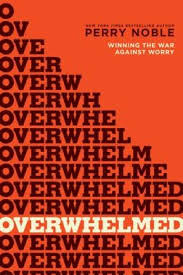
Overwhelmed: Winning the War Against Worry (Review)

overwhelmed I was really blessed by this book. I hope a million people read it and pick up on the message! To be clear, I’m not a big Perry Noble fan, most days his speaking style annoys the snot out of me. However, I was blown away by this book (which I can only assume was based on a sermon series). Perry is an incredibly gifted writer (or he has an incredibly gifted ghost writer… who knows these days?).

I think what makes this book so good is that Perry takes you to the scripture in every chapter. This is really like an old school exposition on the book of Daniel. I think Perry also connects with readers as he walks through his own personal struggles. The book greatly benefits from Noble’s cheesy redneck humor (I was laughing with the giddiness of a school girl somewhere around page 159… so much so that my wife had to come check on me… Not bad for a book on worry).

Overwhelmed: Winning the War against Worryis a great book to have on your shelf and an even better book to read, especially if you deal with worry, depression and/ or anxiety. Perry doesn’t pull any punches and while he has you bent over laughing one moment, he’ll have you pouring your heart out to God in repentance the next. I gladly recommend it to anyone dealing with anxiety or looking for a practical level exposition on the book of Daniel. I hope it blesses you as much as it blessed me.

At the time of this post. Amazon.com has it on sale for $10.11in paperback and $9.60 for the kindle. you can also download the audio version for around $14.95 as well (which is great for listening to while your working out).

Disclosure of Material Connection: Some of the links in the post above are “affiliate links.” This means if you click on the link and purchase the item, I will receive an affiliate commission. Regardless, I only recommend products or services I use personally and believe will add value to my readers. I am disclosing this in accordance with the Federal Trade Commission’s 16 CFR, Part 255: “Guides Concerning the Use of Endorsements and Testimonials in Advertising.”

Did you enjoy this post? Did you consider it helpful? Subscribe by e-mail on the top right of this page and get fresh articles like this one and more sent straight to your e-mail inbox. Don’t for get to share on Facebook or Twitter.