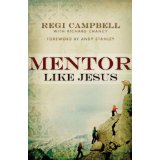
“Mentor Like Jesus” by Regi Campbell (Review)

I ordered my copy of Mentor Like Jesus last week, got it by Thursday and read it by Sunday afternoon.  It was thought provoking and kept me engaged all the way through.  I was blessed by the book and some of the key principles and plan on reading it again slower in order to harvest all that it has to offer.

The author, Regi Campbell writes with a simplistic and straight forward fashion.  In essence the book is his story on how he fell into group mentoring, the lessons he learned along the way, and how similar it really was to how Jesus mentored the disciples.  The book also has a co-author named Richard Chancy who had been through one of Regi’s mentoring groups.  At the end of each chapter Richard shares the perspective of the guys who were being mentored.

Overall I really liked this book.  Some of the principles were common, but others stood out as brilliant insights into the world of mentoring.  Probably the biggest key I took away was that mentoring in group dynamic can be beneficial to those being mentored as well as to the one mentoring.

If you are looking for a good book on mentorship, this book is for you.  I highly recommend it to anyone looking to begin a mentor group.  The retail price is $16.99 (Hardcover), I got my copy for just under $12 at  Amazon.com.  I gave it five stars.

Disclosure of Material Connection: Some of the links in the post above are “affiliate links.” This means if you click on the link and purchase the item, I will receive an affiliate commission. Regardless, I only recommend products or services I use personally and believe will add value to my readers. I am disclosing this in accordance with the Federal Trade Commission’s 16 CFR, Part 255: “Guides Concerning the Use of Endorsements and Testimonials in Advertising.”

Dads, Daughters and Date Days

Right around 5-years ago I became a dad.  The nurse handed me this precious little baby girl and I knew that it would all be different from that day forward.  My life had changed and all the sudden I felt the pressure to not to drop the ball.

Now She is almost 5-years-old and smarter than I ever imagined a 5-year-old being.  She knows me well.  To be honest, sometimes its uncomfortable.  She doesn’t come with a filter.  In fact that’s what a lot of parenting is… introducing a filter.

Just being gut level honest… It’s not easy to introduce a filter and help your kids process life.  Most of the time the easy thing to do is to go cut the grass (because its over due and you wonder what your neighbors are thinking about your un-kept yard), or read a book (because you need some quiet time after they have tugged on our arm and said, “Dad” a million times in a row just to get you to look at their newest drawing and act like its the best thing since Michael Angelo), or Watch TV while your kid takes an hour long bath and shrivels up like a prune (because you’ve had a long day dealing with other peoples problems… not to mention your own).  Its actually quite easy to just show up, give out a hug, maybe play a token game or two with your kid, talk to your wife, go to bed and do it all over again tomorrow without ever really parenting.

To be completely honest.  I don’t always succeed at taking advantage of all the “dad” moments that I could.  But I know I need to.  I know that I love my kids (no matter how many times they say “dad” in a row while I’m trying to figure out the algebra problems I’ve created  in the check book). I know that they need me.  I know that I don’t want to wake up 20 years from now living with regrets on how I wasted these formable years because someone else said, “that’s normal” or “that really never messed up my kid.” (After all they aren’t accountable for how I raise my kids).

So we have set some things in place in my family in order to capitalize on these younger years with my daughter.  I tuck her in bed most nights and read 1 or 2 stories to her from her Jesus Story Book Bible .  We also pray together.

On some Sunday afternoons we are more intentional.  We have this 105 picture set of pictures describing events in the Bible.  She picks out several pictures and I walk her through the story and how it relates to Jesus and obedience to God.  She looks forward to our time on Sundays and its often in this context that we process how the stories tell us about who God is and how we can relate to Him through our decisions.

My favorite part of the week is taking her out for breakfast once a week before school, we call it a Father-Daughter date.  The regular scheduled time gives me a solid hour of quality time with her.  We do everything from eating pancakes, talking about our her week, sharing ideas on how to color a picture, reading books, to picking up a small gift or surprise for my wife and her mom.  Its often in the context of this date that I get opportunities to share about Jesus with folks we meet there.

Its the date days that I really think my daughter gets to see the fullest picture of her dad.  There is no topic off limits and she often brings up some great questions.  We process life together and I intentionally help unmask the world around her through the lens of scripture. Sometimes we talk to people, sometimes we pray with people, and sometimes we just enjoy pancakes and a good story.

You see, here is what I know.  My daughter reads my actions better than my intentions. So it makes sense that I would be intentional about my actions.  I say that church is a family event, yet when we get there I am pulled a million different places (as I should be) because I’m on staff at the church.  So we arrive together and leave together on purpose (even though it would be more convenient not to).  I say I love her, so I am intentional about spending quality and quantity one-on-one time despite having a hectic and busy schedule.  I say I love Jesus, so I intentionally help her process her world through the lens of scripture.

I want her to know me.  I want her to know that I love her.  I want her to know that I am proud of her.  I want her to know that as a father I will do what is best for her.  Its really not about my good intentions, its about intentionally being a dad. I hope one day she looks back on her childhood and treasures the times we talked over pancakes as much as I do.

What about you?  What are some of the things that you are intentional about with your children?


Transforming Grace by Jerry Bridges (a Reveiw)

I intentionally took a while to read Transforming Grace so I wouldn’t pass over anything too lightly.  There is a danger in reading a book like Transforming Grace, in that experienced Christians feel that they are beyond the meat of the message.  There may be a sense of, “been there, done that.” And to be honest the book doesn’t set out with any new truths (given the nature of the book, I wouldn’t expect it too). But there is a great value for mature Christians in reading Transforming Grace.  While the truths are not new, they are still truths.  While Jerry may belabor a few points, they are worth belaboring.

In Transforming Grace: Living Confidently in God’s Unfailing Love Jerry does an excellent job in cutting the meat and  doctrine of transforming grace into palatable and bite sized portions while maintaining an emphasis on the work of Christ.  It’s a great read for new believers.  Mr. Bridges has a knack for taking difficult topics and presenting them in an easy to understand fashion.  Transforming Grace is also a great read for mature believers as well.  The doctrine of grace is one that should never get old or tired.  None of us are past grace.  All of us have a proclivity to default to a works based system of favor with God.  Believers come into a right relationship with God by faith, through the work of Christ, which is undeserved on our part, and indeed a gift of God’s grace.

There is also a companion Discussion Guide for Transforming Grace.  It takes one or two chapters at a time and provides details and discussion points.  The Discussion Guide seems like it would work well in a small group Bible study or book club.  Reader’s interested in the topic of transforming grace may also want to check out John Piper’s book Future Grace.

If you are looking to learn more about God’s grace in the life of a believer, this book is for you.  I highly recommend this book to believers new and old.  The retail price is $14.99 (Paperback), and is available at a discount at  Amazon.com for $10.19.  The Study Guide is also available on Amazon.com for $9.99. I gave it five stars.

The Fruitful Life by Jerry Bridges (a Review)

Disclosure of Material Connection: I received this book free from NavPress as part of their Blogger Review Program. I was not required to write a positive review. The opinions I have expressed are my own. Some of the links in the post above are “affiliate links.” This means if you click on the link and purchase the item, I will receive an affiliate commission. Regardless, I only recommend products or services I use personally and believe will add value to my readers. I am disclosing this in accordance with the Federal Trade Commission’s 16 CFR, Part 255: “Guides Concerning the Use of Endorsements and Testimonials in Advertising.”

Wandering in the Dessert (Review)

Wanderin’ in the Desert (3rd Disc from What’s in the Bible with Buck Denver) is a fascinating yet educating program.  I watched it with my four year old daughter and we talked about the program.  I was really impressed with the material on two levels.  On one level I was impressed with how much content was packed into the two 30 minute shows.  It is clear that the creators were intent on presenting a conservative view of scripture (for which I am deeply appreciative).  They also took great care to answer relevant questions on kid friendly level. On a second level , I was impressed with how the writers took care to draw the information to a simple point of real application.  Not only was there information about the reliability of scripture, but there was a subtle yet evident plea to trust the God of the Scripture.

My daughter, though she was able to retain a lot of information from the program, was impressed on a different level.  The program was fast paced enough to keep her attention all the way through.  She really enjoyed the songs making me play them over and over for her.  After the program I asked her several questions and she responded pretty well.

Overall I was highly impressed with the 3rd disc as I have been with the whole series to date.  The only draw back was that in between segments it shows a little boy (puppet) talking a little disrespectfully to his mother who is silent and off camera.  I discussed this with my daughter as an example of behavior that I expect her not to emulate. Beyond that the whole production is pretty amazing.  I would highly recommend it to parents and grandparents to watch and review with their children.  I can see it being a great resource for bible lessons!  I give it four stars.

Disclosure of Material Connection: I received a DVD of this program free from Tyndale House Publishers as part of their Tyndale Blog Network. I was not required to write a positive review. The opinions I have expressed are my own. Some of the links in the post above are “affiliate links.” This means if you click on the link and purchase the item, I will receive an affiliate commission. Regardless, I only recommend products or services I use personally and believe will add value to my readers. I am disclosing this in accordance with the Federal Trade Commission’s 16 CFR, Part 255: “Guides Concerning the Use of Endorsements and Testimonials in Advertising.”

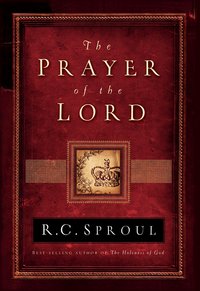
The Prayer of the Lord By R.C. Sproul (Review)

The Prayer of the Lord is perhaps the best books I have ever read on the Model Prayer (sometimes called the Lord’s Prayer)!  I was deeply impressed with how Bible scholar and pastor Dr. R.C. Sproul opened the Scripture and set everything on the bottom shelf.  Dr. Sproul has an engaging and witty style of writing that is both faithful to the text of Scripture and engaging to the reader.  I continue to be amazed at how well he writes.

The Prayer of the Lord is a simple exposition of the Model Prayer.  Dr. Sproul breaks it down taking the reader through the teaching of Jesus on prayer.  Each chapter examines a phrase of the prayer in great detail.  I’ve been a serious student of Scripture for years and I was deeply impressed with how well Sproul wrote about this passage while maintaining a focus to present the truth and application within easy grasp of the reader.  This is a book I would have no problem handing off to a new believer looking to develop his prayer life or a mature believer looking to examine the model prayer.  I really appreciated the appendix that answered several questions for me.

If you are looking for a great book that teaches about the nature of prayer with the scriptures as its source, this book is for you.  I highly recommend this book to anyone interested in developing their prayer life.  The retail price is $15.00 (Hardcover), and is available at a discount at steep discount at  Amazon.com for $10.20. I gave it five stars.

Disclosure of Material Connection: I received this book free from Reformation Trust Publishers as part of their Blog for a Free Book Program. I was not required to write a positive review. The opinions I have expressed are my own. Some of the links in the post above are “affiliate links.” This means if you click on the link and purchase the item, I will receive an affiliate commission. Regardless, I only recommend products or services I use personally and believe will add value to my readers. I am disclosing this in accordance with the Federal Trade Commission’s 16 CFR, Part 255: “Guides Concerning the Use of Endorsements and Testimonials in Advertising.”

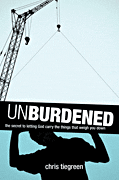
Review: “Unburdened” by Chris Tiegreen

Unburdened: The Secret to Letting God Carry the Things That Weigh You Down (affiliate link) by Chris Tiegreen is a great book for people dealing with stress, work, caring for a sick family member, worry, or any kind of burden for that matter. I was not a big fan of the cover art at all, but the book was great proving that you really can’t judge a book by its cover.  I really could have used this book (affiliate link) a few years ago when I went through  a summer of sleepless nights filled with worry after my concussion.

The author does a great job of drawing the reader into the focus of the book (affiliate link).  One of the best parts of his writing style is that his writing is very quotable, meaning the contents of the chapter often find expression in short, memorable and pity statements that carry on with the reader long after the book has been read. I was deeply impressed with the author’s persistence to bring the scripture into the conversation.  The real value to this book is that it works as a great tool to discovering and applying God’s word to the burdened believer.   Through this is the first book I’ve read by Chris Tiegreen his engaging and transparent writing style won me over and sent me to the book store looking for more of his books and wondering why I haven’t heard of him sooner.

I would highly recommend this book (affiliate link) to anyone who wrestles with trusting God with some of life’s most delicate burdens.  This book also makes a great gift for those you know who are stressed to the max, overfilled with worry, or carry the burden of depression. The cover art and perhaps event the title make it a bit hard to give away, but the contents are well worth the investment.

The retail price is $13.99 (Paperback). It is also available at places like Amazon.com for $10.07 (affiliate links). I gave it 4 Stars

Disclosure of Material Connection: I received this book (affiliate link)  free from Tyndale House Publishers as part of their Tyndale Blog Network. I was not required to write a positive review. The opinions I have expressed are my own. I am disclosing this in accordance with the Federal Trade Commission’s 16 CFR, Part 255: “Guides Concerning the Use of Endorsements and Testimonials in Advertising.”

The Stone the Builder’s Rejected (Sermon Brief)

Pastor was out of town on Sunday and I had a chance to fill the pulpit and preach in his absence.  As soon as I have access to the video file we will figure a way to get it up here.  In the meantime here is copy of my sermon brief.  If you are unfamiliar with a sermon brief, it is a strange creature that is more or less a cross between an outline and a manuscript.  Sometimes I use sermon briefs to make sure I have a grasp on the context and message of a passage. You can also get a PDF of the Sermon Brief by clicking here: The Stone the Builders Rejected

Luke 20:9-19 (ESV)

Introduction:

The setting for this parable takes place in the larger context of the Jesus’ preaching and teaching ministry in the temple the week of his crucifixion.  In the previous chapter Jesus cleansed the temple of money changers.  This action immediately draws the attention of “the elders, chief priests and the scribes” often a designation for the ruling body known as the Sanhedrin.  The Sanhedrin sends a delegation to ask Jesus, “under what authority are you doing these things” (Luke 20:2)?  Jesus in return asks them about the baptism of John and where he got his authority.  The refusal of the scribes and chief priests to acknowledge that John was acting as an agent of God ensures that they would not recognize his authority as their master.

Jesus then picks up with the parable of the wicked tenants in which the central issue is authority.  The question arises in this parable, who has the authority?  Is it the tenants or is it the land owner?  The obvious answer is the land owner and the implications are clear for all who are involved.

The Son the Tenants Rejected

Many of Jesus’ parables are set in the agricultural context of Palestine.  Farmers generally filled one of three stations; Landowners, tenants, and day laborers.  The difference between tenant farmers and day laborers, “Tenant farmers leased the land and sharecropped with the owner, while poorer people hired out as day laborers” (Brisco, 219).

The parable begins with a wealthy land owner who builds and cultivates a vineyard.  Historically the vine has been a symbol for the nation of Israel.  Indeed the temple in Jerusalem, where the whole dialogue was taking place between Jesus and his questioners, had a large golden grape vine displayed in a prominent location.  Many wealthy families contributed great deals of money to add a grape or a cluster of grapes to the vine.  Perhaps some of the men who stood there questioning Jesus had given money to purchase their own grape or cluster to add to the vine.

The scene of a wealthy land owner extending the use of his property to tenants and leaving for an extended period of time was common.  “The upper Jordan Valley, the western and northern shores of the Sea of Galilee, and even a considerable portion of Galilee itself, contained vast estates owned by foreigners, men who lived far away from their holdings” (Hendrickson, 891).  The financial aspect of the relationship between the land owner and tenants would settled at harvest time when a percentage or set amount of the vineyards fruit would be given to the land owner as payment (Straus, 472).

The land owner had a right to expect a portion of fruit “when the time came” (Luke 20:10).  However the tenants beat the servant sent to receive the fruit and they sent him away “empty handed” (Luke 20:10).  There is no indication as to why the tenants treated the servants so harshly other than, “they simply rejected the messengers” (Morris, 311).

At this point in the parable the tenants are in violation of a contract and have added insult to injury by mistreating three servants who have come on the landowner’s behalf.  The master has every right to send a hit squad after the tenants.  As the land owner he is operating out of a position of power, yet the tenants seem to think they can gain power over the master.

The sending of the son by the master is an exercise in self control and patience beyond the scope of expectation.  The sending of the son causes the landowner to appear extremely kind and generous. “Rich or poor, all hearers at this point would agree that the land owner is in the right, and that he was benevolent-indeed, strikingly, foolishly benevolent” (Keener, 244).

When they see the son coming they plot to kill the son.  The tenants murder the son, perhaps thinking they will gain the rights to the property (Luke 20:14). One commentator writes, “according to a then existing law, under certain conditions if the owner died, leaving no heir, whoever were the first to claim the estate, particularly the occupants, were allowed to have it” (Hendrickson, 892).  The Talmud notes, “Tenants were known to claim possession of land they worked for absentee landlords” (Morris, 311-312).  They simply presumed that either the landowner was dead or that with all the trouble they had caused, he would not press the issue.  The covetousness and lust for full possession of the land that has lead the tenants to mistreat the servants of the master comes to its climax in the murder of the heir.  This is an insult to the master that cannot be overlooked.

At this point the story escalates as Luke records that the people respond in terror, recognizing the aim of Christ’s parable.  The team sent forth from the Sanhedrin is amazed at the notion that the tenants will have to pay for what they have done to the master’s son.  They are quick to understand that this parable has been told against them and they are represented by the wicked tenants in this parable.  The notion that these religious men who have labored for the betterment of national Israel would be punished for their rebellion against God must have been a foreign concept to them.

The tenant’s motive for mistreatment and murder in the parable seems to be the prospect of gaining the property rights to the vineyard (Luke 20:14).  In a sense they wanted sole control over who enjoyed the pleasures of the vine.  Before this passage when Jesus cleanses out the temple he quotes a passage from Isaiah that mentions the prospect of the temple becoming a house of prayer for people from all nations (Luke 19:46, Isaiah 56:7).  After the parable Jesus makes a symbolic switch from talking in terms of the vine (national Israel) to the corner stone or foundation of a great building which is associated with church (Acts 4:11, Ephesians 2:20, I Peter 2:6-7).

Just as the wealthy land owner is patient to send messenger after messenger to receive the fruit of the vineyard so God had been patient with the leaders of Israel.  However, just as the wicked tenant reign of terror will be brought to an end by a vengeful father, so to was nation of Israel’s leadership expelled from their position a few decades later in 70 A.D. when Rome sacked Jerusalem and the temple was destroyed.  Israel ceased to exist and the vineyard had been handed over to a new group of tenants called the apostles.

The Stone the Builders Rejected

Jesus craftily turns the symbolism from a vine representing a national Israel to a stone representing the true temple of God.  Jesus changes the picture from a vineyard to a cornerstone.  He reminds the Sanhedrin that not only does he have the right as the founder but he also has the right of a judge.  ‘The stone that the builders rejected has become the cornerstone’?  (18) Everyone who falls on that stone will be broken to pieces, and when it falls on anyone, it will crush him” (Luke 20:17-18).

It is not the value to be places on the stone that is in mind, but the destructive nature of the stone against flesh and blood.  To fall on the stone or have the stone fall one in either case means destruction.  People may reject and oppose Jesus but it is they, not he, who will suffer.  The second part of the saying will refer to the future judgment.  IT will be their attitude to Jesus that will mean the final destruction of the people of his day.  The imagery here is derived from Isaiah 8:14 (Morris, 313).

The stone is also a stone of judgment.  It is not susceptible to destruction by its enemies.  All efforts against the stone shatter to pieces.  Furthermore, it falls in judgment on those who reject it.  The verb rendered crush means primarily to winnow, but early versions support the RSV translation (Tolbert, 154).

Conclusion:

The theme for Luke 20:9-19 is the authority of Christ to save Israel and the whole world.  The parable enters in context of the inability of the scribes and chief priests to recognize the authority of Christ.  In the parable the vineyard will be taken away from the wicked tenants, who killed the son and given to other tenants.  This represents Christ taking the light away from the nation Israel and temple worship and expanding it to the living temple of believers who place their faith in Christ.

Hear today the word’s of Christ.  Have you rejected the son?  God has a right to your life.  Are you glorifying God in your existence or have you rejected the authority of God in your life?

Bibliography

I took the liberty of Hyper-linking to all the books in my Bibliography.  I linked to the newest editions of the books while leaving the reference information from the older versions (The page numbers in the new editions are likely to be different because of updated content and more/ less comments throughout the book).

Brisco, Thomas V. Holman Bible Atlas (affiliate link). Nashville: Broadman and Holman, 1998.

Carson, D. A., Douglas J. Moo, and Leon Morris. Introduction to the New Testament(affiliate link). Grand Rapids: Zondervan, 1992.

Hendriksen, William. New Testament Commentary (affiliate link): The Gospel of Luke. Grand Rapids: Baker, 1987.

Keener, Craig S. The IVP Bible Background Commentary: New Testament (affiliate link). DownersGrove:  Inter Varsity Press, 1993.

Lea, Thomas D., The New Testament: Its Background and Message (affiliate link), Nashville: Broadman and Holman, 1996).

Morris, C. Leon., ed, The Tyndale New Testament Commentaries: Luke (affiliate link), vol.3, Revised Ed., Luke, by Leon Morris. Grand Rapids: Eerdmans, 1999.

A Few Great Resources for Studying Ecclesiastes

So we have been spending a little time reading through Ecclesiastes for the last week and a half and we will wrap things up tomorrow with Ecclesiastes 12.  Some of you may have had your interest piqued by the book of Ecclesiastes and want to go deeper.  Here are a couple of great resources I pulled off my shelf and have helped me get some meaning and application from the book of Ecclesiastes.

The first book I would recommend is A Life Well Lived: A Study of the Book of Ecclesiastes (affiliate link) by Tommy Nelson.  This book is written in a regular non-fiction book format and is an easy read for someone who isn’t used to using commentaries.  The author uses lots of great illustrations and packs in a great deal of application.  You can catch it at Amazon.com for about $11.00 (affiliate links).

The second book I would recommend is Ecclesiastes: Total Life (Everyman’s Bible Commentary)(affiliate link) By Walter Kaiser.  It is a great resource to get into the grit of what Ecclesiastes is all about.  Several years ago when I lead a college group through the book of Ecclesiastes I picked this book up.  Its no long in print and I think the only way you can get it now is from a used book seller.  I think I found my copy on Amazon.com (affiliate like) or maybe allbookstores.com (which is where I go to compare amazon against the other book retailers and get the best price or find an old book no longer out of print).

Switch: How to Change Things When Change is Hard (Review)

Switch: How to Change Things When Change Is Hard (Affiliate link) is an awesome book and a great resource for those who are in the position of motivating others to change.  We  all have things in our life we want to change.  We may want or feel the need to change our physical health, or personal organizational habits.  Maybe the need is greater or the goal is bigger and we are trying to effect change in the health of our community or how we organize our corporation.  Switch takes on those challenges and provides an excellent study on the patterns of change and who to institute them in effective ways.

While this book isn’t a motivator or change agent in and of itself, it does provide a great resource for anyone who is interested in making change happen.  Near the End of the book the authors state,

We can say this much with confidence: When change works, it tends to follow a pattern.  The people who change have a clear direction, ample motivation, and a supportive environment (Switch, 255).

By evaluating these three strategic pieces to change and motivators in each area the authors are able to offer great council on setting things up for change.  This is one of the better books I have read this year and one of the best I have read on the subject of motivating people.  My personal copy is dog eared with a couple of dozen notes written in the margin.  It has proven to be of great value to me, I hope it is a good value for you as well.

If you are interested in purchasing a copy of If you are interested in purchasing a copy of Switch: How to Change Things When Change Is Hard (affiliate link) the retail price is $26.00 (hardcover), and is worth every penny. I purchased my copy at Amazon.com for $14.95 (affiliate links). I gave it five stars.

The Fruitful Life By Jerry Bridges (Review)

Jerry Bridges has discipled me from afar for years. I was first introduced to his book, The Pursuit of Holiness (affiliate link) around 10 years ago and it has left a lasting impression on my life.  I was grateful for the opportunity to read and review The Fruitful Life: The Overflow of God’s Love Through You(affiliate link).

The Fruitful Life: The Overflow of God’s Love Through You (affiliate link) is an application oriented exposition of the fruit of the Spirit found in Galatians 5:22-23.  I am deeply grateful an appreciative to the author for taking the time to flesh out the practical aspects of how fruit is produced in our lives.  He does an outstanding job at bringing the reader in to focus on living a Christ-centered fruit-bearing life.  He acknowledges an individuals reliance on the Holy Spirit of God to produce fruit, while at the same time calling the reader to responsibility.  For example, in the chapter concerning humility the author writes, “Though not mentioned explicitly in Galatians 5:22-23, humility is surely a fruit of the Spirit, the result of His ministry in our hearts.  But this ministry does not occur without deliberate, conscious effort on our part.  The Spirit does not make us humble; He enables us to humble ourselves in these difficult situations” (57).

Each chapter contains excellent study and application questions that go well beyond most group study books that I have read.  If read thoroughly and with a mind for application this book can change your life.  This book is a great tool for understanding and applying the scripture to your life.  It is designed to be useful for either individual study or study as a group.

If you are interested in purchasing a copy of The Fruitful Life: The Overflow of God’s Love Through You (affiliate link) the retail price is $12.99 (paperback), and is worth twice that.  It is also available at places like Amazon.com for $10.39 (affiliate links).  I gave it five stars.

Disclosure of Material Connection: I received this book (affiliate link) free from NavPress as part of their Blogger Review Program. I was not required to write a positive review. The opinions I have expressed are my own. I am disclosing this in accordance with the Federal Trade Commission’s 16 CFR, Part 255: “Guides Concerning the Use of Endorsements and Testimonials in Advertising.”