Nehemiah 4: 15-20

Nehemiah 4: 15-20

Offense and defense are the two major aspects of any great sport. On offense you want to score a goal or earn points for your team on defense you want the stop the other team from scoring on you or marking points against you. What is especially interesting are the sports where you have to play keen offense and defense at nearly the same time. In basketball the ball can be stolen or in football it can be intercepted and everyone who was on the field to play offense is all of the sudden playing defense.  Players who may not be defensive players are still trained in how to tackle others so that when the momentum shifts, they are ready to stand up for their team.

In Jerusalem they had reached a point where it was necessary to go on the offensive of building the wall while at the same time being ready to defend their position. They had to be ready with a sword in one hand while having a trowel in the other. Everyone had to be a dual position player. They had to take their turn at watching the wall and building the wall.

Cover

When our enemies heard that it was known to us and that God had frustrated their plan, we all returned to the wall, each to his work. From that day on, half of my servants worked on construction, and half held the spears, shields, bows, and coats of mail. And the leaders stood behind the whole house of Judah, who were building on the wall. Those who carried burdens were loaded in such a way that each labored on the work with one hand and held his weapon with the other. And each of the builders had his sword strapped at his side while he built. The man who sounded the trumpet was beside me. And I said to the nobles and to the officials and to the rest of the people, “The work is great and widely spread, and we are separated on the wall, far from one another. In the place where you hear the sound of the trumpet, rally to us there. Our God will fight for us.” (Nehemiah 4:15-20 ESV)

There is wisdom with being prepared and moving ahead on two fronts like Nehemiah did. In the Christian life we will always be called to reach out to others, witness, and disciple folks in the name of Jesus, but we will also need to stand guard against temptation. We are all prone to give in at various times to various sinful desires that if we are not careful we will let the wall down.

What was really encouraging for the folks in Jerusalem and what I think can be encouraging for us as well is in verse 20 where Nehemiah says, “Our God will fight for us!”  This is true. In our stand against temptation and sin it is our God who has fought for us. It is He who went to the cross and died for our sins and freed us from the power of sin and darkness. It is our God who lives in side of us as the Holy Spirit choosing our bodies as His temple. Placing his seal over us.

You may feel discouraged in the fight today and maybe you feel week when it comes to standing against temptation, but remember this; Our God will fight for us! So stand strong on the wall with your sword in one hand ready to resist the attacks of the enemy and with your trowel in the other hand building up the wall that God has called you too.


Do Our Songs Matter? (Songs for Teaching, Fellowship, Suffering)

Worship Music

Up to this point we have talked about music in general, but now I kind of want to zero in on certain benefits of worshiping God together in song. Why sing together?

TEACHING

Let the word of Christ dwell in you richly, teaching and admonishing one another in all wisdom, singing psalms and hymns and spiritual sons, with thankfulness in your hearts to God. – Collossians 3:16 ESV

Here the apostle calls for believers to let the word of God dwell in them richly and part of the way to do that is through spiritual songs. Hymns, choruses and special music that are written in response to Gods’ character or actions all teach us something about God or how we should respond to God. They remind us of his characteristics like faithfulness. They remind us that God desires that we would trust him. They remind us that we come to him just as we are. They remind us that God is interested in our hearts, not just our words. They remind us that God is a refuge and a fortress in a time of trouble. They remind us that though we may face financial trouble, marital discord, a prodigal child, depression, the loss of a loved one, the loss of a job, disease, or even the consequences of our own sin, that God transcends all of that. We can come to him in worship while living in a world that is being destroyed by sin and he gives us a taste of heaven. He shows us just a glimpse of what is to come. Songs give rise to what words alone can not express and in doing so we learn our God and know our God deeper.

We use songs to teach our children. We teach them “Jesus Loves Me,” and in doing so we teach them:

  • God’s heart for children
  • the Bible is our standard for knowing God
  • God is a strong God able to take care of the weak and needy.

Some of my favorite songs are children’s songs.

FELLOWSHIP

And when they had sung a hymn, they went out to the Mount of Olives 

– Matthew 26:30, ESV

Part of singing together is to remind ourselves that we are not the only ones following hard after God. The disciples had just celebrated the Passover Meal and Lord’s Supper with Jesus and note that before they left,  they sang a hymn. The hymn that they probably sung was one that was made up of six Psalms that when put together were called the Hillel. This hymn was chosen for the occasion because the selected Psalms all represented the salvation of Israel. Think of the disciples gathered around Christ. They were worshiping together, because he called them together. They had fellowship with one another, because Christ was their Lord.  Gathered around him singing praise to God was a former tax collector, a zealot, a few fisherman, and others all gathered in fellowship.

There is something about singing with other believers that elevates into not just fellowship but worship.  I love going to student camp where I am surrounded by our students and we all sing songs of praise to God. I can not help but smile and think how wonderful it will be, to be in the presence of God in heaven with these precious ones singing praise.

SUFFERING

About Midnight Paul and Silas were praying and singing hymns to God , and the prisoners were listening to them – Acts 16:25, ESV

Do not be confused about this verse. Paul and Silas did not have a prison ministry where they simply came and sang a good gospel song to the inmates. They were in prison themselves for preaching the gospel. They were in chains  and still they found the strength to praise their God! The height of music in worship is music born out of suffering. It is the music that is born out of a heart that has suffered yet still finds strength to praise the Lord.

In North Korea during the 1950’s there was a group of Christians who were meeting in tunnels dug underground. As the Communist were building a road through the area they discovered the tunnels and the Christians.  They were brought to be tried and executed in the middle of the town with  30,000 people gathered around to watch.  First the communist officer ordered four of the children to be hanged, if they would not recant their faith. The parents looked at their children and encouraged them, “be strong, we will see you in Heaven!” The children died quietly. Then the officer had a steamroller brought in and lined the congregation up on the ground. As the steam roller crushed the believers they were singing in unison:

More Love to the, O Christ, More love to Thee
Thee Alone I Seek, More Love to Thee
Let sorrow do its work, more love to Thee
Then shall my latest breath whisper thy praise
This be the parting cry my heart shall raise;
More love, O Christ, to Thee.

(I found this story in D.C. Talk’s first Volume of “Jesus Freaks” page 124-125.)

Did you like this post? Feel free to like it, share it on social media, comment below, and be sure to sign up to get new posts sent to you via e-mail (on the top right of this page).

“I’m Not Getting Fed”:Confronting the voice of Consumer Christianity

As an American I live in a consumer culture. Just check out the cereal isle of your local grocery store and take note of how many options there are for corn flakes and that is just corn flakes! We’ve coined phrases like, “The customer is always right,” “the customer is king,” and my favorite slogan from days gone by, “Your way, right away.” We’re used to paying for things and getting what we want. Almost every industry has someone else competing to offer a better or alternative product so we are never without a choice in the matter. You have tons of options when it comes to car insurance, cell phone coverage, or even what kind of pick-up you want to drive.

i'm not getting fed

To be fair, that’s probably healthy for our economy… but when we carry consumerism into other area’s of our life it can be deadly. We’re so used to getting upgrades, new leases, and trading in the old model when something new, better, more convenient that we have let that mindset creep into our relationships. Can you imagine cutting ties with a friend because a better friend came along? Or how about filing for divorce in order to get a newer younger model? (unfortunately those phrases have been used). Consumerism can trick us into thinking we have options in places where we should have commitments.

I see it in the church too. Folks send their children to one church for it’s children’s ministry, their students go to another church for student ministry, and the parents attend a different church’s community group and maybe they all show us on a Sunday morning where they have opinions about the musical style or the preaching. Folks talk about a pastor or church and say something like, “I wasn’t getting fed” and “My needs weren’t being met,” and “they didn’t have anything for me.” (All phrases that remind me of when my children were infants by the way) And that’s the rub, Christianity for these folks is just a product to be consumed. It’s about getting their needs wants met.

While that may work for corn flakes, it doesn’t work in real relationships like marriage. Consumers quit on marriages because they are consumed with their own needs instead of the needs of their partner. They would soon discover that there is actually real joy in focusing on meeting the needs of your partner and marriages can flourish that way, but that takes commitment. It’s the same way with raising children. As a society, we remove children from the homes of parents who can’t see past their own needs to meet the needs of their children. If you’re a parent, you know that there is a real joy that comes in meeting the needs of your child and even providing some of their wants along the way (despite everything their selfishness may put you through).

That is how church is supposed to work. We are to look out for one another (Philippians 2:4) and work together (1 Corinthians 12:12-31) and meet regularly for encouragement (Hebrews 10:25) and in doing so train our children to be those who commit in relationships, not those who consume. The church is the people, not the program, not the building… the people, and that implies a relationship one to another.

If you really want to grow, do more than just absorb the programming. Get involved, be invested, participate in the life of the church by volunteering. If you have children and you think the children’s ministry could up it’s game, don’t send your kids to another church, volunteer for the children’s ministry team! If you don’t/ can’t volunteer… provide snacks, offer to help financially if you are able, find a way to invest. Find the church the Lord leads you too and get plugged in and serve. You will find there is more joy in the commitment than in consuming because church really has more to do with relationships than it does with products and programs. Ultimately it is about a relationship with Jesus Christ.

I get how God might call you to serve another church. He does this sort of thing all the time. He certainly called my family from one church to serve another, but be sure you are following God’s call and not your own consumer impulses. And as much as possible worship together with one congregation.


Prayer Involves Community

We are not alone. We do not get to call God, “My” Father as if we had an exclusive relationship. He has saved many sons and daughters. Those who have come to him in faith, belong to him in community. There are no lone-ranger Christians. We are compelled even when we pray to recognize that we belong to God…together.
The “our” here is a large collection of folks. In the context of this prayer it encompasses people from every tongue, tribe and nation (Rev. 5:9, 7:9). It includes men and women (Gal. 3:28). It includes those who have been outcast (Lk 16:19-31). Those who were sexually immoral, those who worshiped idols, those who have committed adultery, those who were homosexuals, those who were thieves, those who were alcoholics, and former con-artists… anyone who has died to self and picked up to follow Christ (1 Cor. 6:9-11).
This is precisely the point where Christianity and radical Hinduism are extremely different. We say there is no karma, just sin. Repent and be saved. They say there is karma and what you’ve done in a previous life has set you up for whatever suffering you get in this life. So the high cast and the low cast people are not equal. Within Christianity everyone is equal. We were all sinners. We all come by the blood of the lamb.
Realizing this we acknowledge that we do not act in isolation. Our actions have consequences that affect the greater body of Christ. We will give an account to our Father about how we have treated our spiritual siblings and others. Earlier in this larger section of scripture known as the Sermon on the Mount, Jesus says:

“So if you are offering your gift at the altar and there remember that your brother has something against you, leave your gift there before the altar and go. First be reconciled to your brother, and then come and offer your gift” (Mat. 5:23-24).

When we pray, we are to recognize that we are not in isolation, our actions for and against our spiritual siblings count. Some of you have hindered prayers because you have grievously sinned against your brothers. It doesn’t matter how great your speech is, or how eloquently you can present your requests to God. When your fellowship is broken with your brother/sister in Christ then you will have difficulty in real prayer… I’m sure you could still get out a bunch of words, but authentic prayer comes from the heart. The Apostle Peter writing in first Peter pleads with husbands to honor their wives so that their prayers won’t be hindered (1 Pet. 3:7). There is no us vs them in the family of God…just us.

Let your kids choose not to go to church today and they’ll choose not to go when they are adults

My dad was a pastor, so I got an inside perspective on church growing up. I did everything from help fold the bulletins to taking up the offering. Occasionally through my preteen and teen years there were those moments where for whatever reason… I did not want to go to church.

Now here is where it gets a little touchy because I had friends whose parents gave them the choice about attending church. (ironically they still HAD to do a lot of things like wear a shirt to the dinner table, do their homework, their chores, and visit with great-grandma).  I thought for sure that the only reason I HAD to attend church was because my dad “worked” there. I mean there must be a reason that my friends parents were lax on the whole church deal but strict on stuff like Algebra.

Then my dad got fired… ahem, I mean resigned from the church he was serving. I thought for sure we’d take a Sunday off or something, but the very next week we were in church (a different church, but a church none-the-less). I tried to get out of going (in hind sight I can’t imagine how difficult this must have been for my dad) but he insisted and we went. I learned in a very real way that church attendance was important, not because my dad was a pastor, but because that is where we gathered with the people of God for the worship of God.

Then there came that first Sunday I was away at college. I had the opportunity for the first time in my life to ditch church, but at 18 years old I got out of bed early, got ready and walked into a church in time for Sunday School and I’ve only missed a handful of Sundays since. You see when my dad made me go to church when I didn’t want to, I learned something… Church is important. It was more important than hunting, fishing, sports, and especially more important than sleeping in.

My friends also learned something from their parents about church… Church wasn’t important. Much to the agony of their parents many of my friends, whose parents let them stay home, have continued to stay home from church. They went to college and didn’t attend church. Now they’re having kids and some are coming back but others aren’t.

I’m sure my friends’ parents meant well. They were probably afraid that they would burn their kids out on church. Maybe the pastor made that awful “I had a drug problem… my parents drug me to church” joke one too many times. Or maybe it’s because deciding to follow Jesus is a ‘personal decision’ we don’t want to “pressure” our kids, that we as parents can make the mistake of backing away from training our kids in spiritually right and helpful behaviors. We wouldn’t think twice about making our kids do their homework or clean their room. But somehow we let church attendance be the one place where we let them decide for themselves? Does this not actually send the unintended message… church is not important and you can blow it off for sleep?

I get it…. We faced a similar issue when we started family prayer time and my kids didn’t want to pray. Should I tell my kid they “have to” pray? I don’t want them to hate prayer… But then I realized that I’m responsible for training my kids and they will follow my example no matter what I do. So it’s probably better to err on the side of “repeat the Lords Prayer with me then” than it is to say, “you don’t have to pray.” At the very least they will know that prayer is important to their father. God has blessed our family prayer time. He’s used the Lord’s Prayer in numerous ways to instruct my children and bring both of them to conviction and repentance. I look back and wonder the shape their hearts would be in if we had not hunkered down and said, “This is too important to skip.”

Amazon.com – Read eBooks using the FREE Kindle Reading App on Most Devices

Shop Amazon Gift Cards. Any Occasion. No Expiration.

Be Sure to also check out:

Why Church People Are Sometimes Messy

Proverbs 14:4 ESV Where there are no oxen, the manger is clean, but abundant crops come by the strength of the ox.

In many ways that’s my life verse. I should probably get Proverbs 14:4 engraved on my desk, but if I did you would never see it because I keep my work on my desk. Think about the meaning of the verse for a moment. In the case of an ox and a manger, you have to pick between productive and clean. You can have a clean manger or you can have an ox which is what a manger is for and who helps bring in the crops. You may have a clean manger AND an ox for short periods of times, but not all the time and not without someone shoveling the manure.

It’s kind of the same with small kids. They make messes. You can have a clean house or you can have kids. You may have both a clean house and kids but only for short periods of time and not without someone picking up the toys, cleaning the vomit, changing the diapers, etc… But the beautiful thing about kids is that if you train them, they grow up and eventually pick up after themselves, use the restroom by themselves and feed themselves (with a little pressure from Mom and Dad).

Church isn’t really all that different. You see with church we reach out to people who don’t know Jesus. And when someone comes to church and doesn’t know Jesus, they act like people who don’t know Jesus. And when someone commits their life to Christ, they act just like someone who just committed their life to Christ. While Jesus washes away our sin when we put our trust in him… we still may have a tangled mess of ungodly decisions that we have made in the past that have consequence in our present lives. And let’s be honest there may just be a lot of stuff we just don’t know yet. We’re kind of like new born baby’s in that regard (John 3:3, 1 Peter 2:2, Hebrews 5:12).

We make messes. However, every day we are growing more and more in the likeness of Christ (Ephesians 4:22-32). Our goal is to be presented as mature in Christ (Colossians 1:28). But that takes time and patience from godly teachers and leaders.

Leave room for the immature to become mature at your church. It will involve a little messiness but you will help people grow! You know the barn is a place for oxen and oxen do make messes. The church is a place where both the immature and the mature gather to worship Jesus and the immature do make messes. I’d rather have a messy church that works to raise infants in Christ to maturity in Christ than a clean church without new believers. Because there are those who are weaker in the faith among us perhaps we should challenge them to grow rather than judging them for their weakness (Romans 15:1-6).

The Color of Justice (REVIEW)

the color of justiceThe Color of Justice is an engaging courtroom drama centered on the issue of racial reconciliation. In 1964 a white girl is murdered and a young black man is fingered for the crime despite a lack of evidence. Cooper Lindsey an aspiring lawyer with roots in the small town of Justice, Mississippi steps in to make sure the defendant gets a fair shake. The book is reminiscent of To Kill a Mockingbird , even to the point that the author references Mobile and Montgomery with some frequency. The twist comes when another lawyer enters town in 2014 to answer the questions left by the case in 1964 and to defend a young white man accused of killing a young black man.
The Color of Justice speaks well to the theme of racial reconciliation, repentance and forgiveness. The author helps the reader seemingly explore the issues from both a black and white perspective. Early on the main character maintains that he is not racist, but when confronted with difficult circumstances he has to really examine his motives and thoughts. The author does a great job of illustrating the reality of racism in a 1964 Mississippi town without fully engaging in racist rhetoric. He lays down enough hints and interjections to get the message across without ever actually penning derogatory terms.

Over all I thought this was a great book. The author kept the lines of tension tight which always makes for a great read and the inability to put the book down. I know I lost an hour of sleep just so I could muddle through to the end of the book and not have to wait till later. I got my copy from amazon.com who has it on sale right now for $13.49 in paperback.

Try Audible and Get Two Free Audiobooks

Disclosure of Material Connection: Some of the links in the post above are “affiliate links.” This means if you click on the link and purchase the item, I will receive an affiliate commission. Regardless, I only recommend products or services I use personally and believe will add value to my readers. I am disclosing this in accordance with the Federal Trade Commission’s 16 CFR, Part 255: “Guides Concerning the Use of Endorsements and Testimonials in Advertising.”

Did you enjoy this post? Did you consider it helpful? Subscribe by e-mail on the top right of this page and get fresh articles like this one and more sent straight to your e-mail inbox. Don’t for get to share on Facebook or Twitter.

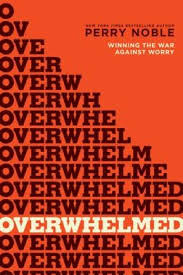
Overwhelmed: Winning the War Against Worry (Review)

overwhelmed I was really blessed by this book. I hope a million people read it and pick up on the message! To be clear, I’m not a big Perry Noble fan, most days his speaking style annoys the snot out of me. However, I was blown away by this book (which I can only assume was based on a sermon series). Perry is an incredibly gifted writer (or he has an incredibly gifted ghost writer… who knows these days?).

I think what makes this book so good is that Perry takes you to the scripture in every chapter. This is really like an old school exposition on the book of Daniel. I think Perry also connects with readers as he walks through his own personal struggles. The book greatly benefits from Noble’s cheesy redneck humor (I was laughing with the giddiness of a school girl somewhere around page 159… so much so that my wife had to come check on me… Not bad for a book on worry).

Overwhelmed: Winning the War against Worryis a great book to have on your shelf and an even better book to read, especially if you deal with worry, depression and/ or anxiety. Perry doesn’t pull any punches and while he has you bent over laughing one moment, he’ll have you pouring your heart out to God in repentance the next. I gladly recommend it to anyone dealing with anxiety or looking for a practical level exposition on the book of Daniel. I hope it blesses you as much as it blessed me.

At the time of this post. Amazon.com has it on sale for $10.11in paperback and $9.60 for the kindle. you can also download the audio version for around $14.95 as well (which is great for listening to while your working out).

Disclosure of Material Connection: Some of the links in the post above are “affiliate links.” This means if you click on the link and purchase the item, I will receive an affiliate commission. Regardless, I only recommend products or services I use personally and believe will add value to my readers. I am disclosing this in accordance with the Federal Trade Commission’s 16 CFR, Part 255: “Guides Concerning the Use of Endorsements and Testimonials in Advertising.”

Did you enjoy this post? Did you consider it helpful? Subscribe by e-mail on the top right of this page and get fresh articles like this one and more sent straight to your e-mail inbox. Don’t for get to share on Facebook or Twitter.


Before you Adopt… Know Orphans (A Review)

know orphans KnowOrphans: Mobilizing the Church for Global Orphanologyis a follow up book to Orphanology: Awakening to Gospel-Centered Adoption and Orphan Care. Dr. Rick Morton seeks to continue to blaze a trial forward when it comes to mobilizing the church to global orphan care. In this book he addresses recent criticisms the movement has experienced and clarifies action steps that individuals and churches can take to become involved in the orphan movement. He also shares background from his own personal experience as well as advice for those who are working through an international adoption.

Know Orphans contains plenty of practical strategies of how to engage in the mission of the gospel as it concerns orphans. The scope goes well beyond adoption as Dr. Morton encourages the church and individuals to stand in the gap for various kinds of orphans. He does an excellent job of painting the picture that “not all orphans are equal” and “that each situation is unique” while at the same time providing tools and resources for the reader to become engaged.

On a personal note. I’ve had the honor of meeting Dr. Morton. He was one of my Professors for a Graduate Level Youth Ministry Seminar. While I didn’t have the opportunity to hear him speak about adoption I did have the opportunity to get a sense of him through his personal interaction with the students both in and out of class (it was a small class). His genuine concern for the Kingdom made a significant mark on me. I’m thankful for that class and I’m thankful for this book.

This is a must read for anyone interested in international adoption and a great read for anyone interested in understanding the Orphanology movement. Amazon’s got a great price on the Kindle Edition and the Paperback right now. If you haven’t already make sure you check out Orphanology.

Disclosure of Material Connection: I received this book free from Litfuse as part of their Blog Tour. I was not required to write a positive review. The opinions I have expressed are my own. Some of the links in the post above are “affiliate links.” This means if you click on the link and purchase the item, I will receive an affiliate commission. Regardless, I only recommend products or services I use personally and believe will add value to my readers. I am disclosing this in accordance with the Federal Trade Commission’s 16 CFR, Part 255: “Guides Concerning the Use of Endorsements and Testimonials in Advertising.”

3 Tips for Using Smart Phones in Corporate Worship

First off you have to know that I’m perhaps the worst person in the world to write a blog post about smart-phone etiquette in church. Simply put, I’ve broken all the rules. I’m the pastor who heard a phone go off while he was speaking, eyeballed the crowd in a judgmental manner, only to realize that it was MY phone going off, and sheepishly reminded everyone to turn their phones to “off” or “silent”… I’m that guy! I was once caught using Instagram FROM the baptismal pool… ok, I was just kidding on that one, but you get the picture… I’m bad. On the other hand, I am a pastor and I care about people. I care about you.  I want you to experience and enjoy a real and meaningful relationship with God. That’s not just my job, it’s my calling. So while etiquette usually takes into account the feelings and perceptions of those around us the aim of this post is to help us think deeply about our use of, or abstinence from, smart phones in worship. Rather than listing out a series of “best practices” I thought it most practical to lay our some basic guidelines that keep loving God and loving our neighbor at the center of our thoughts on the issue.

3 tips for using Smart Phones in Corporate Worship

Phones are just tools and as tools they can either help us or hurt us, but it really depends on how we use them. To ban phones all together might be oversimplifying the issue and cause us to miss a few real blessings along the way, however to use them incessantly to record events or interact with others who are not in the room may cause us to miss everything entirely.

Be Fully Present. However you use your phone, when it comes to worship, be fully there. If you find that you are distracted by your phone turn it off, on silent, or leave it in the car. However, if the bible app helps you fully engage or if your pastor posts interactive notes on line or even if you take notes with an app that allows you to write notes and record audio to be played back later… use it. The key is how you use your phone. If it takes you to another place mentally, then leave it behind.

Be Respectful of Others. You’re not the only one there. If you choose to use the technology on your phone in a way that helps you be fully present, make sure your presence doesn’t become a distraction to others. If at all possible turn your phone to off or silent. Ask the people sitting beside you if they mind if you take notes on your smart phone or tablet. If someone tells you that they are distracted by your device or you notice the children in your section are peering over trying to see what you are doing, you will want to accommodate others and put up your device or move to a less kid friendly section. If you need to use your phone to call a friend who was supposed to meet you at the service, step out into the foyer or perhaps even outside so as not to be a distraction to others.

Don’t Judge How Other People Use Their Phone. It’s easy to judge others for how they use their phones. We tend to be harsher on others for their bad manners than we are on ourselves. The truth is we seldom have the whole story. Unless you know for a fact that someone is playing a game on their phone, assume they have a legitimate reason for having their phone out, such as taking notes, reading a bible app, looking up words they don’t understand, etc.. If you are distracted by someone’s use of a phone, either politely ask them to refrain from using it or to use it elsewhere, “Excuse me sir, I can’t hear the pastor while you are talking on your phone, can you take your call in the foyer or outside please?” (Wish I was kidding).  Or perhaps you could change sections. Obviously if it’s your kids who are using the phone in church you have a lot more leeway in sequestering phone use and dictating what is acceptable and what isn’t.

A few books that have helped my thinking on this issue are Emily Post’s Manners in a Digital World: Living Well Online and Teaching Generation Text: Using Cell Phones to Enhance Learning which is a book geared towards educators but has significant crossover into the ministry world and of course The Bible which should be our ultimate guide when understanding how to approach God and encourage one another. I’m also greatly indebted to about a dozen folks who took time to comment on  Facebook post in which I asked the question “What about smartphone use at church? Can I check in on FB? Tweet? Use my Bible App? Etc. what’s acceptable and what’s not?” As I glanced back over this article I couldn’t help but notice how several of their comments had slipped into my own thought process on this issue and made their way into this post.

What did I miss? What are some of the apps or practices you use to help engage in the worship service? What are some of the biggest distractions and pitfalls with using smart phones in church? Your comments and suggestions are welcome.

Disclosure of Material Connection: Some of the links in the post above are “affiliate links.” This means if you click on the link and purchase the item, I will receive an affiliate commission. Regardless, I only recommend products or services I use personally and believe will add value to my readers. I am disclosing this in accordance with the Federal Trade Commission’s 16 CFR, Part 255: “Guides Concerning the Use of Endorsements and Testimonials in Advertising.”