
Thought Provoking…
Tag: bible
Transforming Grace by Jerry Bridges (a Reveiw)
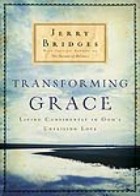 I intentionally took a while to read Transforming Grace so I wouldn’t pass over anything too lightly. There is a danger in reading a book like Transforming Grace, in that experienced Christians feel that they are beyond the meat of the message. There may be a sense of, “been there, done that.” And to be honest the book doesn’t set out with any new truths (given the nature of the book, I wouldn’t expect it too). But there is a great value for mature Christians in reading Transforming Grace. While the truths are not new, they are still truths. While Jerry may belabor a few points, they are worth belaboring.
In Transforming Grace: Living Confidently in God’s Unfailing Love Jerry does an excellent job in cutting the meat and doctrine of transforming grace into palatable and bite sized portions while maintaining an emphasis on the work of Christ. It’s a great read for new believers. Mr. Bridges has a knack for taking difficult topics and presenting them in an easy to understand fashion. Transforming Grace is also a great read for mature believers as well. The doctrine of grace is one that should never get old or tired. None of us are past grace. All of us have a proclivity to default to a works based system of favor with God. Believers come into a right relationship with God by faith, through the work of Christ, which is undeserved on our part, and indeed a gift of God’s grace.
There is also a companion Discussion Guide

If you are looking to learn more about God’s grace in the life of a believer, this book is for you. I highly recommend this book to believers new and old. The retail price is $14.99 (Paperback), and is available at a discount at Amazon.com for $10.19. The Study Guide is also available on Amazon.com for $9.99. I gave it five stars.
The Fruitful Life by Jerry Bridges (a Review)
Disclosure of Material Connection: I received this book free from NavPress as part of their Blogger Review Program. I was not required to write a positive review. The opinions I have expressed are my own. Some of the links in the post above are “affiliate links.” This means if you click on the link and purchase the item, I will receive an affiliate commission. Regardless, I only recommend products or services I use personally and believe will add value to my readers. I am disclosing this in accordance with the Federal Trade Commission’s 16 CFR, Part 255: “Guides Concerning the Use of Endorsements and Testimonials in Advertising.”
The Jesus Storybook Bible (Review)
 I really like the Jesus Storybook Bible Deluxe Edition
Since our children are younger we’ve started using it for family devotions in the evening before bath and bed. My daughter loves it and begs for me to read the next story. We have the deluxe edition which comes with CD’s of David Suchet reading the stories (like in the video’s below). If you have kids or grand-kids I would highly recommend getting your hands on a copy of the Jesus Storybook Bible. The retail price is $25, but I got mine from amazon.com for $16.49. I gave it 5 Stars.
Zondervan has put out a few video’s where you can get a glimpse of how the stories read. I have included them below for your viewing pleasure.
Disclosure of Material Connection: Some of the links in the post above are “affiliate links.” This means if you click on the link and purchase the item, I will receive an affiliate commission. Regardless, I only recommend products or services I use personally and believe will add value to my readers. I am disclosing this in accordance with the Federal Trade Commission’s 16 CFR, Part 255: “Guides Concerning the Use of Endorsements and Testimonials in Advertising.”
Wandering in the Dessert (Review)
 Wanderin’ in the Desert
My daughter, though she was able to retain a lot of information from the program, was impressed on a different level. The program was fast paced enough to keep her attention all the way through. She really enjoyed the songs making me play them over and over for her. After the program I asked her several questions and she responded pretty well.
Overall I was highly impressed with the 3rd disc as I have been with the whole series to date. The only draw back was that in between segments it shows a little boy (puppet) talking a little disrespectfully to his mother who is silent and off camera. I discussed this with my daughter as an example of behavior that I expect her not to emulate. Beyond that the whole production is pretty amazing. I would highly recommend it to parents and grandparents to watch and review with their children. I can see it being a great resource for bible lessons! I give it four stars.
Disclosure of Material Connection: I received a DVD of this program free from Tyndale House Publishers as part of their Tyndale Blog Network. I was not required to write a positive review. The opinions I have expressed are my own. Some of the links in the post above are “affiliate links.” This means if you click on the link and purchase the item, I will receive an affiliate commission. Regardless, I only recommend products or services I use personally and believe will add value to my readers. I am disclosing this in accordance with the Federal Trade Commission’s 16 CFR, Part 255: “Guides Concerning the Use of Endorsements and Testimonials in Advertising.”
The Prayer of the Lord By R.C. Sproul (Review)
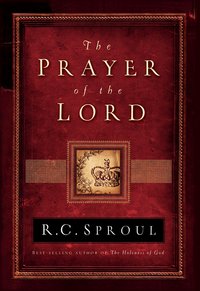 The Prayer of the Lord
The Prayer of the Lord
If you are looking for a great book that teaches about the nature of prayer with the scriptures as its source, this book is for you. I highly recommend this book to anyone interested in developing their prayer life. The retail price is $15.00 (Hardcover), and is available at a discount at steep discount at Amazon.com for $10.20. I gave it five stars.
Disclosure of Material Connection: I received this book free from Reformation Trust Publishers as part of their Blog for a Free Book Program. I was not required to write a positive review. The opinions I have expressed are my own. Some of the links in the post above are “affiliate links.” This means if you click on the link and purchase the item, I will receive an affiliate commission. Regardless, I only recommend products or services I use personally and believe will add value to my readers. I am disclosing this in accordance with the Federal Trade Commission’s 16 CFR, Part 255: “Guides Concerning the Use of Endorsements and Testimonials in Advertising.”
Mark 4: Can you hear me now?
Mark 4 opens with Jesus telling a parable. Most often this parable is called the parable of the “Sower,” however, the real action in this parable takes place in the soil.
At first the disciples don’t get it. They later ask Jesus what it means. Jesus responds that this was his plan… Those inside the Kingdom would know the meaning and those outside wouldn’t. Jesus had spoken this parable to a great crowd, but only a few wanted to really know what it meant. And this was exactly the meaning of the parable. I fear that many Sunday sermons in many churches are the same way. The pastor preaches, the word goes out just like the parable. Some hear, but their hardness of heart blocks them from really understanding the message perhaps they are bitter or angry and even though they receive the same “seed’ as everyone else Satan is able to immediately make sure that message is not understood or applied.
Others hear and are immediately excited about the implications of the message, but they are shallow and beneath the surface their is a hardness that won’t let the seed really take root. Satan doesn’t have to take this seed away their shallowness ensures that it will never come to anything.
The next group hears the word, and produce a plant, but at the same time other “weeds” are being cultivated in their life. These ones hear the word, practically understand it, but are unwilling to remove the competition from their lives. This is the rich young ruler who walked away from Jesus sorrowful because he had great possessions.
All of these soil/ heart types hear the same message, but it is obscured for various reasons. The word of God is unable to be cultivated because of the condition of the soil/ heart. So “they may indeed see but not perceive, and may indeed hear, but not understand, lest they should turn and be forgiven” (mark 4:12).
Those who actually receive the message without hardness, shallowness, or competition truly hear the word and run to Christ for forgiveness. They have a soil/ heart that produces fruit (evidence of the work of God in your life).
The point: are you actually hearing the word of God and letting have full effect in your life or are you dangerously hearing the word with no real fruit?
Take time today to examine your heart. What kind of response have you been giving to His word? Are you willing to confess a hard heart and ask God to break you? Will you confess shallowness, remove pride and ask God to take you deep? Will you take the idols in your life, the things that compete with with God’s word and remove them allowing God to truly reign in your life? Will you simply hear the word or will you truly seek to understand?
Review: John (St. Andrew’s Expositional Commentary) By R.C. Sproul
 John (St. Andrew’s Expositional Commentary)
The commentary is divided up into 57 chapters that focus on the various portions of scripture. The chapters work in order through the book of John. Each chapter appears as a written sermon complete with illustrations and pertinent background information (similar to the commentaries by James Montgomery Boice in his commentary, Gospel of John, The (5 Vol. Set)
This commentary has several practical uses. I can see it being a great benefit for those who are looking for a devotional guide to the book of John. It also functions well as a commentary for those who are looking for some basic background information on a passage. When preparing a message, one of the last things I do is see how other pastors and teachers have approached a text, especially when considering a difficult passage… This volume has been extremely helpful in allowing me to see how a seasoned expositor handles the expression of the text.
This was a great commentary and I would highly recommend it pastors and laymen alike. The book is easy to read, follows a predictable pattern and draws a steady point of application. John (St. Andrew’s Expositional Commentary)
Disclosure of Material Connection: I received this book free from Reformation Trust Publishers as part of their Blog for a Free Book Program. I was not required to write a positive review. The opinions I have expressed are my own. Some of the links in the post above are “affiliate links.” This means if you click on the link and purchase the item, I will receive an affiliate commission. Regardless, I only recommend products or services I use personally and believe will add value to my readers. I am disclosing this in accordance with the Federal Trade Commission’s 16 CFR, Part 255: “Guides Concerning the Use of Endorsements and Testimonials in Advertising.”
The Stone the Builder’s Rejected (Sermon Brief)
Pastor was out of town on Sunday and I had a chance to fill the pulpit and preach in his absence. As soon as I have access to the video file we will figure a way to get it up here. In the meantime here is copy of my sermon brief. If you are unfamiliar with a sermon brief, it is a strange creature that is more or less a cross between an outline and a manuscript. Sometimes I use sermon briefs to make sure I have a grasp on the context and message of a passage. You can also get a PDF of the Sermon Brief by clicking here: The Stone the Builders Rejected

Introduction:
The setting for this parable takes place in the larger context of the Jesus’ preaching and teaching ministry in the temple the week of his crucifixion. In the previous chapter Jesus cleansed the temple of money changers. This action immediately draws the attention of “the elders, chief priests and the scribes” often a designation for the ruling body known as the Sanhedrin. The Sanhedrin sends a delegation to ask Jesus, “under what authority are you doing these things” (Luke 20:2)? Jesus in return asks them about the baptism of John and where he got his authority. The refusal of the scribes and chief priests to acknowledge that John was acting as an agent of God ensures that they would not recognize his authority as their master.
Jesus then picks up with the parable of the wicked tenants in which the central issue is authority. The question arises in this parable, who has the authority? Is it the tenants or is it the land owner? The obvious answer is the land owner and the implications are clear for all who are involved.
The Son the Tenants Rejected
Many of Jesus’ parables are set in the agricultural context of Palestine. Farmers generally filled one of three stations; Landowners, tenants, and day laborers. The difference between tenant farmers and day laborers, “Tenant farmers leased the land and sharecropped with the owner, while poorer people hired out as day laborers” (Brisco, 219).
The parable begins with a wealthy land owner who builds and cultivates a vineyard. Historically the vine has been a symbol for the nation of Israel. Indeed the temple in Jerusalem, where the whole dialogue was taking place between Jesus and his questioners, had a large golden grape vine displayed in a prominent location. Many wealthy families contributed great deals of money to add a grape or a cluster of grapes to the vine. Perhaps some of the men who stood there questioning Jesus had given money to purchase their own grape or cluster to add to the vine.
The scene of a wealthy land owner extending the use of his property to tenants and leaving for an extended period of time was common. “The upper Jordan Valley, the western and northern shores of the Sea of Galilee, and even a considerable portion of Galilee itself, contained vast estates owned by foreigners, men who lived far away from their holdings” (Hendrickson, 891). The financial aspect of the relationship between the land owner and tenants would settled at harvest time when a percentage or set amount of the vineyards fruit would be given to the land owner as payment (Straus, 472).
The land owner had a right to expect a portion of fruit “when the time came” (Luke 20:10). However the tenants beat the servant sent to receive the fruit and they sent him away “empty handed” (Luke 20:10). There is no indication as to why the tenants treated the servants so harshly other than, “they simply rejected the messengers” (Morris, 311).
At this point in the parable the tenants are in violation of a contract and have added insult to injury by mistreating three servants who have come on the landowner’s behalf. The master has every right to send a hit squad after the tenants. As the land owner he is operating out of a position of power, yet the tenants seem to think they can gain power over the master.
The sending of the son by the master is an exercise in self control and patience beyond the scope of expectation. The sending of the son causes the landowner to appear extremely kind and generous. “Rich or poor, all hearers at this point would agree that the land owner is in the right, and that he was benevolent-indeed, strikingly, foolishly benevolent” (Keener, 244).
When they see the son coming they plot to kill the son. The tenants murder the son, perhaps thinking they will gain the rights to the property (Luke 20:14). One commentator writes, “according to a then existing law, under certain conditions if the owner died, leaving no heir, whoever were the first to claim the estate, particularly the occupants, were allowed to have it” (Hendrickson, 892). The Talmud notes, “Tenants were known to claim possession of land they worked for absentee landlords” (Morris, 311-312). They simply presumed that either the landowner was dead or that with all the trouble they had caused, he would not press the issue. The covetousness and lust for full possession of the land that has lead the tenants to mistreat the servants of the master comes to its climax in the murder of the heir. This is an insult to the master that cannot be overlooked.
At this point the story escalates as Luke records that the people respond in terror, recognizing the aim of Christ’s parable. The team sent forth from the Sanhedrin is amazed at the notion that the tenants will have to pay for what they have done to the master’s son. They are quick to understand that this parable has been told against them and they are represented by the wicked tenants in this parable. The notion that these religious men who have labored for the betterment of national Israel would be punished for their rebellion against God must have been a foreign concept to them.
The tenant’s motive for mistreatment and murder in the parable seems to be the prospect of gaining the property rights to the vineyard (Luke 20:14). In a sense they wanted sole control over who enjoyed the pleasures of the vine. Before this passage when Jesus cleanses out the temple he quotes a passage from Isaiah that mentions the prospect of the temple becoming a house of prayer for people from all nations (Luke 19:46, Isaiah 56:7). After the parable Jesus makes a symbolic switch from talking in terms of the vine (national Israel) to the corner stone or foundation of a great building which is associated with church (Acts 4:11, Ephesians 2:20, I Peter 2:6-7).
Just as the wealthy land owner is patient to send messenger after messenger to receive the fruit of the vineyard so God had been patient with the leaders of Israel. However, just as the wicked tenant reign of terror will be brought to an end by a vengeful father, so to was nation of Israel’s leadership expelled from their position a few decades later in 70 A.D. when Rome sacked Jerusalem and the temple was destroyed. Israel ceased to exist and the vineyard had been handed over to a new group of tenants called the apostles.
The Stone the Builders Rejected
Jesus craftily turns the symbolism from a vine representing a national Israel to a stone representing the true temple of God. Jesus changes the picture from a vineyard to a cornerstone. He reminds the Sanhedrin that not only does he have the right as the founder but he also has the right of a judge. ‘The stone that the builders rejected has become the cornerstone’? (18) Everyone who falls on that stone will be broken to pieces, and when it falls on anyone, it will crush him” (Luke 20:17-18).
It is not the value to be places on the stone that is in mind, but the destructive nature of the stone against flesh and blood. To fall on the stone or have the stone fall one in either case means destruction. People may reject and oppose Jesus but it is they, not he, who will suffer. The second part of the saying will refer to the future judgment. IT will be their attitude to Jesus that will mean the final destruction of the people of his day. The imagery here is derived from Isaiah 8:14 (Morris, 313).
The stone is also a stone of judgment. It is not susceptible to destruction by its enemies. All efforts against the stone shatter to pieces. Furthermore, it falls in judgment on those who reject it. The verb rendered crush means primarily to winnow, but early versions support the RSV translation (Tolbert, 154).
Conclusion:
The theme for Luke 20:9-19 is the authority of Christ to save Israel and the whole world. The parable enters in context of the inability of the scribes and chief priests to recognize the authority of Christ. In the parable the vineyard will be taken away from the wicked tenants, who killed the son and given to other tenants. This represents Christ taking the light away from the nation Israel and temple worship and expanding it to the living temple of believers who place their faith in Christ.
Hear today the word’s of Christ. Have you rejected the son? God has a right to your life. Are you glorifying God in your existence or have you rejected the authority of God in your life?
Bibliography
I took the liberty of Hyper-linking to all the books in my Bibliography. I linked to the newest editions of the books while leaving the reference information from the older versions (The page numbers in the new editions are likely to be different because of updated content and more/ less comments throughout the book).
Brisco, Thomas V. Holman Bible Atlas
(affiliate link). Nashville: Broadman and Holman, 1998.
Carson, D. A., Douglas J. Moo, and Leon Morris. Introduction to the New Testament
(affiliate link). Grand Rapids: Zondervan, 1992.
Hendriksen, William. New Testament Commentary
(affiliate link): The Gospel of Luke. Grand Rapids: Baker, 1987.
Keener, Craig S. The IVP Bible Background Commentary: New Testament
(affiliate link). DownersGrove: Inter Varsity Press, 1993.
Lea, Thomas D., The New Testament: Its Background and Message (affiliate link)
, Nashville: Broadman and Holman, 1996).
Morris, C. Leon., ed, The Tyndale New Testament Commentaries: Luke
(affiliate link), vol.3, Revised Ed., Luke, by Leon Morris. Grand Rapids: Eerdmans, 1999.
A Few Great Resources for Studying Ecclesiastes
So we have been spending a little time reading through Ecclesiastes for the last week and a half and we will wrap things up tomorrow with Ecclesiastes 12. Some of you may have had your interest piqued by the book of Ecclesiastes and want to go deeper. Here are a couple of great resources I pulled off my shelf and have helped me get some meaning and application from the book of Ecclesiastes.

The first book I would recommend is A Life Well Lived: A Study of the Book of Ecclesiastes
The second book I would recommend is Ecclesiastes: Total Life (Everyman’s Bible Commentary)
Real Failure Comes From a Lack of Wisdom (Ecclesiastes 10)
Chapter 10 is much like Solomon’s speech to the graduating class. Its a reminder that God is sovereign, people should be humble, and that apart from God’s wisdom you will make a mess of your life.
I know a man who lived well and for a majority of his life he trusted God. Yet near the end he became a fool and made some bad decisions. We are all only one bad decision away from ruining it all. It’s not how you start the race its how it ends that matters. (Ecclesiastes 10:1)
Sometimes we meet resistance in life just because we are foolish. There is story I once heard of a young man who wanted to be a lumberjack. He was younger and more athletic than the other lumberjacks in his crew. He showed up to the forest the first day and made the claim that he could chop down more trees than anyone else on the crew by the end of the week. So they went to work and sure enough the young and athletic lumberjack was leading the way and cutting down trees almost twice as fast as the rest of the crew. Eager to make his mark on the lumberjack world he worked through his lunches and while the other guys took a break. Somewhere around mid-week things began to slow and the young and athletic lumberjack was cutting fewer and fewer trees. Finally by the end of the week he had cut the least amount of trees and the foreman had to let him go. On his way out of the camp he went up to one of the older men who had been cutting down trees for years. He said, “I don’t get it. I am stronger and faster than anyone out here. I never took breaks. I worked through lunch. How did you cut down more trees than me?” The older lumber jack simply replied, “I took time to sharpen my axe.” Sometimes it’s not about how hard you swing or how fast you are. Sometimes as the old business proverb goes, “Work smarter, not harder.” (Ecclesiastes 10:10)
Application: Where do you need wisdom in your life? There are decisions that you need to make in your life right now. Some of them are somewhat small and inconsequential (like what will you eat for lunch). Others of them really matter. Like what kind of husband, father, son, or leader will you be.
 The Hill House