The Book Every Young Pastor in a Small Church Needs to Read

Transforming Church in Rural America by Shannon O’Dell is a must read for any young pastor leading a congregation in rural America!  I was deeply blessed by almost every page in this book and even a little humbled.  Having grown up in rural churches and having many friends who are pastoring rural churches I can testify that Shannon has hit the mark.  What you will find with this book is a no-nonsense, practical, count-the-cost design for much needed change in many of our rural churches.  Shannon knows from first hand experience the cost of bringing change and leading a dying church back to vibrant health and he has a story to tell.

Throughout Transforming Church in Rural America, Shannon tells the story of how he was called by God from being on staff at a large church to pastoring a small South Side Baptist Church in an 88 resident town in Arkansas.  Over the last six years God has blessed Shannon to be at the forefront of change in rural America to reach people with the gospel.  Today Shannon’s church, now renamed, Brand New Church reaches out to thousands of people each week through multiple campuses. Shannon’s passion to reach rural America at any cost is contagious.  Note this quote from the book…

As far as too many soldiers have shown us, it takes great personal sacrifice to willingly enter a conflict.  But if we are to fulfill our vision, we have no other choice.  It’s change, conflict, growth; change, conflict, growth; and you have to walk through that process.  It happens on a personal level every time we see someone freed from a massive addiction. The person makes a change, then there is a major conflict, but then there is unbelievable growth. It’s the same with church; we must go through change and then conflict in order to see growth. Nobody told me that before I went to rural America.  but it’s part of the game – one of the rules you will have to abide by play after play. When conflict comes most rural pastors give up on change. It’s just too hard. What can we do? We must be resolved to conflict in its many forms; we must pick our battles carefully, and we must choose which hills we are willing to die on- just as Jesus chose Golgotha. (page 81-82).

I highly recommend Transforming Church in Rural America.  In fact if you are considering a call to pastor a small church or a church in rural America, its a must read.  You won’t find this kind of transparency and passion for rural churches anywhere else. The retail price is $12.99 (hardcover), and is available around the web in places like Amazon.com for $10.39. I gave it four stars.

Disclosure of Material Connection: I received this book free from Thomas Nelson as part of the BookSneeze program. I was not required to write a positive review. The opinions I have expressed are my own. Some of the links in the post above are “affiliate links.” This means if you click on the link and purchase the item, I will receive an affiliate commission. Regardless, I only recommend products or services I use personally and believe will add value to my readers. I am disclosing this in accordance with the Federal Trade Commission’s 16 CFR, Part 255: “Guides Concerning the Use of Endorsements and Testimonials in Advertising.”

The Covenant with Levi Mentioned in Malachi

Ok… This is for all the Bible Nerds out there. Enough of you have been finding my post on a little background on Senacherib.   that I feel comfortable posting more nerdy stuff. A word of warning… this is a little wordy at just over 3000 words compared to my normal posts of 300-500 words.  I’ll probably write a brief, application oriented post on this passage at a later time.  If it’s not your cup of tea… no worries, this won’t become normal, just a brief detour for the nerds of the bunch.

Join Amazon Student FREE Two-Day Shipping for College Students

Introduction: Background to Malachi

The book of Malachi contains very little information about its authorship.  The first verse of Malachi simply states, “The oracle of the word of the LORD to Israel by Malachi.”[1] Many scholars suppose that even the name Malachi is not the real name of the prophet, but a pen name of sorts meaning, “My messenger.”[2]  Other scholars reject this notion stating that there are no real grounds to assume that Malachi is a pen name and if it were it would in effect be the only, “Old Testament prophetical book where the prophet’s name is not given in the opening verses.”[3]  Some have even wildly asserted that Malachi was an incarnate angel.[4] The exact date for the writing of Malachi is also disputed by scholars.[5]  This is in large part due to the fact that Malachi does not contain any specific details as to when it was written.[6]  However, there are several references within the book that allow scholars to narrow the time frame.  Two are immediately helpful keys in developing a date for Malachi.  One is that the author of Malachi cites current abuses in the temple (1:7ff, 2:13, 3:10).[7]  The other is that there is a strong similarity regarding the themes of Malachi and the themes present in Nehemiah.[8] This has lead several scholars to conclude that Malachi was written, “Somewhere in the period between the completion of the second Temple in 515 B.C. and the work of Ezra and Nehemiah.”[9]             Despite the general vagueness surrounding the authorship and date of the book of Malachi, there are some inferences that Biblical scholars can glean from the text regarding the perspective of the people that the book of Malachi was written to address.  It is supposed that the first audience of Malachi were post exile Jews who had seen the rebuilt temple, but still lacked zeal and had become quite apathetic in their acts of worship.  Jerusalem, once a brilliant and vibrant city was only a mere shadow of its former glory and the second temple had seemingly temporally failed to fulfill the vision of passionate prophets like Haggai and Zechariah.[10]             The nation of Israel was not short on apathy and it was precisely at this time that the prophet called by the name of Malachi declares a message from the Lord.  The style of writing is somewhat enigmatic and engaging.  John Hendrix, when writing on the nature of the dialogue in Malachi notes:

What is the medium that carries the message in Malachi?  The style is rare if not unique.  There are strands of interrogative methodology in Old Testament literature (Amos 3:3-7; Jer. 13:12-14; Ezek. 18:1-24), but none as sharply developed as in Malachi.  Malachi has been called the “Hebrew Socrates” and calls our attention to the Socratic method of teaching. [11]

The style fits the culture, Hendrix goes on to compare the Hebrew people to the cultures of Greece during the time of Socrates and Denmark during Kierkegaard in communicating the immediacy of one person’s experience to another.[12]             Malachi’s message was urgent.  God loved Israel and had a plan to reveal Himself to the nations.  Yet, an unloyal priesthood and people stood in the way with apathetic worship.[13] Brian Froese writes, noting, “God did not need the priests to reveal knowledge of himself, he chose to.  And part of that choice demanded appropriate behavior.”[14]             The book begins with a charge against the people of the nation of Judah.  The Lord has declared His love, yet they seem to wonder at how the Lord has loved them.  The Lord responds with a comparison of the nations of Edom and Israel as though providing proof of His love (1:1-5).  He then proceeds to charge the priests with accepting unacceptable animals for sacrifice (1:6-10) and ultimately will not accept the offerings from their hands. What is the Covenant of Levi Mentioned in Malachi?             Chapter two of Malachi begins with an appeal to a covenant that has scholars digging through the Old Testament.  The covenant with Levi (2:4) does not seem to appear anywhere else in scriptures leaving scholars to debate the nature of the covenant and when it was initiated. References to covenants both with the nation of Israel and the priestly line abound leaving scholars to wonder if perhaps the covenant with Levi is really just tied up in semantics. The Covenant of Levi according to Malachi 2

My covenant with him was one of life and peace, and I gave them to him. It was a covenant of fear, and he feared me. He stood in awe of my name. True instruction was in his mouth, and no wrong was found on his lips. He walked with me in peace and uprightness, and he turned many from iniquity. For the lips of a priest should guard knowledge, and people should seek instruction from his mouth, for he is the messenger of the LORD of hosts.[15]

There are several aspects of this covenant that scholars have used to search for a previous reference in scripture.  Key terms include that this was a covenant with “Levi” (2:4), it was a covenant of “peace,” and that teaching or instruction was a key part of fulfilling the covenant. Exodus 32             Shortly after Moses came down from the mountain carrying the Ten Commandments, he addressed a rebellious congregation.[16]  Moses immediately called for a volunteer army of executioners to purge the evil from the camp. Without delay the tribe of Levi stepped up to the challenge and Moses commanded them, “Thus says the LORD God of Israel, ‘Put your sword on your side each of you, and go to and fro from gate to gate throughout the camp, and each of you kill his brother and his companion and his neighbor.'”[17] That day over 3000 people are slaughtered at the hands of the Levites and Moses stated, “Today you have been ordained for the service of the LORD, each one at the cost of his son and of his brother, so that he might bestow a blessing upon you this day.”[18]  This has led some scholars to surmise that this event became the basis for the covenant with Levi.[19] Numbers 3             George Harrison notes:

Another possible setting for the exclusive covenant with Levi is found in Num 3:5-13. After reminding Israel of the special sanctity of the first offspring based upon the Passover event, the Lord commanded Moses to number all the firstborn males among the Levites (Num 3:15). A second census was taken of the first male offspring among the other tribes (Num 3:40). The two totals were nearly identical. Then a momentous decision was announced: “Take the Levites for me in place of all the firstborn of the Israelites, and the livestock of the Levites in place of all the firstborn of the livestock of the Israelites. I am the Lord” (Num 3:41, NIV). Instead of disrupting the family solidarity of Israelite society, the Levites could serve the Lord as proxy firstborn. The support of the Levitical priesthood with tithes and offerings surely must have been accepted more readily because of this explanation. Each Hebrew family unit could declare, “We have a son in the ministry of worship.” [20]

Deuteronomy 33             Yet another striking possibility is in Deuteronomy 33:8-10:

And of Levi he said, “Give to Levi your Thummim, and your Urim to your godly one, whom you tested at Massah, with whom you quarreled at the waters of Meribah; who said of his father and mother, ‘I regard them not’; he disowned his brothers and ignored his children. For they observed your word and kept your covenant. They shall teach Jacob your rules and Israel your law; they shall put incense before you and whole burnt offerings on your altar.[21]

This passage seems particularly fetching because it includes two key aspects of the covenant mentioned in Malachi, the tribe of Levi and the responsibility of Levi to guard or teach God’s Law.   J. D. W. Watts notes, “Levi is given a place of spiritual leadership with the functions of determining God’s will, teaching the law, and serving at the altar.[22] Keil and Delitzsch also note, “The priests alone were actually entrusted with the instruction of the people in the law and the sacrificial worship; but the rest of the Levites were given them as assistants in their service, this service might properly be ascribed to the whole tribe.”[23]  However, Stephen McKenzie and Howard Wallace note, “In Deuteronomy 33… the covenant seems to be with all Israel, not with Levi alone. The priesthood of Levi in Deuteronomy 33 is given as a consequence of Levi’s faithfulness to an existing covenant.”[24] Numbers 25             Numbers 25 holds the key to a “Covenant of Peace:”

“Phinehas the son of Eleazar, son of Aaron the priest, has turned back my wrath from the people of Israel, in that he was jealous with my jealousy among them, so that I did not consume the people of Israel in my jealousy. Therefore say, ‘Behold, I give to him my covenant of peace, and it shall be to him and to his descendants after him the covenant of a perpetual priesthood, because he was jealous for his God and made atonement for the people of Israel.'”[25]

The problem with this covenant, however, is that this covenant is specifically for Phinehas and his clan, not for the whole tribe of Levi.[26] The Salt Covenant Earlier there is mention of a salt covenant with Levi, “All the holy contributions that the people of Israel present to the LORD I give to you, and to your sons and daughters with you, as a perpetual due. It is a covenant of salt forever before the LORD for you and for your offspring with you.”[27] This also appears in Leviticus 2:13, “You shall season all your grain offerings with salt. You shall not let the salt of the covenant with your God be missing from your grain offering; with all your offerings you shall offer salt.[28]  However, the covenant referred to in these passages is clearly held with priests in particular and not Levites in general as the covenant in Malachi would seem to indicate.  McKenzie and Wallace note, “Both passages concern a covenant with priests, but they offer little aid for understanding the covenant of Levi in Malachi. In both cases the covenant is mentioned in connection with sacrificial offerings brought to the priests, not as in Mal 2:1-9, where the covenant is related to the personal behavior of the priests”[29] Jeremiah 33:20-26 and Nehemiah 13:29 Jeremiah 33:20-26 contains note of two covenants, one with the house of David and the other with the Levitical priests:

“Thus says the LORD: If you can break my covenant with the day and my covenant with the night, so that day and night will not come at their appointed time, then also my covenant with David my servant may be broken, so that he shall not have a son to reign on his throne, and my covenant with the Levitical priests my ministers. As the host of heaven cannot be numbered and the sands of the sea cannot be measured, so I will multiply the offspring of David my servant, and the Levitical priests who minister to me.” The word of the LORD came to Jeremiah: “Have you not observed that these people are saying, ‘The LORD has rejected the two clans that he chose’? Thus they have despised my people so that they are no longer a nation in their sight. Thus says the LORD: If I have not established my covenant with day and night and the fixed order of heaven and earth, then I will reject the offspring of Jacob and David my servant and will not choose one of his offspring to rule over the offspring of Abraham, Isaac, and Jacob. For I will restore their fortunes and will have mercy on them.”[30]

A similar reference appears in Nehemiah 13:29, “Remember them, O my God, because they have desecrated the priesthood and the covenant of the priesthood and the Levites.”[31]              While both of these passages seem to suggest a covenant relationship with Levitical priests, liberal scholars would assert that perhaps these passages are dependent upon the Malachi passage.[32] McKenzie and Wallace are keen to note:

Contrary to Malachi, Neh 13:29 refers to “the priesthood and the Lévites.” In Malachi the priests are under the covenant of Levi. Jer 33:20-26 mentions the Davidic house beside the Levitical priests and refer to the issue of legitimate heirs to both offices. These are clearly concerns different from those of Malachi.[33]

Combination of Passages from the Pentateuch Some scholars conclude that it is probable that the covenant of Levi was derived from an exegetical work on a variety of Torah passages.  McKenzie and Wallace state:

Since external sources are of little help with the covenant of Levi, we can only notice Malachi’s interpretation of it. It is the basis for his rebuke of the priests. Levi was a source of knowledge and torà for the people. He feared Yahweh and turned many from evil (v. 6). Malachi stresses the priestly task of instruction here rather than the sacrificial duties emphasized in 1:6-14.  In light of the reference to the covenant of Levi we should note the language used in Mai 2:2 where it states, “If you do not obey . . .,” and then continues to describe Yahweh’s curse… One could also mention the parallels in Lev 26:3, 14-32. As in Deuteronomy 28 and Leviticus 26 the conditional formula is followed by curses in Mai 2:2-3. The priests have been unfaithful to their covenant. They are warned to obey lest the covenant curses come upon them.[34]

Try Audible and Get Two Free Audiobooks

Conclusion: Textual Evidence Simply Interpreted Indicate that the Covenant of Levi in Malachi 2 was Derived from the Deuteronomy 33:8-10 Passage  Deuteronomy 33:8-10 indicates that the tribe of Levi was blessed by God because of their singularity of purpose in defending truth and zeal for Lord even at the cost of personal relationships.[35]  Especially striking is the phrase, “For they observed your word and kept your covenant.”[36] While others have commented that this phrase most likely is in reference to Israel’s covenant with God and is not particular to the tribe of Levi,[37] it is important to note that here Levi was considered the tribe that would always be zealously faithful to the Lord even when others were not.  The actions of the Levites recorded earlier in the Pentateuch affirm this.  Keil and Delitzsch comment:

The words, “who says to his father,” etc., relate to the event narrated in Ex. 32:26-29, where the Levites draw their swords against the Israelites their brethren, at the command of Moses, after the worship of the golden calf, and execute judgment upon the nation without respect of person. To this we may add Num. 25:8, where Phinehas interposes with his sword in defence of the honour of the Lord against the shameless prostitution with the daughters of Moab. On these occasions the Levites manifested the spirit which Moses predicates here of all the tribe.[38]

It was the faithfulness of tribe of Levi to God’s covenant with the whole nation that they earned the right and privilege of the priesthood.[39]  Yet, in Malachi the whole nation appears to be waning from religious zeal.  What makes God’s charges against the Levites so damning isn’t the fact that they had a special covenant with God apart from the nation of Israel.  It was that they were historically the leaders in keeping the covenant.  They were leaders to the degree that they had been blessed with the rights of priesthood and assisting in temple duties.  Yet in Malachi the priests are no longer leaders in righteousness.  They have accepted worthless sacrifices.  They have not stood for truth at all cost.  They had made serious compromises.  They were no longer acting in the character of Levi described by Moses in Deuteronomy 33 and they were in danger of seeing their blessings become a curse.[40]  Levi had broken covenant. Given the nature, context, and history of the Deuteronomy 33 passage it is the opinion of this student that the covenant of Levi referred to in Malachi 2 is a reference to Deuteronomy 33 and the historical character of the tribe of Levi in being guardians the covenant with the Lord.


[1] Malachi 1:1, ESV [2] George L. Klein, “An Introduction to Malachi,” Criswell Theological Review 2, no. 1 (Fall 1987), 23. [3] F. B. Huey, “An exposition of Malachi, Southwestern Journal of Theology30, No. 1 (Fall 1987), 12. [4] T. Miles Bennet, “Malachi,” The Broadman Bible Commentary, vol. 7, (Nashville: Broadman Press, 1972), 366. [5] Joel F. Drinkard, Jr., “The Socio-Historical Setting of Malachi,” Review and Expositor 84, no. 3 (Summer 1987), 387. [6] George L. Klein, “An Introduction to Malachi,” Criswell Theological Review 2, no. 1 (Fall 1987), 23. [7] Ibid. [8] Ibid. [9] Joel F. Drinkard, Jr., “The Socio-Historical Setting of Malachi,” 387. [10] T. Miles Bennet, “Malachi,” The Broadman Bible Commentary, vol. 7, (Nashville: Broadman Press, 1972), 366. [11] John D. Hendrix, “’You Say’: Confrontational Dialogue in Malachi,” Review and Expositor 84, no.3 (Summer 1987), 469. [12] John D. Hendrix, “’You Say’: Confrontational Dialogue in Malachi,” 469. [13] Brian Froese, “Approaching a Theology of the Book of Malachi,” Direction 25, no. 1, (Spring 1996), 14. [14] Brian Froese, “Approaching a Theology of the Book of Malachi,” 14. [15] Malachi 2:5-7, ESV. [16] Exodus 32:7-24. [17] Exodus 32:27, ESV. [18] Exodus 32:29, ESV. [19] George Harrison, “Covenant Unfaithfulness in Malachi 2:1-16,” Criswell Theological Review 2, no. 1 (Fall 1987), 63-64. [20] George Harrison, “Covenant Unfaithfulness in Malachi 2:1-16,” 64. [21] Deuteronomy 3:8-10, ESV. [22] J.D.W. Watts, “Deuteronomy,” The Broadman Bible Commentary, vol. 2, (Nashville: Broadman Press, 1970), 293. [23] C.F. Keil and F. Delitzsch, “Pentatuch,” Commentary on the Old Testament, vol.1 (Peabody: Hendrickson, 2006), 1012. [24] Steven L McKenzie and Howard N. Wallace, “Covenant Themes in Malachi,” Catholic Biblical Quarterly 45, no. 4 (October 1983), 550. [25] Numbers 25:11-13, ESV. [26] Marvin Tate, “Questions for Priests and the People in Malachi 1:2-2:16,” Review and Expositor 84, no.3 (Summer 1987), 400. [27] Numbers 18:19 [28] Leviticus 2:13 [29] Steven L McKenzie and Howard N. Wallace, “Covenant Themes in Malachi,” 550. [30] Jeremiah 33:20-26, ESV. [31] Nehemiah 13:29, ESV. [32] Marvin Tate, “Questions for Priests and the People in Malachi 1:2-2:16,” 400. [33] Steven L McKenzie and Howard N. Wallace, “Covenant Themes in Malachi,” 551. [34] Ibid. [35] Deuteronomy 33:9. [36] Deuteronomy 33:9b, ESV. [37] Steven L McKenzie and Howard N. Wallace, “Covenant Themes in Malachi,” 550. [38] C.F. Keil and F. Delitzsch, “Pentatuch,” 1011. [39] Ibid. [40] Malachi 2:2

What Is the Bible basically about?

Thought Provoking…

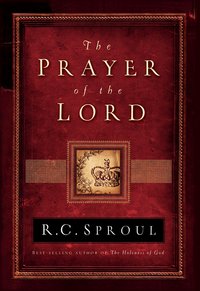
The Prayer of the Lord By R.C. Sproul (Review)

The Prayer of the Lord is perhaps the best books I have ever read on the Model Prayer (sometimes called the Lord’s Prayer)!  I was deeply impressed with how Bible scholar and pastor Dr. R.C. Sproul opened the Scripture and set everything on the bottom shelf.  Dr. Sproul has an engaging and witty style of writing that is both faithful to the text of Scripture and engaging to the reader.  I continue to be amazed at how well he writes.

The Prayer of the Lord is a simple exposition of the Model Prayer.  Dr. Sproul breaks it down taking the reader through the teaching of Jesus on prayer.  Each chapter examines a phrase of the prayer in great detail.  I’ve been a serious student of Scripture for years and I was deeply impressed with how well Sproul wrote about this passage while maintaining a focus to present the truth and application within easy grasp of the reader.  This is a book I would have no problem handing off to a new believer looking to develop his prayer life or a mature believer looking to examine the model prayer.  I really appreciated the appendix that answered several questions for me.

If you are looking for a great book that teaches about the nature of prayer with the scriptures as its source, this book is for you.  I highly recommend this book to anyone interested in developing their prayer life.  The retail price is $15.00 (Hardcover), and is available at a discount at steep discount at  Amazon.com for $10.20. I gave it five stars.

Disclosure of Material Connection: I received this book free from Reformation Trust Publishers as part of their Blog for a Free Book Program. I was not required to write a positive review. The opinions I have expressed are my own. Some of the links in the post above are “affiliate links.” This means if you click on the link and purchase the item, I will receive an affiliate commission. Regardless, I only recommend products or services I use personally and believe will add value to my readers. I am disclosing this in accordance with the Federal Trade Commission’s 16 CFR, Part 255: “Guides Concerning the Use of Endorsements and Testimonials in Advertising.”

Review: “Unburdened” by Chris Tiegreen

Unburdened: The Secret to Letting God Carry the Things That Weigh You Down (affiliate link) by Chris Tiegreen is a great book for people dealing with stress, work, caring for a sick family member, worry, or any kind of burden for that matter. I was not a big fan of the cover art at all, but the book was great proving that you really can’t judge a book by its cover.  I really could have used this book (affiliate link) a few years ago when I went through  a summer of sleepless nights filled with worry after my concussion.

The author does a great job of drawing the reader into the focus of the book (affiliate link).  One of the best parts of his writing style is that his writing is very quotable, meaning the contents of the chapter often find expression in short, memorable and pity statements that carry on with the reader long after the book has been read. I was deeply impressed with the author’s persistence to bring the scripture into the conversation.  The real value to this book is that it works as a great tool to discovering and applying God’s word to the burdened believer.   Through this is the first book I’ve read by Chris Tiegreen his engaging and transparent writing style won me over and sent me to the book store looking for more of his books and wondering why I haven’t heard of him sooner.

I would highly recommend this book (affiliate link) to anyone who wrestles with trusting God with some of life’s most delicate burdens.  This book also makes a great gift for those you know who are stressed to the max, overfilled with worry, or carry the burden of depression. The cover art and perhaps event the title make it a bit hard to give away, but the contents are well worth the investment.

The retail price is $13.99 (Paperback). It is also available at places like Amazon.com for $10.07 (affiliate links). I gave it 4 Stars

Disclosure of Material Connection: I received this book (affiliate link)  free from Tyndale House Publishers as part of their Tyndale Blog Network. I was not required to write a positive review. The opinions I have expressed are my own. I am disclosing this in accordance with the Federal Trade Commission’s 16 CFR, Part 255: “Guides Concerning the Use of Endorsements and Testimonials in Advertising.”

The Stone the Builder’s Rejected (Sermon Brief)

Pastor was out of town on Sunday and I had a chance to fill the pulpit and preach in his absence.  As soon as I have access to the video file we will figure a way to get it up here.  In the meantime here is copy of my sermon brief.  If you are unfamiliar with a sermon brief, it is a strange creature that is more or less a cross between an outline and a manuscript.  Sometimes I use sermon briefs to make sure I have a grasp on the context and message of a passage. You can also get a PDF of the Sermon Brief by clicking here: The Stone the Builders Rejected

Luke 20:9-19 (ESV)

Introduction:

The setting for this parable takes place in the larger context of the Jesus’ preaching and teaching ministry in the temple the week of his crucifixion.  In the previous chapter Jesus cleansed the temple of money changers.  This action immediately draws the attention of “the elders, chief priests and the scribes” often a designation for the ruling body known as the Sanhedrin.  The Sanhedrin sends a delegation to ask Jesus, “under what authority are you doing these things” (Luke 20:2)?  Jesus in return asks them about the baptism of John and where he got his authority.  The refusal of the scribes and chief priests to acknowledge that John was acting as an agent of God ensures that they would not recognize his authority as their master.

Jesus then picks up with the parable of the wicked tenants in which the central issue is authority.  The question arises in this parable, who has the authority?  Is it the tenants or is it the land owner?  The obvious answer is the land owner and the implications are clear for all who are involved.

The Son the Tenants Rejected

Many of Jesus’ parables are set in the agricultural context of Palestine.  Farmers generally filled one of three stations; Landowners, tenants, and day laborers.  The difference between tenant farmers and day laborers, “Tenant farmers leased the land and sharecropped with the owner, while poorer people hired out as day laborers” (Brisco, 219).

The parable begins with a wealthy land owner who builds and cultivates a vineyard.  Historically the vine has been a symbol for the nation of Israel.  Indeed the temple in Jerusalem, where the whole dialogue was taking place between Jesus and his questioners, had a large golden grape vine displayed in a prominent location.  Many wealthy families contributed great deals of money to add a grape or a cluster of grapes to the vine.  Perhaps some of the men who stood there questioning Jesus had given money to purchase their own grape or cluster to add to the vine.

The scene of a wealthy land owner extending the use of his property to tenants and leaving for an extended period of time was common.  “The upper Jordan Valley, the western and northern shores of the Sea of Galilee, and even a considerable portion of Galilee itself, contained vast estates owned by foreigners, men who lived far away from their holdings” (Hendrickson, 891).  The financial aspect of the relationship between the land owner and tenants would settled at harvest time when a percentage or set amount of the vineyards fruit would be given to the land owner as payment (Straus, 472).

The land owner had a right to expect a portion of fruit “when the time came” (Luke 20:10).  However the tenants beat the servant sent to receive the fruit and they sent him away “empty handed” (Luke 20:10).  There is no indication as to why the tenants treated the servants so harshly other than, “they simply rejected the messengers” (Morris, 311).

At this point in the parable the tenants are in violation of a contract and have added insult to injury by mistreating three servants who have come on the landowner’s behalf.  The master has every right to send a hit squad after the tenants.  As the land owner he is operating out of a position of power, yet the tenants seem to think they can gain power over the master.

The sending of the son by the master is an exercise in self control and patience beyond the scope of expectation.  The sending of the son causes the landowner to appear extremely kind and generous. “Rich or poor, all hearers at this point would agree that the land owner is in the right, and that he was benevolent-indeed, strikingly, foolishly benevolent” (Keener, 244).

When they see the son coming they plot to kill the son.  The tenants murder the son, perhaps thinking they will gain the rights to the property (Luke 20:14). One commentator writes, “according to a then existing law, under certain conditions if the owner died, leaving no heir, whoever were the first to claim the estate, particularly the occupants, were allowed to have it” (Hendrickson, 892).  The Talmud notes, “Tenants were known to claim possession of land they worked for absentee landlords” (Morris, 311-312).  They simply presumed that either the landowner was dead or that with all the trouble they had caused, he would not press the issue.  The covetousness and lust for full possession of the land that has lead the tenants to mistreat the servants of the master comes to its climax in the murder of the heir.  This is an insult to the master that cannot be overlooked.

At this point the story escalates as Luke records that the people respond in terror, recognizing the aim of Christ’s parable.  The team sent forth from the Sanhedrin is amazed at the notion that the tenants will have to pay for what they have done to the master’s son.  They are quick to understand that this parable has been told against them and they are represented by the wicked tenants in this parable.  The notion that these religious men who have labored for the betterment of national Israel would be punished for their rebellion against God must have been a foreign concept to them.

The tenant’s motive for mistreatment and murder in the parable seems to be the prospect of gaining the property rights to the vineyard (Luke 20:14).  In a sense they wanted sole control over who enjoyed the pleasures of the vine.  Before this passage when Jesus cleanses out the temple he quotes a passage from Isaiah that mentions the prospect of the temple becoming a house of prayer for people from all nations (Luke 19:46, Isaiah 56:7).  After the parable Jesus makes a symbolic switch from talking in terms of the vine (national Israel) to the corner stone or foundation of a great building which is associated with church (Acts 4:11, Ephesians 2:20, I Peter 2:6-7).

Just as the wealthy land owner is patient to send messenger after messenger to receive the fruit of the vineyard so God had been patient with the leaders of Israel.  However, just as the wicked tenant reign of terror will be brought to an end by a vengeful father, so to was nation of Israel’s leadership expelled from their position a few decades later in 70 A.D. when Rome sacked Jerusalem and the temple was destroyed.  Israel ceased to exist and the vineyard had been handed over to a new group of tenants called the apostles.

The Stone the Builders Rejected

Jesus craftily turns the symbolism from a vine representing a national Israel to a stone representing the true temple of God.  Jesus changes the picture from a vineyard to a cornerstone.  He reminds the Sanhedrin that not only does he have the right as the founder but he also has the right of a judge.  ‘The stone that the builders rejected has become the cornerstone’?  (18) Everyone who falls on that stone will be broken to pieces, and when it falls on anyone, it will crush him” (Luke 20:17-18).

It is not the value to be places on the stone that is in mind, but the destructive nature of the stone against flesh and blood.  To fall on the stone or have the stone fall one in either case means destruction.  People may reject and oppose Jesus but it is they, not he, who will suffer.  The second part of the saying will refer to the future judgment.  IT will be their attitude to Jesus that will mean the final destruction of the people of his day.  The imagery here is derived from Isaiah 8:14 (Morris, 313).

The stone is also a stone of judgment.  It is not susceptible to destruction by its enemies.  All efforts against the stone shatter to pieces.  Furthermore, it falls in judgment on those who reject it.  The verb rendered crush means primarily to winnow, but early versions support the RSV translation (Tolbert, 154).

Conclusion:

The theme for Luke 20:9-19 is the authority of Christ to save Israel and the whole world.  The parable enters in context of the inability of the scribes and chief priests to recognize the authority of Christ.  In the parable the vineyard will be taken away from the wicked tenants, who killed the son and given to other tenants.  This represents Christ taking the light away from the nation Israel and temple worship and expanding it to the living temple of believers who place their faith in Christ.

Hear today the word’s of Christ.  Have you rejected the son?  God has a right to your life.  Are you glorifying God in your existence or have you rejected the authority of God in your life?

Bibliography

I took the liberty of Hyper-linking to all the books in my Bibliography.  I linked to the newest editions of the books while leaving the reference information from the older versions (The page numbers in the new editions are likely to be different because of updated content and more/ less comments throughout the book).

Brisco, Thomas V. Holman Bible Atlas (affiliate link). Nashville: Broadman and Holman, 1998.

Carson, D. A., Douglas J. Moo, and Leon Morris. Introduction to the New Testament(affiliate link). Grand Rapids: Zondervan, 1992.

Hendriksen, William. New Testament Commentary (affiliate link): The Gospel of Luke. Grand Rapids: Baker, 1987.

Keener, Craig S. The IVP Bible Background Commentary: New Testament (affiliate link). DownersGrove:  Inter Varsity Press, 1993.

Lea, Thomas D., The New Testament: Its Background and Message (affiliate link), Nashville: Broadman and Holman, 1996).

Morris, C. Leon., ed, The Tyndale New Testament Commentaries: Luke (affiliate link), vol.3, Revised Ed., Luke, by Leon Morris. Grand Rapids: Eerdmans, 1999.

A Few Great Resources for Studying Ecclesiastes

So we have been spending a little time reading through Ecclesiastes for the last week and a half and we will wrap things up tomorrow with Ecclesiastes 12.  Some of you may have had your interest piqued by the book of Ecclesiastes and want to go deeper.  Here are a couple of great resources I pulled off my shelf and have helped me get some meaning and application from the book of Ecclesiastes.

The first book I would recommend is A Life Well Lived: A Study of the Book of Ecclesiastes (affiliate link) by Tommy Nelson.  This book is written in a regular non-fiction book format and is an easy read for someone who isn’t used to using commentaries.  The author uses lots of great illustrations and packs in a great deal of application.  You can catch it at Amazon.com for about $11.00 (affiliate links).

The second book I would recommend is Ecclesiastes: Total Life (Everyman’s Bible Commentary)(affiliate link) By Walter Kaiser.  It is a great resource to get into the grit of what Ecclesiastes is all about.  Several years ago when I lead a college group through the book of Ecclesiastes I picked this book up.  Its no long in print and I think the only way you can get it now is from a used book seller.  I think I found my copy on Amazon.com (affiliate like) or maybe allbookstores.com (which is where I go to compare amazon against the other book retailers and get the best price or find an old book no longer out of print).

Sound Doctrine Produces Godly Living (Titus 2)

I’m trying something new.  My pastor posts a daily devotional thoughts most every day on the passages of scripture he is reading.  I follow along by reading the same passage in the morning and some time later catching up with his thoughts.  Today is the second day in Titus. I don’t know what aspects of the passage he is going to flesh out.  Hopefully this will be complimentary to his blog post.

Sound Doctrine Produces Godly Living

Truth about God is called doctrine.  Sound doctrine is having true truth about God.  False doctrine is when some one says, “This is true about God” and it isn’t.  Like when some people in Crete said you had to be circumcised in order to be a follower of Jesus (Titus 1:10).  That was a lie and it didn’t lead people closer to God, it actually separated them from God (Titus 1:16). Sound doctrine however causes us to grow in godliness.

So how do you apply sound doctrine to your life?

Submit to authority (Titus 2:2,15; 3:1) – I know it sounds weird to submit.  Saying the very word submit brings back memories of playing “mercy” (you may have called it “uncle”) and watching wrestling on TV. Submission, however, is really less about being defeated by someone and more about accepting authority.  Submission to godly authority actually protects us from error and helps us to grow in our relationship with Christ.  Being under authority is actually a gift from God and we need to be thankful for our pastors and teachers.

As an adult it is easy to see why children really need to submit to their parents.  When I discipline my daughter I remind her that God has given her great parents to protect her and guide her as she grows up.  The authorities that God has placed in our life have come to bless us and help us grow in godliness.

Learn from those who have gone before (Titus 1:4-5). Older women are to teach the younger women.  There is great value in learning from someone who has been where you are and walked with God through it.  We don’t have to blaze the trail anew each time we come to a junction in life where we have never tread.  It is great to get godly advice and leadership from people who walk close to the Lord and have tread the path before us.

The Grace of God (Titus 1:11-14).  God’s grace has a way of transforming us.  The power to overcome sin and temptation in our lives flows from the overwhelming nature of God to secure our salvation and draw us near to Himself.  We have been considered righteous because of what Christ has done, not a work of our hands.  Yet, now what motivates us to give ourselves wholly to Him is that he has given so much for us.  We give our all now, not because we could even begin to repay him by our deeds, but because He satisfies.  What we have in Christ is so much better than the short-lived pleasures that this world has to offer.  We desire for others to know Him and celebrate His goodness.

Application: Sound Doctrine Produces Godly Living… What are you doing to actively live out Truth about God in your life?  Who do you submit yourself too? Who are you learning from?  How has the grace of God transformed how you live?

What is the hardest part about submitting to others?

What were your thoughts on Titus 2?

If you liked this post, you may like these as well:

When Church People Do Bad Things

When Church hurts

7 Steps of a Unified Group

God Cannot Lie, but People Can (Titus 1)

God Cannot Lie, but People Can (Titus 1)

I’m trying something new.  My pastor posts a daily devotional thoughts most every day on the passages of scripture he is reading.  I follow along by reading the same passage in the morning and some time later catching up with his thoughts.  Today we start Titus and so I thought I would post along.  The catch is that I don’t know what aspects of the passage he is going to flesh out.  Hopefully this will be complimentary to his blog post.

God Cannot Lie, but People Can.

There are a few things that God cannot do.  The list is short, but on the list is “lying” (Titus 1:2b).  God has a clear record.  He Doesn’t lie.  People, however, don’t always tell the truth (Titus 1:10-13).  And worse they don’t always tell the truth about God.

So how do we hold on to truth and discern lies?

Preaching (Titus 1:3) – I know it seems outdated.  Especially in the days of television.  But then again we just witnessed the final episode of LOST and it seems like no one really knows what that show is about.  Sometimes we need someone to point to the very words of God and say, “this is what God said and this is how we should respond.”  Maybe it doesn’t have the same kind of feel good approach, but it certainly clears things up.

I forget where I got this story, but imagine back when they first found out that we could create an electric spark.  People were trying to figure out how to get the spark from point A to Point B.  I’m sure that a metal wire looked cold and lifeless and didn’t appear as a viable option for carrying electric current (after all the spark was lively and vibrant, metal just looks dead).  So they experimented with prisms.  Prisms sparkled and carried light.  The initial thought was that they could carry electric current.  Of course today we houses that are “wired” and prisms are relegated to the neat little things you can look at in science class, but carry no practical value for conducting electric current.  So it is with preaching.  Though other forms of communication may be more flashy, God has chosen the simple method of preaching to carry the profound word of Life.

Pastors also known as Elders (Titus 1:5) – These guys are qualified by living out the principles in God’s word.  Its not that they live to a higher standard than God’s word.  They model how we all should live.  Read Titus 1:5-9… are there any traits in that passage that we shouldn’t all be living up too?  They not only preach the message, but they should live the message.

If they are following the Truth, they have the ability and calling to confront those who are in error and leading others astray (Titus 1:9).  Its not that they are superhero’s or anything, but that they are called to preserve the truth.  The fact is that people lie (Titus 1:12).  Pastors are to hold false teachers accountable for their false teaching.  Not only does false teaching lead others astray (Titus 1:10-11), but it perverts the gospel.

In the book of Titus the issue was relying on some work of the flesh like circumcision to save in addition to the work of Christ. These people needed to be confronted and reminded that God is not pleased with the circumcision of the flesh as much as he is the circumcision of the heart (Titus 1:15).  The heart is the issue.  If you are working out of a heart that loves God and is following him, it doesn’t matter what has taken place in your flesh.  Marking your body doesn’t save or sanctify you, Jesus Christ saves and the Holy Spirit works in us for our own sanctification.  But these false leaders showed by their actions that their heart wasn’t right.  They weren’t believing God and worse they were telling lies about God.

Application: God cannot lie, but people Can… are you obedient to God?  Are you entrusting yourself to sound biblical teaching?  Are you found where you can hear from God (in the bible, in prayer,  in fellowship with other believers, in a Bible believing and teaching church) ?  Are you quick to judge people on appearance rather than their heart (tattoos, smoking, dress)? Most importantly do you believe God (He never lies) and following Him in a way that produces genuine Christlike character in your life?

What is the hardest part about trusting God for you?

What were your thoughts on Titus 1?

If you liked this post, you may like these as well:

When Church People Do Bad Things

When Church hurts

7 Steps of a Unified Group

A Hill on Which to Die

I still remember it like it was yesterday.  I was at the Southern Baptist Convention in New Orleans a few years ago.  A good friend of mine (who was more excited about the conservative resurgence than I was) had convinced me to tag along and soak in the atmosphere.  He had a contact with Judge Pressler and several others in the movement and we were invited to sit in and hear about the lives of these men, the battles they had fought, and absorb the atmosphere.

To be honest, I went for the bookstore.  The Alabama Baptist Convention used to have a fantastic bookstore at each of its meetings with great deals on books.  I was hoping for some of the same kind of interaction on national level.  However, I was quickly disappointed to learn it was just a Lifeway store set out on tables.

The Highlight of the trip came however when we had the opportunity to tag along on a trip with Judge Pressler to Cafe Dumonde.  We sat in on the conversation, asked our best questions, bought Cafe Dumonde mugs (to remember the occasion) and consumed beignets and hot chocolate.

We were blessed to be able to interact with Judge Pressler that night and throughout the convention.  I was amazed at the character and grace of a man who was both very loving and very kind to most everyone he encountered.  He talked with grace about the years of the conservative resurgence and I was surprised to later hear all the things he was accused of saying or doing.  Quite simply the accusations didn’t line up with the man I had met.

His book A Hill on Which to Die: One Southern Baptist’s Journey is his side of the story concerning the Conservative Resurgence in the Southern Baptist Convention.  It is a very straightforward, orderly account of his life, the issues that lead to the resurgence, and the account of how things took place.  It is a great book for anyone looking to hear the conservative side of the resurgence in the Southern Baptist Convention.  I give it 5 stars.

I picked up my copy several years ago when Pressler came to speak at UM and I got a copy autographed.  Recently I had the opportunity to pick it up again and actually read it.  I wish I had read it much sooner.