Unfinished Books, Unframed Pictures, and Eternity

This is a guest post by Jesse Campbell.  He is the Student Pastor at Heritage Baptist Church in Pensacola, Florida and is the Director of Percussion at Tate High School.

I am a jumbled mess of the right idea and good intentions. This is probably way too much information, but the counter next to my favorite toilet is piled high with open books; each stacked precariously on another so as to keep my places in each of them simultaneously.

One is the memoirs of a Marine Lieutenant, another a dissertation on quantum physics that I don’t really understand, another John Eldridge’s latest attempt to stretch yet another book out of the same idea that spawned Waking the Dead, another Lee Strobel’s incredible The Case for Christ, and the miserably wrinkled bottom of the stack is a registry guide distributed by Wal-Mart to parents to be. How do they know when you’re about to have a baby and do we really need two Pack & Plays? In our foyer hang sepia tone pictures of complete strangers. A few rooms over, in my garage, sit dusty boxes with ready-to-assemble shelving systems and three surfboard racks that have yet to make it onto the walls. My house has quite a few half-finished projects. So did my mind until recently.

Even highly organized people will embark on a project of some sort, only to be diverted by…well, life. The unfinished projects in my head remained so for similar reasons. I never truly nailed down my stance on the whole Calvinism (the philosophy that God predetermines who will be saved) issue until this year. I carried unanswered questions regarding God’s perspective on the dimension of time through three years of vocational ministry. I couldn’t really answer the tough questions about God’s perspective on man’s prayers until I was married (which is funny because marriage is the kind of thing you pray about A LOT). Now, it’s not as though these questions were unimportant to me. Like my partially assembled garage door opener, I knew they were of great significance to my everyday life. But, the resolution of some tough questions was interrupted by my need to compose the music for Tate Drumline’s show or pull together the final details for our ski trip. This may sound extreme, but this kind of distraction is the work of Satan in our lives. It’s not that these distractions are inherently evil in and of themselves. Rather, it’s that they are not as important as the big questions in our lives.

How did the universe come to exist from absolute void? Where do you stand with God? Is Hell a real place? Do the rebuttals to the theory of evolution hold water? If so, what does that mean for you? Why do bad things happen to good people? With all the religions of the world holding claims to the truth, how do you know which one is true? These are examples of unfinished projects that even brilliant and highly educated people will carry around in their minds for decades.

Work out the unfinished projects because your soul may hang in the balance. Take the time to put these questions on the front burner and have the objectivity to follow the evidence wherever it takes you. Letting them slip into the obscurity that life can bring could be catastrophic. One wrong turn nullifies every turn that follows it and we’re not guaranteed tomorrow. So, go back and investigate as if your eternity in Heaven, Hell, or existential void depended on it because it does. Consider the risk you take by never fully resolving these issues or never giving them a fair chance in your heart. Is adherence to atheism (the belief that nothing spiritual exists) worth the risk of being wrong? Don’t take the easy way out and put a quick fix on a paradigmatic life issue. That’s like duct taping the garage door opener to the ceiling, buying the first set of tires you see, or drilling into a wall and just hoping you hit a stud…not that I’ve done one of those things. I’ve spoken with hundreds of atheists who base their beliefs about God on false assumptions or lies about Christianity. They think that science and Christianity are mutually exclusive and some have never even heard of the field of study called “apologetics.” They cite the writings of biased and bitter “former Christians” who do not personally take the very risk they so vehemently endorse. I’ve spoken with many agnostics who, by their own admission, have simply never taken the time to adequately ponder or investigate God’s existence. With these examples in mind, does my theory about Satan’s sabotage sound a little less crazy? If there is an enemy to God, then isn’t it in his best interest to keep people distracted from the big issues like Jesus and what you truly believe about Him?

I know that, if you were to really and truly put these questions on the front burner and commit to objectively follow the evidence to wherever it takes you even if that means dramatically changing your stance on something, you’d investigate your way to Jesus. Jesus said in John 14:6 that He is the way, the truth, and the life and that no one can come to God except through Him.

It all comes down to what you believe about Jesus. Jesus claimed to be the Son of God. Would you put aside the less important things in your life to make this Jesus guy and your beliefs pertaining to Him a priority? Heaven is a real place. So is Hell. Jesus loves you and that’s eternally more important and worthy of contemplation than is the plot of the aptly titled show “LOST.”

Free Resources to Study the Bible Study

Over the years I have found several free resources for studying the Bible that work as well or sometimes better than paid programs.  I know of several more than I have listed here, but these are the 3 Bible study programs I use the most.  I hope they bless you as much as they have been a blessing to me.

1. E-sword

E-Sword is a great Bible study program.  You can download the main program to your computer and latter add on Bibles, commentaries, dictionaries, books, and devotional material.  The great strength to this program is that you pick and choose which bible study materials you want to use and those you don’t.

2. Blue Letter Bible

Blueletterbible.org is the place that I go when I am on a different computer and I need to look up some information.  You can search several versions of the Bible on line as well as a few commentaries.

3. Pocket Sword

I recently downloaded this program to my iphone.  It is a great Bible app that works much like e-sword.  You begin with a KJV bible and a commentary.  Once the program is downloaded you can go back and add several other versions of the bible and commentaries.

Theology is Important for a Relationship With God

Theology.  A brief defanition is, “The Study of God.”  A simple explanation is that theology answers the question, “What is God like?”

The key to any relationship is knowing something about the other person.  Fathers try to spend time with their children. Spouses try to find time away from the children. Young couples go on a series of dates before they settle into a marriage.

Usually at the beginning of a relationship we tell ourselves all kind of lies about what the other one is like.  To put it milder, you may say we have differing expectations.  We paint a picture of what the other one is like, but we don’t really know what they are like until we get to know them.    Sometimes our expectations are exceeded by the character of another, sometimes we are let down.  That is why we need to spend time getting to know people.

New dad’s dream about what their kids will be.  However, they soon realize that children have a will of their own.  It is the same way with the young couple that have fallen deeply in love.  They don’t really know anything about each other, but they “love” each other.  Then months or years down the road they realize the real nature of the other person (for good or for bad) and accept that for months they were in “love” with their version of this person and now they must decide if they truly do “love” this other person. That’s why it is a good idea to take the whole courting thing a little slow and know what you are getting into. (You can check out how I dated my wife and married the most wonderful woman in the world… here).

The point is that at the beginning of relationships we fill in missing information about the other person with what we want to put there.  I think many people have false ideas about God simply because they don’t know Him and have filled in false information about Him.  Many of us have created a picture of God based upon what we want Him to be rather than what He is really like.

Some of us picture God like a Santa Claus type figure.  Others have pictured him as an angry judge.  To be honest, some people don’t think He exists at all.  Still others think of him as a passive grandfather who lets everything go.

The challenge is to really know God.  To put all of our preconceived notions on the table and read what God has revealed about Himself in the Bible.  Feeling are a good thing, but I’ve been mislead by feelings.  Isn’t it better to know God?  That happens by learning about Him.  The way you learn about God is by spending time reading the Bible and talking to him.

Theology is answering the question, “What is God like?”  Do your answers come from the Bible, where God had revealed things about Himself or do they come from how you picture Him in your mind based mostly off your feelings?

What tools have helped you dig into the Bible and learn more about who God really is?  Here are a few that have helped me along the way.

Book Review: “Living Life in the Zone” by Kyle Rote, Jr. & Dr. Joe Pettigrew

Living Life in the Zone: A 40-Day Spiritual Game Plan for Men by Kyle Rote, Jr. and Dr. Joe Pettigrew is a great book  for men who are looking to jump-start their devotional life.   Through out this book the authors challenge the reader to be a real man of Christian Character. The authors share keen insights and interviews from legendary sports figures from around the world of sports.The book is intended to be read in 40 days.  Each section is comprised of seven days worth of material that follows a common theme for the week.  Sections are geared around the various relationships in a man’s life such as his wife, children, friends, and work. ( The last section is noticeably shorter at 5 days.)

The author’s have taken careful pains to maintain a rigorous order of steps for each day’s reading.  Making each devotional similar in style, but unique in substance.    Overall the book is very readable, very organized, and authentically sports oriented.

I especially enjoyed reading this book as a devotional in the morning.  It took only a few minutes to read and provided real insights with great questions.  I can see it being used as a stand-alone devotional or used by a group of men for accountability purposes.  My over all impression was that it was a great book.  The only reservation that I have is that the scripture section at times can seem a bit light due to the topical nature of the book.

This is a very practical and readable devotional book for men.   Living Life in the Zone is an excellent resource. The retail price is $14.99 (Paperback), and is available at places like Amazon.com for $10.19. I gave it four stars.

Disclaimer: As a blogger I received a free review copy from the Thomas Nelson’s Book Review Blogger program  (http://brb.thomasnelson.com/ ).  There was no requirement to give it a positive review, just for the reviewer to call it like they see it.

Resources for Developing a Bible Reading Plan

One of the best habits you can develop is to daily read God’s word.  Listed here are a few  great resources for reading the Bible. 

If you are looking for community and interaction check out pastor Chris Aiken’s blog.  He blogs daily from one chapter of Scripture and a Proverb.  Its a great place to read along, gather insights, and share thoughts.  I have been following along for nearly a year now and have been greatly blessed.

For study and prayer purposes I have found the free and easy to use E-sword program to be an invaluable aid.  It is a Bible study software program that you can download to your computer.  You can also down load a variety of translations, commentaries, devotions and other Christian works.  (All free, easy to use, and adaptable).

The image above is a picture of the MacArthur Daily Bible that I have used for the past several years.  It contains selections from the Old Testament, New Testament, Psalms and Proverbs each day.  It also contains a brief devotional and explanatory comments about the scripture passages you are reading.

There are several other plans to read through the Bible, but rather than repeating a bunch of information I have listed a link to a few great resources on reading the Bible through.

ewordtoday.com – I recommend the ESV Chronological or Historical track

doxologypress.org – this is a great place to hear the audio Bible and keep track of your reading/listening. (though you need to sign up for an account) It’s also a great place to hear great works of literature like John Owen’s Mortification of Sin (though I admit it’s not for the faint of heart).

If you are new to reading the Bible or haven’t had much sucess in being consistent.  I highly reccomend Pastor Chris’ Blog above the other resources.  It is simple interactive plan that can be easily maintained by most anybody.  I hope all goes well with your adventure in journeying deeper into God’s Word this year.  Here are a few more articles that you might find useful.

3 Christmas Meditations on Being a Parent (Part 3)

3. Mary and Joseph knew that their son would be hated and rejected (Matthew 2:1-18).

Among other things the passage referenced above mentions the wholesale slaughter of all the children born in Bethlehem under the age of 2.  In the wake of this magnificent birth, angels singing on a hillside, and  a visit from the magi comes a horrific massacre.  It is only through a dream that Joseph knows to flee with his family and misses the impending destruction.

I am sure that the reality of caring for a wanted child set in as they traveled to Egypt.  Everyday they awaited the news that Herod had died and it would be safe to return to their beloved homeland.  Even when that news came, they made their way to Galilee to avoid Herod’s vicious son.

Now there may not be a king or president intent on killing my children, but I have no doubt that there are sinister forces in this world that would seek to destroy the lives of my children.  The forces of darkness were not silent at the birth of Christ and they are not silent today.  There are too many who die needlessly.  There are too many who are abused or injured.  In my line of work we used to see and counsel the statistic that one out of four girls are raped or molested by the time they are the age 18.  Sadly that number has increased to one out of three.

All around the world children are starving while we gorge ourselves on Thanksgiving and Christmas feasts.  Darkness covers our globe and we pretend in merriment that our houses provide protection.  We pretend that we even have the power to protect our kids. 

What if we saw the darkness and instead of running from it, we asked God to send us into the midst of it?  What if we were willing to get our hands dirty and aim our children strategically into the darkness so that by the time our grandchildren arrive, the world is a little less dark and the brilliant light of Christ can be seen more clearly.

The truth is that Jesus came into the world to destroy the darkness.  That same darkness destroyed the lives of many children in the town of Bethlehem.  But it could not keep them.  He would one day go to the cross and bear our sins, die a horrible death, and be resurrected 3 days later.  He promised to return.  His resurrection gives us hope that we will one day be raised too.  The darkness can not win.

3 Christmas Meditations on Being a Parent (Part 2)

2. Mary and Joseph Knew they would have to let go.

I wonder if knowing the destiny of Jesus (at least vaugly) effected the way that Mary and Joseph went about parenting? In a very real way they were forced to come to terms with letting him go.  Letting go can be one of the hardest parts about parenting.

I see parents who are clinging to their children and holding on too tight.  Sometimes this comes from a natural desire to protect their children from harm (there are other reasons).  No one wants to see their children hurt and or know that their child could be in danger.  Yet, some parents take this to an extreme by hampering their children from being able to  spread their own wings.  Sometimes we grow so accustomed to making decisions for our children, that we forget the goal of parenting is to train our children to make their own decisions.

Just like an archer has to let go of the arrow before it sails into the air and finds its mark, Parents are called on to release their children.  I think this happened in a very real way for Mary and Joseph.  They knew their was something special about Jesus from the start.  How do you raise the savior?

How would we parent differently if we knew the destiny of our children?  What if God called them to the heart of darkness a world away?  Would we be prepared to send them? Guide them? even direct them? My prayer is that he does call them there and that we are willing to let go and even send them.

To be honest each day I function on the edge of insanity.  Every time the road is wet and my wife and kids are in a car somewhere without me, I keep the phone close, praying that they are ok.  I could easily become compulsive about the safety of my children.  “No” could easily become the most dominant word in my vocabulary for no other reason than that “No” is safe.  But the joy of parenting isn’t found purely in seeking safety but in the risk of providing direction and  letting go.

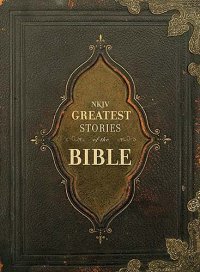
The Greatest Stories of the Bible, published by Thomas Nelson

The Greatest Stories of the Bible by Thomas Nelson Publishing is a remarkable book.  It is a well crafted and organized compilation of 250 of the classic stories told in the Bible.  The Bible stories are shared in the New King James Version and scripture references are provided for further study.  Each story fills about one to three pages. Though it is not a full Bible it does contain the biblical text and provides an excellent resource for families.

The Greatest Stories of the Bible is an attractive book and is decorative enough in nature that it can be left out on the coffee table for regular use. It’s greatest value is its devotional appeal.  The stories are compact enough to be read in families with young children and larger stories are spread over two or three readings.    We will most likely use this as a guide for family devotions over the course of 2010.  The only thing missing for families with really young children are the pictures.

This book makes an excellent resource for family devotional time. If you are looking to share the classic stories of the Bible with your family The Greatest Stories of the Bible is a great resource. The retail price is $29.99 (Hardcover), and is available at places like Amazon for $21.59.

Disclaimer: As a blogger I received a free review copy from the Thomas Nelson’s Book Review Blogger program  (http://brb.thomasnelson.com/ ).  There was no requirement to give it a positive review, just for the reviewer to call it like they see it.

How to Have a Daily Worship Time

What is a Daily Worship Time (DWT)?

A daily worship time is a special time set aside for an individual to grow closer to God.  The DWT most often includes practical and consistent excercise of spiritual disciplines (bible study, prayer, silence, fasting,etc.).  This practice has various other names, such as a daily ‘”quiet time” or “personal devotions”, the name doesn’t matter as much as the concept of intentionally putting ourselves in a place where we are more likely to hear from God.

When Should I have a my Daily Worship Time?

Daily worship times really work best for me when scheduled in the morning before breakfast.  I personally like this time because it helps me start my day out right.  On days that I have missed my DWT, or done it later in the day, I can really tell a difference.  This may be hard for some people because it requires self-discipline.  This early morning time is somewhat important for me, but you haven’t blown it if you need to set up another time.  It is better to be consistent with your DWT than it is to be early and not consistent.  If you have never had a consistent DWT before, you may want to schedule a time with Jesus  (ex. before breakfast, when you get home from school, or 8PM every evening).  You may want to set an alarm clock to remind you or leave yourself notes.   Make it as important as if you were meeting one of your best friends (after all you are meeting with Jesus).

What do I do for a Daily Worship Time?

Many people do different things for their daily worship time.  The main thing is that the focus is on learning about and worshiping God.  Even though people do their DWT differently there are some elements that  should always be involved.

The first important element of a DWT is reading God’s Word. It is by reading what God has said about Himself that we learn about who God is.  When we read His word we are reminded of his unchanging character.  You can learn more about how to read God’s word here.

Another element essential to a DWT is  Prayer. Prayer is how we communicate with God and verbally submit our lives to him.  Through prayer we recognize His ability and our inability over people and circumstances.  There are many parts to prayer, but the main parts are:  recognizing who God is, recognizing our need for God, submitting our lives (and specifically each day) to God, asking God for direction, and asking God to move and work in the lives of other people. I will post more on prayer later.

Some people like to include a Journal as part of their DWT. This is a notebook where you can record your thoughts about who God is or how you need to respond to Him.  A journal can consist of just a few short notes or well thought out paragraphs.  When I was younger and had a hard time praying, I would write out my prayers to Jesus in a journal.  Since then it has been a blessing to look back at my journals and see who and what I was praying for and how God answered those prayers.

Many people like to sing as part of their DWT. They use music to proclaim their delight in God or to remind them of certain things about God like His love or His faithfulness.  We have a few  awesome worship teams at our church both on Sundays and Wednesday nights with our students who have introduced me to several great songs.  If I hear a song that really speaks to me, or reminds me of a particular truth about God, I will do a word search and get a copy of the music and memorize the song so I can sing it during this time. Some of you are very musically gifted and will write songs of praise based off of what you have learned about God in your DWT.

I strongly recommend that near the end of your DWT that you write out what your response to God should be. This allows you to apply God’s word to your life and how you live.  In my own DWT  I call these action steps.  Action steps are practical ways that you will apply the truth you learn each day to your life.  You can read more about action steps in the second half of this post.

A Few Tips on How to Read the Bible

When I was little I knew that it was important to read the Bible, but I didn’t know how.  I used to flip open my Bible and what ever passage it opened to I would read.  I heard a preacher tell a story about a man who was looking for God’s will like that.  He flipped open his Bible and placed his finger on a verse and it said, “Judas went out and hung himself.”  He thought, “that can’t be God’s will for my life.  I need to try again.”  He did it again and this time it came up, “Go thou and do likewise.” We know God would never tell us to go hang ourselves, this man’s idea about how to hear from God was a little flawed.

My bible at Whirled Cup Cafe

Needless to say you don’t normally get a lot from reading the Bible like that.  You can’t get a lot from any book by doing that, especially God’s word.  When it comes to God’s word there are a few things that you need to keep in mind.

1.) The Bible is a collection of books. The Bible is collection of books and those books were meant to be read just like any other book, from beginning to end.  That is how we can make the most sense of other books.  That is how we can make the most sense out of God’s word.

2.)  We call the Bible God’s word because it is what God has told us about Himself. It is a record of how God has dealt with mankind through the centuries.  Hebrews 1:1-2 tells us,”God, who at various times and in various ways spoke in time past to the fathers by the prophets, has in these last days spoken to us by His son.” The Bible is the recorded word of God and so when we read it, whether we are reading about Noah and the Flood, or Jesus’ death, burial, and resurrection, we can rest assured that God has given us His word in order to reveal Himself.  So as we study the Bible we need to ask, “What is God saying about Himself ?”  The story of Noah and the ark isn’t about a floating zoo, its about God’s grace in saving Noah, God’s intolerance of sin, and so much more!  We read God’s word to learn about God.

3.)  But we don’t stop there, we also need to apply it to our lives and so we should ask a second question, “What should my response be to what I have just learned to be true about God?”  We want to be a responsive people.  Think about it.  Why did God give you His word?  He shows you who He is through His word and so as our understanding of God changes our response to God changes.  We can not be the same people.

These two questions help me to develop resolutions or what I like to call action steps. Action steps are tangible things that I can do in my life that day to put into practice what I have learned to be true about Jesus.  They can be as simple and general as “I’m going to call out to Jesus every time I am tempted today because he knows what it was like to be tempted and was yet without sin” (Matthew 4).  Or they can be as specific and complex as, “I am going to ask my mother to forgive me because I was a jerk to her last night because Jesus commands his followers to live in a right relationship with others” (Matthew 5:24).

——————————————————————————————————————-

Just to recap, here are the highlights.

1. Read a book of the bible in the order it was written (don’t randomly flip open the bible and throw your finger down in the middle).

2. Ask two important questions….

  • What does this say about God?
  • How should I respond to God?

3. Use those questions to help you formulate resolutions or action steps

—————————————————————————————————————————

Looking for a place to start?

If you are new to this bible reading thing or haven’t done it in a while and you are looking for a place to start, I encourage you to check out the blog of my friend (and pastor) Chris Aiken.  Each morning he reads a proverb and a chapter from another book of the Bible.  He then makes a blog post commenting on the chapter of scripture he read.  What is really neat about the blog format is that you can post questions or responses to each daily reading.  You can find his blog at http://www.chrisaiken.wordpress.com