Owned!

Paul and Timothy, servants of Christ Jesus, To all the saints in Christ Jesus who are at Philippi, with the overseers and deacons: (Philippians 1:1 ESV)

Paul and Timothy use a weird word to introduce themselves. They use the word servant. The Greek word is “dulos” (just in case we got any Greek Scholars out there). It could be translated as “slave.” The first thing they say about themselves is, “Hey everybody we’re slaves of Jesus.” When I first read this and thought about it, it was weird. Think about it. How would you introduce yourself? I might say hey I’m Jonathan and I’m a pastor. To get more personal I might say that I’m an Auburn fan. I might even reveal too much and say that I like Pizza way more than I should. Those are all statements about my identity.
We all go through this part of life where we try and figure out who we are. We know the basics like, who raised us and what our parents want for us. But then we start trying to figure out who WE are going to be. It’s like going back to school shopping with your mom for new cloths and trying on new outfits. (I know the guys are thinking, let’s just throw 3 pairs of the same jeans in the cart, try them on at home and be done with it. Some of the girls, however, will try on one of everything in the store… I know I had sisters). So you try on the preppy outfit, the sporty outfit, the I don’t care outfit… Then you have to do this delicate balance between finding an outfit that you think is socially acceptable but also not the exact same as someone else. You want to fit in, but you also want to be a little bit different.
We do that with our identity too. We try and figure out who we are going to be. Are you going to be a jock? In the band? A gamer? A cheerleader maybe? You look for crowds to be a part of (or not to be a part of). You try different things. You test the water with different crowds.
I went through a country music phase. The rational side of my brain has tried to repress all of those memories, but I do remember that Randy Travis would love someone even if her hair fell out. I also went through a Tom Petty phase, the Grateful Dead (which was all probably related to the activities I found myself taking part in) and then I was off to bands like the Smashing Pumpkins, Everclear, Nirvana, Counting Crows and Korn (before they were mainstream) and now I love talk radio, Classical music, hymns and praise and worship music (mostly because my life has been radically changed by the gospel).
When I was trying to figure out who I was going to be I also went through different things. I collected basketball and football cards. I played guitar for like a minute. I was on the quiz bowl team. I was in the FFA (Future Farmers of America). I was in drama. I played football and basketball. I even ran track. I went through a lot of phases.

But I also made a big mistake during that time of my life. While I was trying to figure out who I was, independent of my parents, I thought that Jesus was just something else to try on. It’s like life was a giant buffet table and you could just pick what you wanted. I’ll take a little Auburn football please. I’ll take a little bit of country music. I’ll take deer hunting. I’ll take playing right defensive tackle on the HS football team. I’ll take playing the 6th man in basketball… Oh and I’ll take Jesus too.

The problem was that Jesus isn’t something you could just add to a plate or an outfit you can buy. When we think of Jesus like this, we are in control and we determine just how far we’ll go with the whole Jesus deal. We want enough Jesus to deal with the pressures of life, but not so much Jesus that we actually love our enemies. I wanted him to heal my great-grandma of cancer, but I don’t want him to ask me to love people who are different than me. I want Jesus to pay my debt, but I don’t want to be generous with my money… So really I didn’t want Jesus, I just wanted the good things he could provide for ME. Man, if it ever got too tough or too real I was out.
Truth be told, I was really looking to Jesus to serve me, not to save me.
So naturally nothing really changed in my life because I was still in charge. I only wanted His gifts and I wasn’t ready for His grace. Then something changed… I had a dream. I felt the weight of my sin. I knew that I needed to be forgiven, but had no right, no claim, no demand that God should forgive me. I needed Jesus to save me from my sins and it was at that point that I realized that this whole Christianity thing can’t be something YOU own, it’s more like someone (Jesus) owns you. Anyone who has read the Bible for like a minute can tell you that. It’s one of the reasons I taught my kids how to pray what’s often referred to as the “Lords Prayer” because at the very onset it sets out that we are seeking God’s Kingdom and God’s will, not ours.
So Paul and Timothy at the very beginning of this letter want to make it clear that they don’t have Jesus in their pocket, they are in His pocket. He’s not a designer label. He’s not just an occupational thing. He’s not someone to be dealt with and handled. He’s the boss! They are owned!
In our culture that’s a put down. It’s a slap in the face. When someone is better than you at something, like maybe someone dunks the ball on you, other people will say you “got owned.” Nobody wants to be “owned.” It wasn’t a point to brag about in ancient culture either, yet here we find Paul and Timothy stating from the very beginning that they are owned. I think the reason they seemingly boast here is because they know the real freedom that come from being a slave of Jesus. They have no power in their own name, but their is great power in the name of their master Jesus.

Your thoughts and comments are welcome below. Keep them friendly. I reserve the right to censor crude comments.

Family Devotional: It’s More About Rhythm than Time.

I’m so thankful for my parents and their commitment to the Lord. So much of what I have to share here is because of their testimony in my life. I had great models of family devotional time to build on and improve. I realize that not everyone grew up in a Christian home or Christ may have not been emphasized at home the same way he was at my house and so I want to give you a glimpse at what we do so you can have a model to build on and improve with your family. You may have some other great helps, practical suggestions, resources and/ or ideas, if so, please share with us in the comment section below.

It’s more about rhythm than time.

Leading your family is more about finding a natural rhythm in your schedule than setting up a specific time or meeting for a specific time. For our family the rhythm looks something like this on a weekday.

6AM – I have my own study time. Through the years I’ve done various things but I keep coming back to The MacArthur Daily Bible: Read through the Bible in one year.

6:20ish – I’ll have breakfast with my 8-year-old and I will do a devotional together before school. Right now we’re working on a devotional that I wrote for our students but mostly we use Long Story Short: Ten-Minute Devotions to Draw Your Family to God. I’ll read from the book and she reads the scripture portion each day.

Around 7:30ish – I’ll have coffee and read a story from The Jesus Storybook Bible to my 4-year-old before he heads off to 4k.

Evenings when I’m home before bedtime (Roughly 3 nights a week) we’ll have a prayer time around 7:30ish (our goal is to get them in bed by 8PM). Right now we’re praying for a particular UUPG and we made a cube that has pictures and writing based on Romans 10:13-14. One of the kids will roll the cube and it will help guide us in how to pray for our UUPG that night. We pray from youngest to oldest (with dad always going last). We pray simple, but heartfelt prayers. After everyone has prayed we say the Lord’s prayer together and then we play a game with the ten commandments where a family member will name a commandment and call on someone else to say the next commandment, etc. then we’ll go over a series of verses that the kids have memorized (the Roman’s Road, Proverbs 3:5-6, Matthew 6:33, etc.). The whole things lasts about 15-20 minutes from start to finish.

The real value is that each of these moments provide a great reference point for further conversation. I can’t tell you how many times we’ve talked about forgiveness based on the Lord’s prayer or sin based on the 10 commandments. There are also times were we have great gospel centered conversations based on a story we’ve read or a devotional. Then there are times where I will share about what I’ve read in my own time in the word and how it applies to something that one of the kids mentioned.

If you are looking to lead your family and aren’t doing any yet don’t try and start everything at once. Pick one habit that you think will fit or work in your routine and make it work for you. For example you may have to clock in at 5AM and so their is no way you could possibly read with your kids before school. Maybe you could record a video (using your ipad or phone) and have it ready for them to watch while they are at breakfast. Or maybe you have to be out of state/ country for your job. Challenge your children to memorize a scripture passage with you (Like the 10 commandments or the Lord’s Prayer) and make it part of the phone call when you are able to call home.

What are some other great ways to engage your kids with the scripture on a regular basis?

Boring: Finding an Extrodinary God in an Ordinary Life (A review of a book that is anything but boring).

boring  You want to read a down to earth and encouraging book? Read this one! In a market saturated with hype, this book is a breath of fresh air. Author Michael Kelley takes a reader on an adventure to discover deep joy and profound love for God in the everyday moments of life. He provides the biblical foundation to view routine and responsibility as avenues for worship.

Michael is like an expert tracker leading the reader on a journey through familiar terrain. What you once thought was just boring, frustrating or tedious parts of everyday life are reexamined with a trained eye and evidence of the activity and presence of God are made known all along the way. I couldn’t help but be humbled and encouraged as I read this book and I think you will be too.
Boring: Finding an Extraordinary God in an Ordinary Life is a great read for young married folks with kids. You’ll find tons of great application and you’ll really appreciate Michael’s sense of humor.
At the time of this post. Amazon.com has it on sale for $13.17 in paperback and $4.99 for the kindle.

Disclosure of Material Connection: Some of the links in the post above are “affiliate links.” This means if you click on the link and purchase the item, I will receive an affiliate commission. Regardless, I only recommend products or services I use personally and believe will add value to my readers. I am disclosing this in accordance with the Federal Trade Commission’s 16 CFR, Part 255: “Guides Concerning the Use of Endorsements and Testimonials in Advertising.”

Did you enjoy this post? Did you consider it helpful? Subscribe by e-mail on the top right of this page and get fresh articles like this one and more sent straight to your e-mail inbox. Don’t for get to share on Facebook or Twitter.

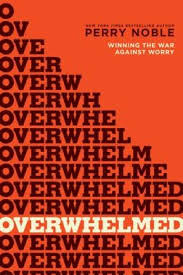
Overwhelmed: Winning the War Against Worry (Review)

overwhelmed I was really blessed by this book. I hope a million people read it and pick up on the message! To be clear, I’m not a big Perry Noble fan, most days his speaking style annoys the snot out of me. However, I was blown away by this book (which I can only assume was based on a sermon series). Perry is an incredibly gifted writer (or he has an incredibly gifted ghost writer… who knows these days?).

I think what makes this book so good is that Perry takes you to the scripture in every chapter. This is really like an old school exposition on the book of Daniel. I think Perry also connects with readers as he walks through his own personal struggles. The book greatly benefits from Noble’s cheesy redneck humor (I was laughing with the giddiness of a school girl somewhere around page 159… so much so that my wife had to come check on me… Not bad for a book on worry).

Overwhelmed: Winning the War against Worryis a great book to have on your shelf and an even better book to read, especially if you deal with worry, depression and/ or anxiety. Perry doesn’t pull any punches and while he has you bent over laughing one moment, he’ll have you pouring your heart out to God in repentance the next. I gladly recommend it to anyone dealing with anxiety or looking for a practical level exposition on the book of Daniel. I hope it blesses you as much as it blessed me.

At the time of this post. Amazon.com has it on sale for $10.11in paperback and $9.60 for the kindle. you can also download the audio version for around $14.95 as well (which is great for listening to while your working out).

Disclosure of Material Connection: Some of the links in the post above are “affiliate links.” This means if you click on the link and purchase the item, I will receive an affiliate commission. Regardless, I only recommend products or services I use personally and believe will add value to my readers. I am disclosing this in accordance with the Federal Trade Commission’s 16 CFR, Part 255: “Guides Concerning the Use of Endorsements and Testimonials in Advertising.”

Did you enjoy this post? Did you consider it helpful? Subscribe by e-mail on the top right of this page and get fresh articles like this one and more sent straight to your e-mail inbox. Don’t for get to share on Facebook or Twitter.


How High Will You Climb By John Maxwell (A Review)

_225_350_Book.1162.cover Attitude. That’s what How High Will You Climb?: Determine Your Success by Cultivating the Right Attitude is about…attitude. Mostly the focus in on how to have a positive attitude. That’s the real game changer according to Maxwell. The ability to face challenges, short-term defeat and the obstacles in our path with a gutsy determination that everything will be fine. John Maxwell offers two compelling lines of argument through the book. One seems to follow a biblical pattern (at least the scripture verses are fairly quoted). And the other is squarely placed in the self-help camp (He’s done some outside reading).

As with most books I review I put it through the “wait” test. For those unfamiliar, the wait test is simply this. Read the book well, then simply… wait. If what you remember was actually helpful, practical, and perhaps even relevant then it passed the test. What I came away with after reading this book was that a good attitude is better than a bad attitude. I hardly needed a book to tell me that, but this one comes across more like a pep-rally and some folks need that sort of thing.

So here is the deal, if you generally have a good attitude, you don’t need this book. However on the other hand if you are a perpetual grumpy pants you probably could benefit from reading this book (You need the pep-rally). And If you know a grumpy person, you might give them this book as a kind of inside joke, but also as an encouragement to adopt a different perspective on life. John Maxwell is a talented writer. He flirts with a few elements of the sovereignty of God in this book that I wish he would have taken all the way to their conclusions.

Disclosure of Material Connection: I received this book free from the publisher as part of their Reviewer program. I was not required to write a positive review. The opinions I have expressed are my own. Some of the links in the post above are “affiliate links.” This means if you click on the link and purchase the item, I will receive an affiliate commission. Regardless, I only recommend products or services I use personally and believe will add value to my readers. I am disclosing this in accordance with the Federal Trade Commission’s 16 CFR, Part 255: “Guides Concerning the Use of Endorsements and Testimonials in Advertising.”

Did you enjoy this post? Did you consider it helpful? Subscribe by e-mail on the top right of this page and get fresh articles like this one and more sent straight to your e-mail inbox. Don’t for get to share on Facebook or Twitter.

A Brief Theology of Disaster: Our Motives in Providing Disaster Relief

To be honest, my tendency is to be bit skeptical when I think of churches banding together to help those who are recovering from a disaster. If we are not careful success will be redefined by how many people are fed, lots are cleared, children are ministered to, etc. rather than implementing a strategy to reach a community with the gospel.  Silently the evangelistic reports will pushed to the back of the pile.  We will be giving out bread, but forgetting to mention that it is in Jesus’ name. 

If we are not careful we will forget the true mission of God to rescue and redeem man from sin, not just from the current disaster.

We will forget that incarnation is about a holy God living among a sinful people for the purpose to rescue and redeem them from sin.  While we may mimic the incarnation by having middle class people live in impoverished communities to deliver them from poverty. We are just people reaching other people through the grace and providence of God.

disaster reliefI’m not saying that we should not help the displaced, but that we should be diligent in how we do it, because I also know that not every work done in Jesus name is actually from Jesus (Matthew 7:21-27).  It behooves us to follow Jesus’ model and listen to his words.

It is not enough to simply recall bible stories we were taught and say, “Jesus always met the physical need before the spiritual.”  That’s simply not the case.  Sometimes he forgave sin first (Mark 2:5), sometimes he asked if people believed that he was able to heal first (Matthew 9:27-31), and countless times he was approached by people who already believed he had the power to heal.  The reality is that according to the biblical record, Jesus did not indiscriminately meet physical needs then preach the kingdom, indeed he was preaching the kingdom and in the process he met physical needs (in my opinion as authentication of his message). The gospels are clear that Jesus was concerned with the spiritual above the physical (Luke 12:4-5).  Why else would he knowingly call his followers into physical suffering for the sake of the proclamation of the kingdom (Matthew 10:38-39, Acts 9:16)?

Then there are the times that he did not heal or perform signs because people would not believe (Matthew 13:58).  There was also a time that he challenged his hearers to see past the signs to see that they were pointing to the power and provision of God (John 6:26-33).   There certainly was not an apology for the gospel of Jesus part in the midst of doing good works like healing people.  The signs and wonders that we often point to as Jesus meeting physical needs were accompaniment to the proclamation of the kingdom, not the other way around.

The purpose of disaster relief should be modeled off the life and message of Jesus which is to, “let your light shine before others, so that they may see your good works and give glory to your father who is in heaven” (Matthew 5:16).   This requires some discrimination in determining what kind of works we will be a part of and how we will use resources to meet needs while we are proclaiming the gospel.  It is important that we follow Jesus in performing our good works before men and do them in such a way that causes them to give glory to our father in heaven.

The gospel must not only be present, but the very motivation of our efforts in disaster relief.

A Brief Theology Disaster: thinking biblically in the wake of tragedy

By nature a disaster indicates a world in which death and suffering are predominant. A world very different that the one described by God as “very good” in Genesis 1:31. A world in which disaster often occurs is a world in desperate need of a savior. When victims cannot alleviate their suffering, they must look beyond themselves to an outside source to deliver them from suffering and set the world right as it once was. This is actually the testimony of the Bible: Jesus Christ has come to save those who cannot save themselves.

disaster relief

A proper understanding of disaster will take into account the issue of sin. The Apostle Paul reminds readers in the book of Romans that, “just as sin came into the world through one man, and death through sin, and so death spread to all men because all sinned” (Romans 5:12, ESV). The Apostle Paul indicates in Romans eight that even all of creation groans under the curse of sin. The sin of Adam was so great because precisely through one sin the whole world fell to sin. Adam opened the door for disaster to come into the world and now those presently alive find that the world is not always “very good” as indicated by God in Genesis 1:31.

At this point many people blame God for the condition of the world and make charges that if God were good or loving that He would at the very least prevent disaster from happening. However, such allegations view to lightly the scandal of sin and the holiness of God. The scandal of sin places the trigger for disaster squarely in the hands Adam and through Adam all mankind. While some disasters may be seen as punishment for sin, not all disasters are. Indeed many disasters are the mere product of living in a fallen world. Directly or indirectly, the sin of Adam in particular and the sins of mankind in general have caused the current condition of the world. To levy the argument that the love of God ought to compel him to prevent disaster is an attempt to un-ring the bell of sin.[1]

Yet, this is the very thing that God promises! This is the very story of the Bible! Where man is unable to relieve the suffering introduced into the world through sin and death; Jesus Christ stepped out of heaven and in to space and time, lived a sinless life, embraced death through obedience to God and rose again from the dead conquering death and promising to return ushering a new heaven and a new earth. In essence God has promised to rid the world of sin and suffering.

This leaves Christians in an interesting place spreading the gospel message of salvation through Jesus Christ. This proclamation should not be silenced in the wake of disaster, but proclaimed all the more. In the wake of disaster Christians have the opportunity to act out on a small scale what Christ has done for us on a large scale.

Christians are called to regard the image of God in each individual, boldly declaring every individual to be of a special worth (Genesis 1:27). While domesticated animals may be of a specific worth to their owners, all human life is valuable to God. It was to man that God gave the right and privilege to subdue the world and rule over it (Genesis 1:28).

Christians should also call into account the calling of the church, noting that Christ has commissioned his church to go and make disciples of all nations (Matthew 28:19-20). Indeed part of being a disciple is being a fisher of men (Matthew 4:19). Jesus often modeled a ministry of provision and preaching. That is while he was preaching he was also healing, multiplying loaves and fishes, etc. In essence Jesus was meeting physical needs as a way of demonstrating the authenticity of his message. This should challenge believers today to share the good news of Jesus in the midst of disaster while pointing to Christ as the ultimate means of salvation.

[1] Thought this isn’t a quote, I do owe my thoughts on this an article I read … John Garvey, “Is God Responsible,” Commonweal 132, no.2 (Jan 2005), 10-11.

Teenagers and the Gospel (Part 2)

Teenagers are Self Interested

Most Teenagers are a product of their culture and our culture is all about the consumer. Marketers have been targeting our kids for years and playing to their emotional needs. Ten’s of thousands of hours of screen time and all the related ads can’t be undone in a 30 minute pep talk. Because of this when it comes to Teenagers; they will understand most biblical truths through the lens of how it affects their lives.  Cognitively they should be able to think outside of themselves, however in our society it’s not an issue of ability, it’s an issue of conditioning. To reach teenagers you have to make a personal appeal or they will tune you out.

teenagers and the gospel

Even kids who have grown up in Christian families and have a strong background in church will have a hard time paying attention if you don’t address how the scripture relates to them personally. Quite frankly teenagers have been programed to be self-interested thinkers. You need to get to know them well enough to relate biblical truth to their personal needs. However, don’t make the mistake here of falling into moralism (good apart from the gospel). Teenagers need the gospel. Help them to see their need for the Savior.

Having a self-interested teen can be a mixed blessing. On one level you can’t compete with millions of dollars of marketing, well written scripts, and super model actors… on the other hand… those people don’t know “your” teen. While you may be less entertaining than the latest super bowl commercial, a little time well spent learning about the teens in your life can give you more credibility than axe body spray ever had.

Teenagers are Emotional

Teenagers make decisions based on feelings more than rational thought.  Physiologically they are still developing the rational part of their brain while the emotional impulse part of the brain is already developed.  They default to what they know. Something which seems cut and dry to you, is a major issue to them because they simply lack the development in their brains to process the situation the way you can as an adult.

They can still get there, it’s just not the preferred method and it requires you to connect a lot of the dots for them. Think of this as exorcising a weak muscle. The tendency to default to emotion is why students can sometimes be prone to “drama.” Teens often use the filter of feeling (“how does this make me feel”) to evaluate their circumstances and to make decisions. We need to guard our kids in this area because it leaves them open to manipulation.

The positive side of this is that teenagers are able to be empathetic. However, rarely do they ever get there without some help or guidance along the way. It is generally good when ask “How do you think it made them feel?”  When talking about how our actions effect others.

Grumpy Teen: If you are a parent dealing with a grumpy teen take in to account how many hours of sleep your child is getting each night. Most studies indicate that middle school age kids need around 9 hours of sleep or more per night and only about 15% of teens are getting enough sleep (There is a reason they would sleep till noon on Saturday if you’d let them). If 13 year-old Tommy is acting like the 3 year-old Tommy when he didn’t get his nap, it’s probably because 13-year-old Tommy is tired.

Challenge: How well do you know the teens in your life? If you don’t already, schedule regular personal time with your teen doing something you both value.  What emotions tend to rise to the top when you are carrying on a conversation? Pray for the teenagers in your life. Ask God to give you wisdom in applying the scripture to their needs. How is their sleep schedule? Sometimes a late weekend wake up is due to not enough sleep during the week.

10% Happier (A Review)

10%Just to be clear I don’t endorse this book. It’s a book about one man’s completely ironic journey to Buddhism. What’s most ironic is how the author rips on self-help guru’s and then ends up writing what amounts to a self-help book complete with a guide on how to meditate.

I get it. Dan Harris believes this stuff and thinks that he is offering us a public service. (He’s in deep enough that he had a vision that this stuff would catch on here in the West).  He almost actually shared some actual scientific data in the book… but no, not really. Most of that just ended up being promising leads, not actual scientific data. The book is primarily based on his experience. It’s a well written story book, “This is how meditation changed my life and it can change yours too.” 

 My curiosity was piqued and I picked up the book because I saw things like “disgraced pastor” (Spoiler: It’s Ted Haggard)  and “unchurched” in the initial rundown of the book. While this wasn’t false advertising, it was certainly misleading in that I fear others will also pick up this book thinking that Harris is driving the bus somewhere other than Buddhism.The problem though is that I don’t think Dan Harris or his publishers are familiar enough with the Evangelical movement to know that he’s off market with these misdirects (or worse they’ve intentionally targeted us).

As a Christian I believe in meditation, but it’s a completely different sort than what is dealt with here. This book deals with “mindfulness” (read clearing your mind) whereas Christian meditation “focuses” the mind on a promise of God, scripture passage, or truth about God. They are polar opposites.

I think Dan is a gifted writer. He’s gutsy and bold. I found it odd that for someone on TV his inner voice cusses a bit more than mine.  I hope he writes again about something else (he is a master story-teller). If he ever reads this blog and comes through Pensacola I’d love to buy him a coffee and talk more about the differences between Christian meditation and Eastern mediation.

Disclosure of Material Connection: I received this book free from Litfuse as part of their Blog Tour. I was not required to write a positive review. The opinions I have expressed are my own. Some of the links in the post above are “affiliate links.” This means if you click on the link and purchase the item, I will receive an affiliate commission. Regardless, I only recommend products or services I use personally and believe will add value to my readers. I am disclosing this in accordance with the Federal Trade Commission’s 16 CFR, Part 255: “Guides Concerning the Use of Endorsements and Testimonials in Advertising.”

3 Things to Do After You Graduate

So you’ve just graduated! Congratulations! If you’re like me, everyone is asking about what you will be doing next. Maybe you have plans to attend a college or university. Maybe you are stepping out into the armed forces or a career field. Or maybe you just don’t know yet. Regardless of where you are I want to offer you three great pieces of advice that I wish someone had told me along the way.

  • Be intentional with the friends you want to keep. After graduation people have a tendency to go their own way. The things you once had in common like homeroom, the football team, etc. tend to slip into the background. Don’t worry though, you don’t have to lose your friends, but you do need to be intentional about the ones you want to keep. With Facebook, Twitter, and Google +, it’s a lot easier to keep up with the day to day stuff in the life of your friends, but you need to take it a step further. Create a list of friends that you don’t want to lose touch with (I would keep the list down to 3 to 5) and make the effort to connect on a monthly basis with a lunch, coffee, or phone call. Make the personal contact beyond what you see on social media and it will go a long way in preserving your friendships. Don’t wait on your friends to initiate contact. Be the one to get something going.
  • Thank the people who helped you along the way. Have your parents supported you? Did you have a teacher that made the difference for you? Often times the only thing these people hear from us are our gripes and complaints. Take time to show them your appreciation. Go beyond the thank you card and either make or buy them something nice. It can be a good meal together at a nice restaurant, time helping your teacher redecorate the room, or even a thoughtful gift. Give back generously to those who supported you along the way.
  • Remember where you came from and encourage others. Keep up with your alma mater. Is there an alumni office or an alumni page on Facebook? Stop by and keep up to date on everything that is happening. Show up for alumni events. Encourage others who are still taking classes. Wear your team colors and stop back in from time to time to see how things are going. Support your school with both volunteer hours and financially.  Sometimes you will find that the connections you have made with the faculty and staff at your alma mater are still helpful beyond graduation.

Congratulations on making it this far! Keep pressing on. Some of the best days in your life are ahead of you!